

By Nkechi Eze
The Nigeria Customs Service (NCS) has reaffirmed its commitment to building a transparent, technology-driven, and globally competitive customs administration, urging journalists to play a strategic role in promoting accurate and balanced reportage of ongoing reforms within the Service.
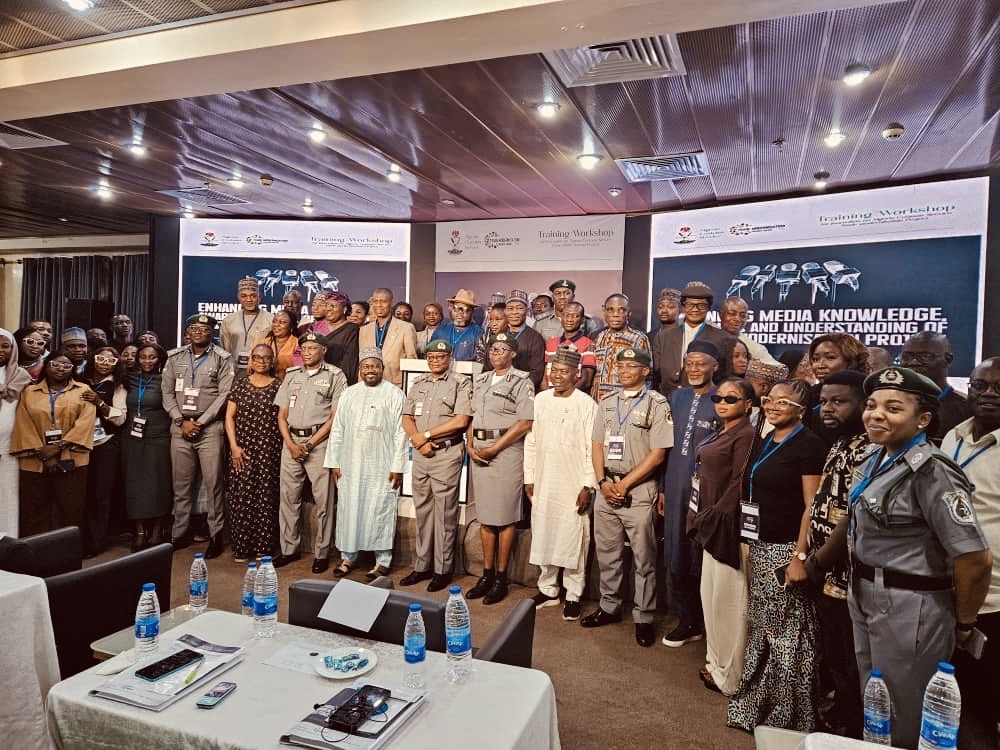
This formed the focus of a Training/Workshop for Journalists on the Nigeria Customs Service Trade Modernisation Project held in Abuja on Thursday, where the Comptroller-General of Customs, Bashir Adewale Adeniyi, represented by Deputy Comptroller-General Timi Bomodi, said the Service was intensifying efforts to align Nigeria’s customs operations with global best practices through digital transformation and automation.
Speaking at the opening ceremony, the Comptroller-General described the Trade Modernisation Project as a comprehensive reform initiative designed to overhaul customs processes, eliminate operational inefficiencies, improve transparency, and facilitate seamless trade operations across the country.
He noted that the deployment of modern digital platforms and integrated systems would significantly enhance efficiency in revenue generation, trade facilitation, and border security, while positioning the Nigeria Customs Service as a globally competitive institution.
According to the CGC, the success of reforms of such magnitude depends not only on infrastructure and technology but also on stakeholder understanding and participation, particularly from the media.
He said journalists occupy a critical position in shaping public perception and interpreting government policies, stressing that accurate and informed reporting would help build public confidence in the Service’s modernisation agenda.
The Customs boss further explained that the workshop was specifically designed to deepen media understanding of the Trade Modernisation Project, its operational framework, expected outcomes, and broader implications for national economic growth and trade facilitation.
He commended Trade Modernisation Project Limited (TMPL) for its technical support and partnership in driving innovation within the Service, while also appreciating facilitators and participants for their commitment to strengthening public awareness around customs reforms.
In his welcome address, the National Public Relations Officer of the Service, Deputy Comptroller of Customs Abdullahi Maiwada, said the workshop was organised to bridge knowledge gaps and strengthen collaboration between the Nigeria Customs Service and the media.
Maiwada said the Customs Service, under the leadership of Comptroller-General Bashir Adewale Adeniyi, had continued to prioritise transparency, innovation, and stakeholder engagement as critical pillars of institutional reform.
He described the Trade Modernisation Project as a major milestone aimed at simplifying customs procedures through technology-driven solutions capable of improving operational efficiency, enhancing revenue collection, and facilitating trade.
The Customs spokesman noted that beyond technology and infrastructure, effective communication and public enlightenment remain essential to the successful implementation of the project.
He therefore urged journalists participating in the workshop to actively engage in discussions, seek clarification on critical issues, and utilise the knowledge gained to promote factual, constructive, and development-focused reportage on customs operations and reforms.
Maiwada also lauded Trade Modernisation Project Limited for its continued collaboration and technical expertise in supporting the Service’s modernisation efforts.
Participants at the workshop were exposed to various aspects of the Trade Modernisation Project, including its implementation framework, operational structure, expected impact on trade facilitation, revenue optimisation, and its contribution to national economic development.
The engagement also featured interactive sessions between customs officials, technical experts, and media practitioners aimed at strengthening understanding of emerging customs technologies, automation systems, and ongoing institutional reforms within the Service.