By Nkechi Eze
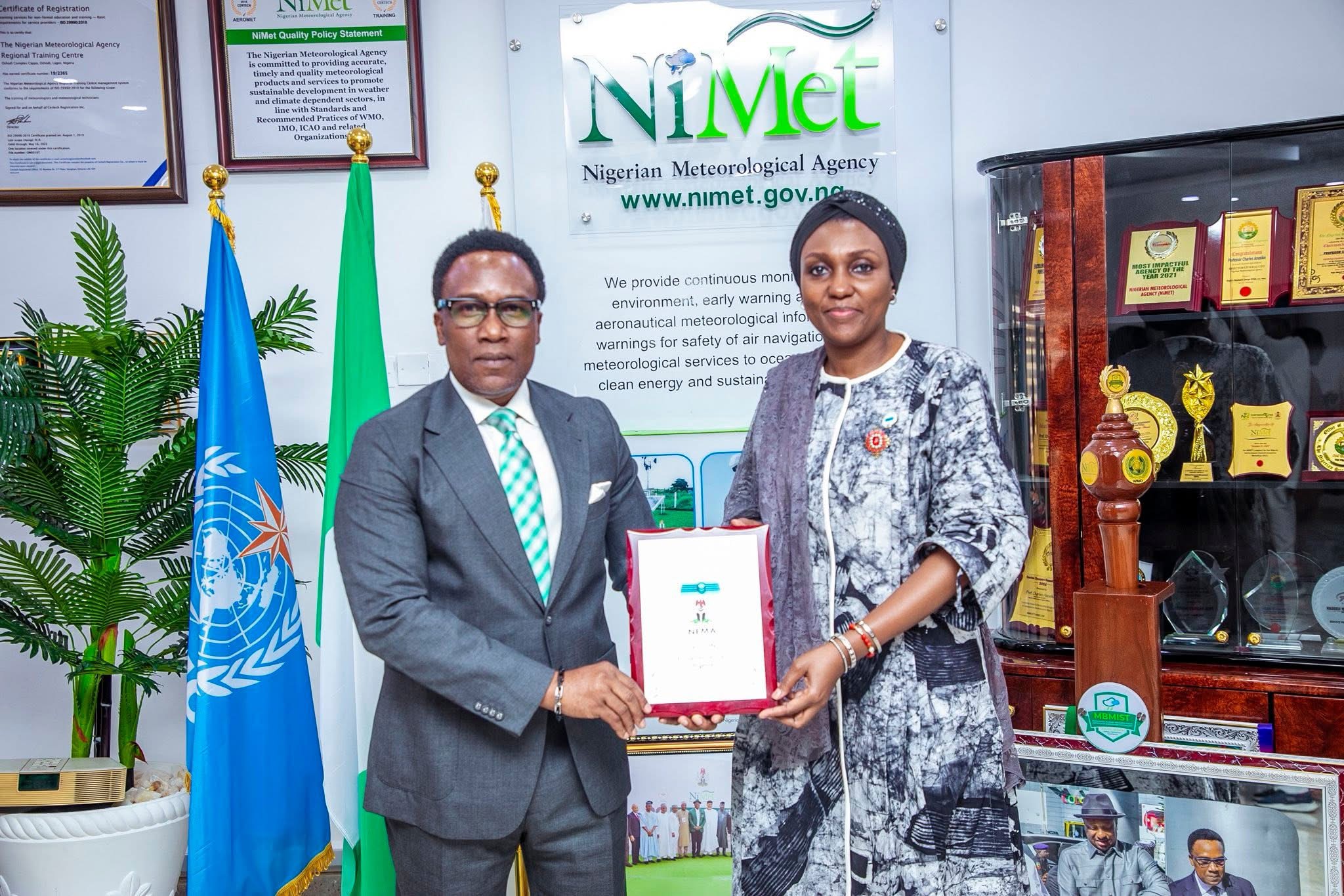
The Director General and Chief Executive Officer of the National Emergency Management Agency (NEMA), Mrs. Zubaida Umar, on Thursday paid a courtesy visit to the Director General and Chief Executive Officer of the Nigerian Meteorological Agency (NiMet), Professor Charles Anosike, at the NiMet Headquarters in Abuja, as both agencies moved to deepen collaboration on disaster preparedness and climate risk management.
During the visit, Mrs. Umar congratulated NiMet on the early release of the 2026 Seasonal Climate Prediction (SCP), the consistency of its daily weather forecasts, and the significant improvements recorded under the leadership of Professor Anosike.
She explained that the visit, alongside key members of the NEMA management team, was aimed at strengthening the long-standing partnership between both agencies in addressing climate-related emergencies and disasters across the country.
Mrs. Umar also stressed the importance of integrating NiMet into the NEMA Emergency Operations Centre (EOC) to further enhance disaster preparedness, early warning dissemination, and coordinated emergency response nationwide.
Responding, the Director General and Chief Executive Officer of NiMet, Professor Charles Anosike, welcomed the NEMA delegation and appreciated the recognition of the agency’s contributions to national development.
Professor Anosike noted that NiMet, NEMA, and the Nigeria Hydrological Services Agency (NIHSA) have remained strategic partners in efforts to mitigate the impact of climate-related disasters and provide renewed hope for Nigerians through improved forecasting and coordinated response mechanisms.
He emphasized the need for the development of a Nigerian Early Warning System Roadmap to be jointly designed by NiMet, NEMA, and NIHSA in order to strengthen inter-agency collaboration, coordination, and institutional trust.
At the end of the meeting, both agencies agreed to immediately establish a joint committee that would develop and implement the proposed Early Warning System Roadmap for Nigeria.
The initiative, according to the agencies, is expected to improve disaster preparedness and response through clear objectives, collaborative action, and timely implementation strategies.