

By Nkechi Eze
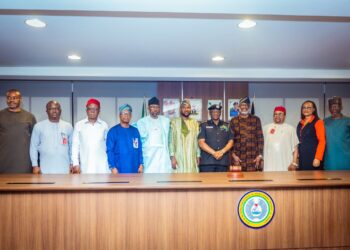
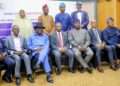
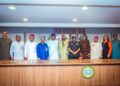
Against the backdrop of persistent security challenges, rising concerns over violent extremism and the protection of vulnerable communities, the United States and Nigeria have once again reinforced their long-standing strategic partnership, signalling a renewed determination to confront insecurity and safeguard religious freedom across Nigeria. The commitment was reaffirmed on Thursday during a high-level bilateral working group meeting that brought together senior officials from both countries, building on months of intensified diplomatic and security engagement.
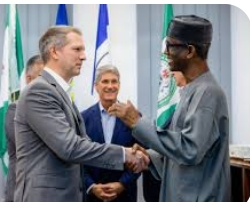
The meeting followed the United States’ designation of Nigeria as a Country of Particular Concern on October 31, 2025, a development that, rather than straining relations, has catalysed deeper cooperation between both governments. Opening the session, U.S. Under Secretary of State for Political Affairs, Allison Hooker, described the engagement as a continuation of focused efforts to protect vulnerable populations, particularly Christian communities, while strengthening Nigeria’s overall security architecture.
Hooker underscored that the U.S.–Nigeria partnership rests on broad shared interests, including trade, investment, energy development, regional stability and collective security. Within that framework, she outlined the core priorities of the bilateral working group, which include deterring violence against Christian communities, countering terrorism and widespread insecurity, investigating attacks, holding perpetrators accountable, and reducing killings, forced displacements and abductions, especially in Nigeria’s North Central states.
Commending Nigeria’s growing cooperation in degrading terrorist capabilities, the U.S. official referenced coordinated airstrikes conducted on December 25, noting that the operations were carried out in close collaboration with Nigerian authorities as part of broader efforts to defeat extremist groups responsible for attacks on civilians. She pointed to what she described as tangible progress on the ground, highlighting Nigeria’s recruitment of an additional 20,000 police officers deployed to protect vulnerable communities, the arraignment of nine suspects linked to the June 2025 massacre in Benue State, and the arrest of 39 suspects allegedly fleeing Sokoto State following the December air operations.
Hooker also cited improved rescue outcomes, including the release of 38 Christians abducted from a church in Kwara State and 265 others kidnapped from St. Mary’s Catholic School, as indicators of enhanced operational effectiveness. However, she expressed concern over reports that more than 170 Christians were kidnapped in Kaduna State on January 18, urging Nigerian authorities to intensify efforts to safeguard citizens, ensure freedom of worship and deepen collaboration with non-governmental organisations to support victims and affected families.
Responding, Nigeria’s National Security Adviser Mallam Nuhu Ribadu welcomed the U.S. delegation and described the meeting as the third high-level engagement with senior U.S. officials since November 2025, reflecting what he characterised as a maturing strategic relationship anchored on trust, shared responsibility and practical outcomes. He emphasised that Nigeria views the bilateral working group as a problem-solving platform rather than a compliance exercise, designed to align priorities, address challenges candidly and consolidate gains already recorded.
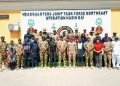
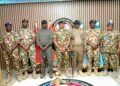
Ribadu expressed appreciation for U.S.–Nigeria military and security cooperation, particularly enhanced intelligence sharing and coordination with U.S. Africa Command, which he said has significantly strengthened Nigeria’s counter-terrorism posture across multiple theatres of operation. He outlined recent operational gains under Operation HADIN KAI in the North East and Operation FASAN YAMMA across the North West and North Central, citing the neutralisation of hundreds of terrorists, destruction of logistics hubs and the interception of key facilitators sustaining violent networks.
He further welcomed U.S. commitments toward the delivery of defence equipment, including drones, helicopters, operational platforms and critical spare parts, stressing that the cooperation has respected Nigeria’s sovereignty while prioritising civilian protection and adherence to international humanitarian standards.
According to him, President Bola Ahmed Tinubu has taken decisive steps to confront insecurity nationwide, including declaring national security emergencies in high-risk areas, authorising intensified joint operations and directing sustained deployments to vulnerable communities. He disclosed that Nigeria is also expanding early-warning and rapid-response mechanisms, developing a national database on conflict-related casualties, and intensifying investigations and prosecutions connected to attacks on religious communities.
Reaffirming Nigeria’s plural identity, the National Security Adviser stressed that the protection of Christians, Muslims and adherents of other beliefs remains non-negotiable, noting that violence framed along religious lines is treated as a direct attack on the Nigerian state and its constitutional order.
Both delegations agreed that the partnership extends beyond immediate security concerns to encompass democratic resilience, the rule of law, regional stability and efforts to prevent extremist groups from exploiting social, economic and governance gaps. They expressed confidence that sustained dialogue, intelligence-driven operations and accountability measures would translate into improved security outcomes and lasting protection for all communities.
The meeting concluded with both sides committing to continued engagement and outcome-driven collaboration, reaffirming their shared resolve to confront insecurity, promote religious freedom and strengthen peace and stability in Nigeria.