

The Executive Secretary of the Agricultural Research Council of Nigeria (ARCN), Professor Abubakar Adamu Dabban, has called for bold investments in artificial intelligence, scientific innovation and agricultural research as critical drivers of agricultural transformation and food security across Sub-Saharan Africa.
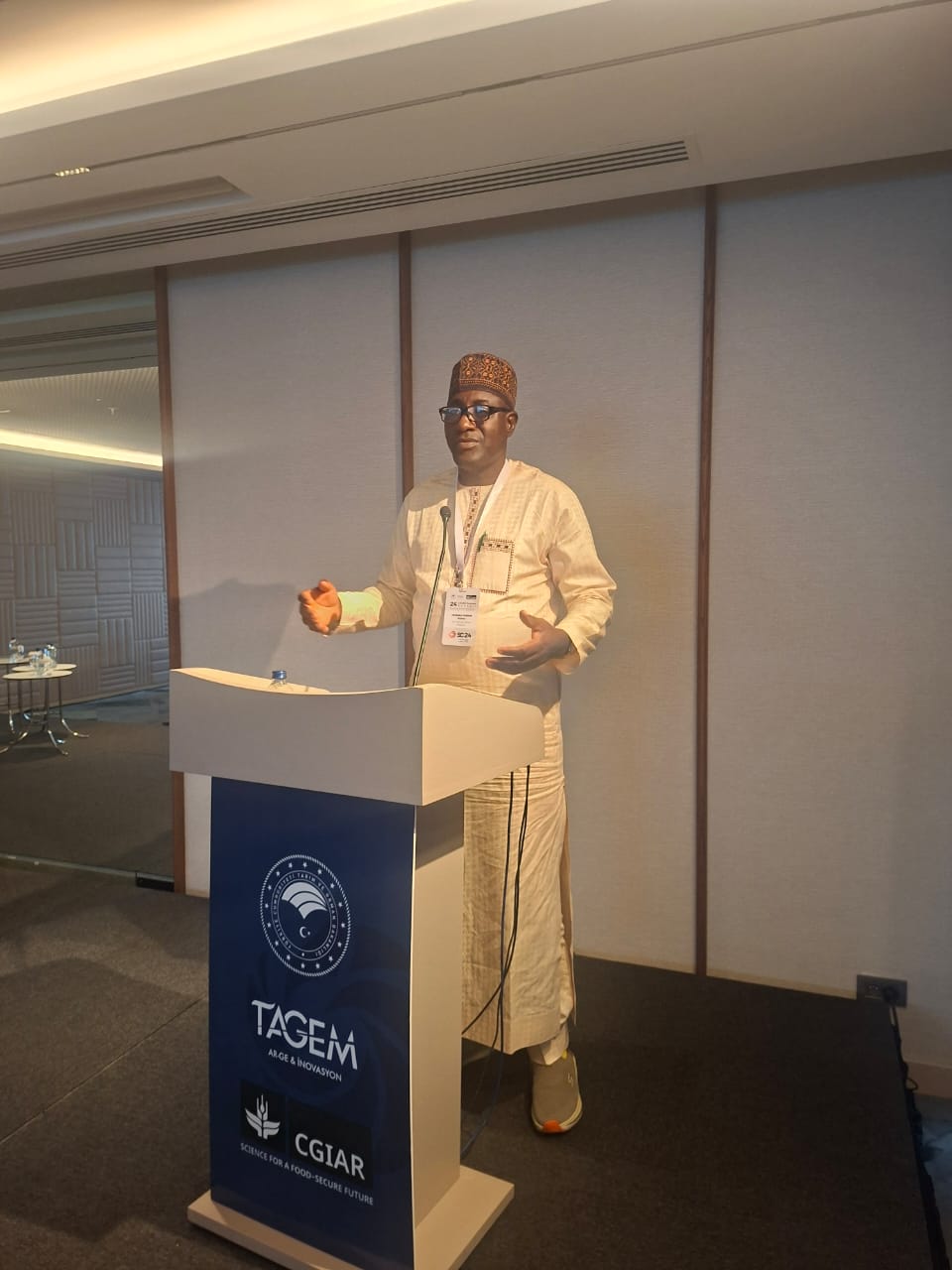
According to an official signed statement by the PRO to the Executive Secretary, ARCN, Ameen O. Khadijat, Dabban made the call while addressing delegates at the 24th Consultative Group on International Agricultural Research (CGIAR) System Council Meeting held in Antalya, Türkiye.
Speaking before development partners, researchers, policymakers and private-sector leaders, the ARCN Executive Secretary noted that Sub-Saharan Africa possesses more than 60 per cent of the world’s uncultivated arable land, a youthful population, rich biodiversity and enormous agricultural opportunities, yet continues to face persistent food insecurity, low productivity, inadequate infrastructure and climate-related challenges.
He stressed that the future of agriculture on the continent must be driven by knowledge, innovation and technology rather than traditional factors such as land availability and labour.
According to Dabban, artificial intelligence has the capacity to revolutionise agricultural production by improving weather forecasting, detecting crop diseases before outbreaks, optimising fertiliser and water use, enhancing livestock management, reducing post-harvest losses and strengthening market intelligence and agricultural extension services.
He urged governments and stakeholders across the region to invest in digital agricultural infrastructure, including rural broadband connectivity, satellite technologies, farm information systems, innovation hubs and digital advisory platforms capable of providing farmers with timely and actionable information.
The ARCN boss also advocated stronger support for agricultural research institutions through AI-powered breeding programmes, climate-smart crop improvement initiatives, genomic research, predictive analytics and big-data platforms that can accelerate innovation and increase food production.
Highlighting the importance of biodiversity conservation, Dabban described Africa’s genetic resources as strategic assets for future food security and climate resilience. He noted that artificial intelligence could significantly improve germplasm characterisation, breeding efficiency, genetic diversity analysis and conservation planning.
He further identified young people as central to Africa’s agricultural transformation agenda and called for the establishment of innovation funds, agritech incubators, scholarships in artificial intelligence and data science, agritech training programmes and venture capital initiatives targeted at youth-led enterprises.
“The next agricultural revolution in Africa will be led by young innovators equipped with technology and entrepreneurial skills,” he said.
Dabban also emphasised the need for increased financing for agritech startups, climate-smart agriculture projects, AI-enabled agricultural solutions and smallholder farmers, stressing that innovation cannot thrive without sustainable funding mechanisms.
On climate change adaptation, he said technologies such as early warning systems, drought forecasting tools, precision irrigation, climate-risk mapping, carbon monitoring systems and digital insurance products could help farmers improve resilience and adapt to changing environmental conditions.
In a separate address during the meeting themed, “Transforming Sub-Saharan Africa’s Agricultural Research and Innovation Ecosystem for Maximum Impact,” the ARCN Executive Secretary outlined seven strategic pillars for agricultural transformation. These include increased investment in agricultural research and development, adoption of artificial intelligence and digital agriculture, strengthening genebanks, empowering youth and women, promoting partnerships, scaling climate-smart agriculture and ensuring research outcomes translate into measurable development impacts.
He called on African governments to allocate at least one per cent of agricultural Gross Domestic Product (GDP) to research and innovation while advocating stronger collaboration among CGIAR centres, national research institutions, universities, governments, farmers’ organisations and the private sector.
Dabban also urged CGIAR to place Africa at the centre of its 2025–2030 Science and Innovation Portfolio through increased support for African-led research and wider deployment of proven agricultural technologies across the continent.
“The future of global food security will be significantly shaped by what happens in Africa over the next decade. The question is whether we will invest boldly enough in science, innovation, technology and partnerships to make it happen,” he stated.
He called on governments, development partners and stakeholders to work collectively toward building resilient, productive and sustainable food systems capable of transforming Africa’s vast agricultural potential into broad-based prosperity while making a significant contribution to global food security.