

The National Emergency Management Agency (NEMA) has taken the lead in strengthening Nigeria’s flood preparedness by rallying key government agencies and development partners to build a more robust, coordinated and people-centred national early warning system.
The move came as NEMA hosted a high-level inter-agency meeting ahead of the national launch of the Early Warnings for All (EW4All) Initiative, a global programme aimed at ensuring timely and effective warnings reach vulnerable populations before disasters strike.
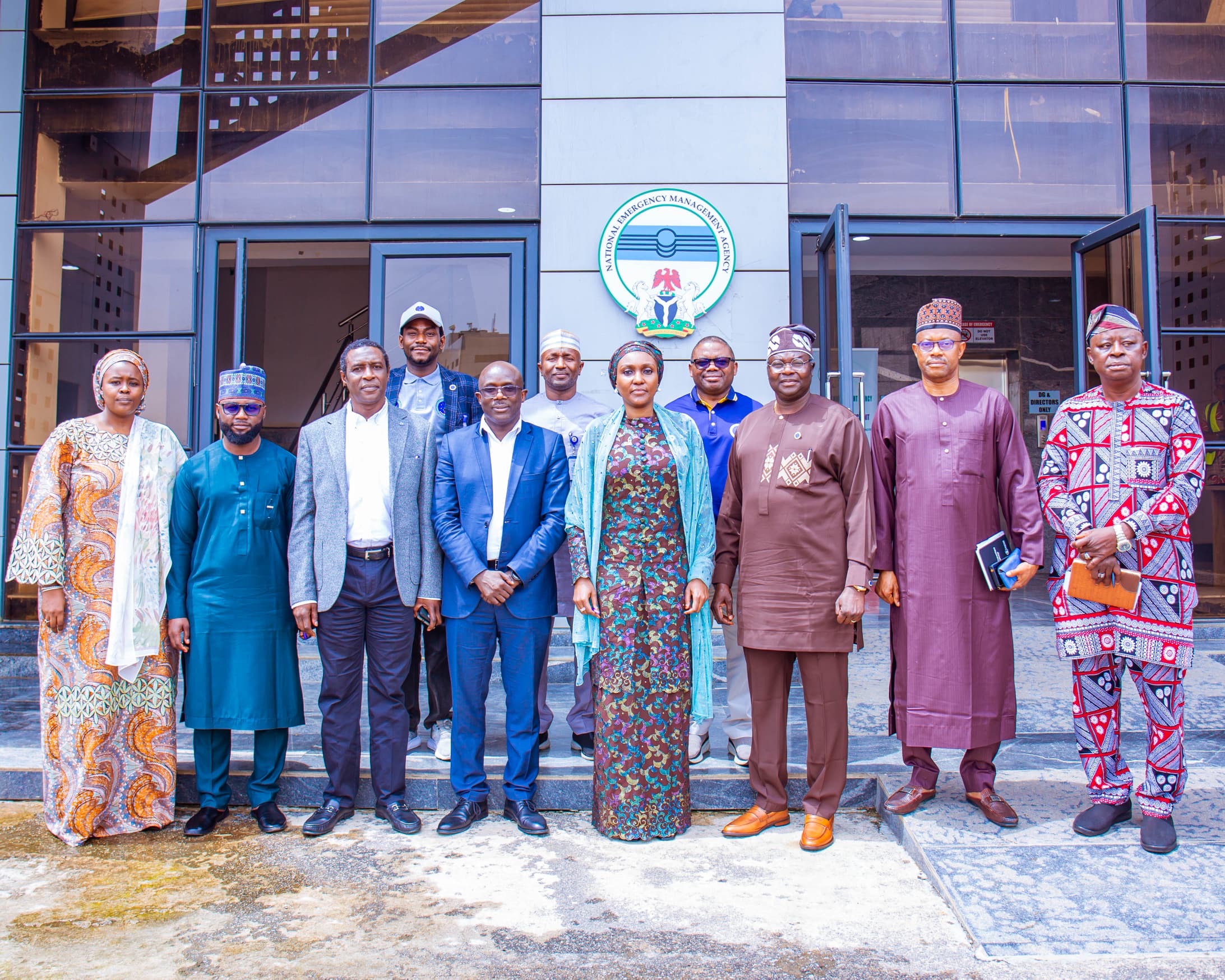
According to an official statement, the meeting brought together the Director General of NEMA, Mrs. Zubaida Umar; Executive Vice Chairman and Chief Executive Officer of the Nigerian Communications Commission (NCC), Dr. Aminu Maida; Director General of the Nigeria Hydrological Services Agency (NIHSA), Alhaji Ahmed Ibrahim Mohammed; Director General of the National Space Research and Development Agency (NASRDA), Dr. Matthew Adepoju; Director General of the Nigerian Meteorological Agency (NiMet), Prof. Charles Anosike; and the representative of the United Nations Office for Disaster Risk Reduction (UNDRR), Mr. Muliro Mashauri.
The gathering focused on strengthening collaboration among critical institutions responsible for weather forecasting, hydrological monitoring, communications, space technology and emergency response to ensure Nigeria develops a seamless early warning system capable of reducing the devastating impact of floods and other climate-related disasters.
Addressing participants, the Director General of NEMA, Mrs. Zubaida Umar, described the meeting as a significant milestone in Nigeria’s efforts to reinforce its disaster risk management architecture through stronger institutional cooperation.
She noted that the United Nations Secretary-General has described the Early Warnings for All Initiative as a “survival agenda for humanity,” stressing that Nigeria must equally treat it as a national security and development priority.
Mrs. Umar added that the initiative supports Nigeria’s commitments under the Sendai Framework for Disaster Risk Reduction, the Sustainable Development Goals and the Paris Agreement on climate adaptation, while also advancing the Renewed Hope Agenda of President Bola Ahmed Tinubu, GCFR, President and Commander-in-Chief of the Armed Forces, Federal Republic of Nigeria, by protecting lives, preserving development gains and building resilient communities.
The Executive Vice Chairman and Chief Executive Officer of NCC, Dr. Aminu Maida, emphasised that an effective early warning system depends on reliable communication channels that can deliver timely information to communities at risk.
He reaffirmed the Commission’s commitment to supporting the initiative, noting that every institution represented at the meeting has a vital role in safeguarding Nigerians against disasters and other emergencies.
Similarly, the Director General of NASRDA, Dr. Matthew Adepoju, pledged the agency’s support through the deployment of satellite technology, technical expertise and geospatial data to strengthen Nigeria’s disaster monitoring and early warning capabilities.
The Director General of NIHSA, Alhaji Ahmed Ibrahim Mohammed, stressed that accurate hydrological forecasts enable governments and communities to take preventive measures before disasters occur, thereby minimising damage to lives, livelihoods and infrastructure.
He commended NEMA for providing a platform that fosters collaboration among key stakeholders and reaffirmed NIHSA’s commitment to supplying the hydrological data and technical support required for the successful implementation of the initiative.
Also speaking, the Director General of NiMet, Prof. Charles Anosike, reiterated the agency’s readiness to provide timely and actionable weather and climate information to support disaster preparedness and response efforts across the country.
On behalf of the United Nations Office for Disaster Risk Reduction, Mr. Muliro Mashauri applauded NEMA and the heads of participating agencies for demonstrating strong leadership and commitment to the Early Warnings for All Initiative.
He described the meeting as an outstanding example of inter-agency cooperation and observed that such collaboration among key national institutions on disaster risk reduction is particularly encouraging within the West African region.
The meeting ended with participating institutions reaffirming their collective commitment to building an effective, inclusive and people-centred national early warning system capable of supporting anticipatory action, improving disaster preparedness and reducing the impact of floods and other hazards across Nigeria.