

By Nkechi Eze
The Federal Government of Nigeria has called for stronger trust-based international cooperation to effectively confront the evolving and increasingly complex threat of global terrorism.
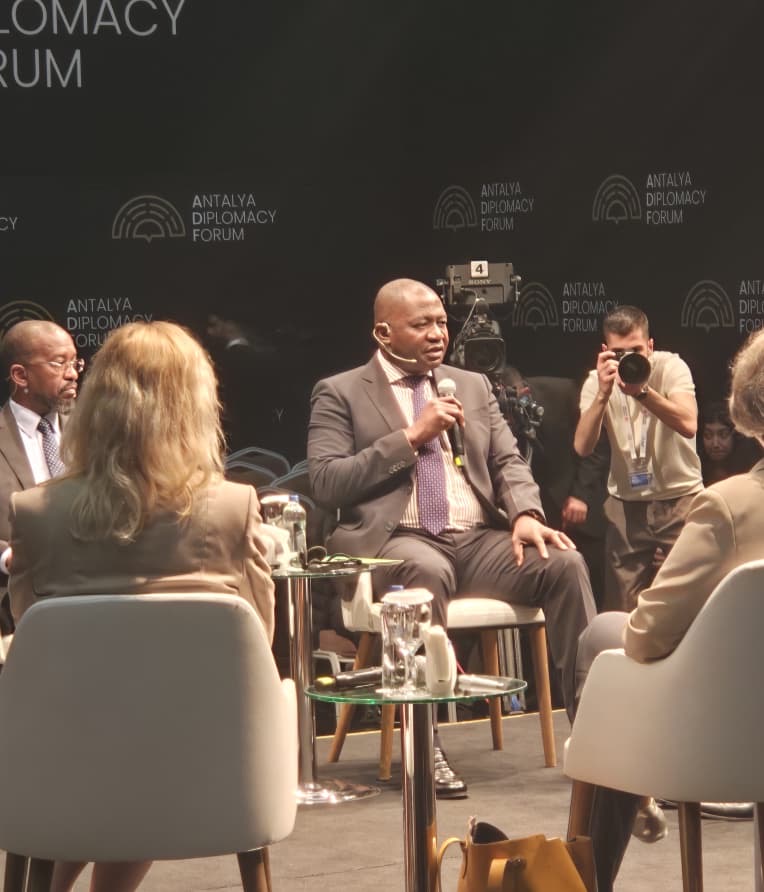
The call was made by Nigeria’s Minister of Defence, General Christopher Gwabin Musa (Rtd), during a panel session titled “Countering Terrorism: International Cooperation Reclaimed” at the Antalya Diplomacy Forum 2026 held in the Republic of Türkiye.
In an official statement issued by the Chief Information Officer, Queeneth Iheoma-Hart, the minister stressed that the growing complexity of terrorism requires deeper global collaboration built on trust, shared responsibility, and transparency.
Representing the Federal Republic of Nigeria at the high-level forum, General Musa joined global leaders, policymakers, and security experts to examine the changing nature of terrorism and explore ways to strengthen cooperative international responses.
According to him, modern terrorism has become increasingly adaptive, complex, and transnational, driven by decentralised networks, emerging technologies, and illicit financial systems that enable extremist groups to operate across borders.
He warned that the growing convergence between terrorism, organised crime, and banditry—particularly across fragile regions such as the Sahel—poses a serious threat to international peace and security and requires urgent coordinated global action.
“No country, regardless of strength or capacity, can confront terrorism alone. Collective security must guide our response,” Musa said.
The minister noted that although capacity-building remains important in counterterrorism efforts, one of the biggest obstacles to effective international collaboration is the lack of confidence in how intelligence is shared and utilised among partner nations.
Highlighting Nigeria’s efforts in combating terrorism, Musa said the country has recorded measurable progress through sustained military operations, improved intelligence architecture, and strengthened regional security cooperation.
He explained that Nigeria continues to play a leading role in key regional security platforms, including the Multinational Joint Task Force, the Regional Intelligence Fusion Unit, and the Committee of Intelligence and Security Services of Africa.
The minister further stated that Nigeria’s counterterrorism strategy goes beyond military action, incorporating governance reforms, development initiatives, and community engagement programmes aimed at addressing the root causes of insecurity while promoting sustainable peace.
Musa emphasised that effective counterterrorism requires transparent, reciprocal, and accountable intelligence-sharing frameworks capable of building confidence among global partners.
He also cautioned that terrorist groups are increasingly exploiting digital platforms, encrypted communications, and hybrid criminal networks, urging the international community to respond with faster technological adaptation, stronger intelligence integration, and deeper strategic collaboration.
Reaffirming Nigeria’s commitment to global efforts against terrorism, the minister expressed confidence that stronger cooperation among nations would ultimately defeat the threat.
“Through unity of purpose, shared responsibility, and sustained collaboration, the international community can overcome the challenges posed by terrorism and build a more secure and stable world,” he said.
Musa also expressed appreciation to President Bola Ahmed Tinubu for his continued support and commitment to strengthening Nigeria’s national security architecture.