

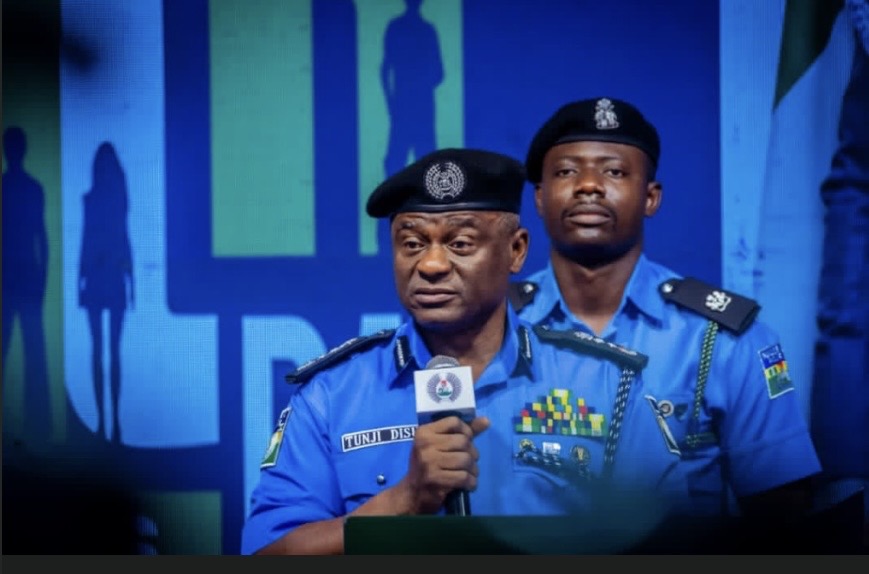
The Nigeria Police Force has clarified that Inspector-General of Police, Olatunji Disu, does not oppose Nigerians recording police officers while they perform their duties in public.
The clarification was made by the Force New Media Officer, Aliyu Giwa, in a series of posts on X on Saturday, following public reactions to the IGP’s recent comments on citizens filming police officers.
Giwa explained that Disu’s concern was not about preventing legitimate public scrutiny, but the improper use of recordings, particularly when encounters between police officers and citizens are deliberately turned into social media entertainment.
According to him, responsible recording could promote accountability, provide evidence of misconduct and protect police officers against false allegations.
He stressed that Nigerians have legitimate rights to document police activities in public, but urged citizens to exercise such rights responsibly by avoiding actions that could provoke, ridicule or unnecessarily invade the privacy of police officers.
The Force also disclosed that the use of body-worn cameras was being considered as part of ongoing efforts to strengthen transparency and accountability within the police.
Giwa said the technology could benefit both law enforcement and members of the public by providing an objective record of encounters between police officers and citizens.
He urged Nigerians not to frame the issue as a confrontation between the police and the public, but as a need to strike an appropriate balance between accountability, privacy and the professional discharge of police duties.
The clarification followed criticism of remarks made by Disu during a recent meeting with the leadership of the Nigerian Bar Association at the Force Headquarters in Abuja.
The IGP had described the use of police officers as subjects of social media skits as demoralising, while acknowledging that citizens were entitled to record officers carrying out their duties in public.
His comments subsequently generated reactions from lawyers, rights advocates and members of the public, with some reiterating that citizens have the right to document police conduct in public spaces.
The development also comes against the backdrop of a March 17 judgment of the Federal High Court in Warri, Delta State, which affirmed the right of Nigerians to record police officers while performing their duties in public.
Giwa said the engagement between the police leadership and the NBA demonstrated that disagreements could be addressed through constructive dialogue.
He maintained that technology should be deployed to strengthen accountability rather than create unnecessary confrontation, stressing that both the police and citizens have a shared responsibility to promote professionalism, justice and a safer Nigeria.