

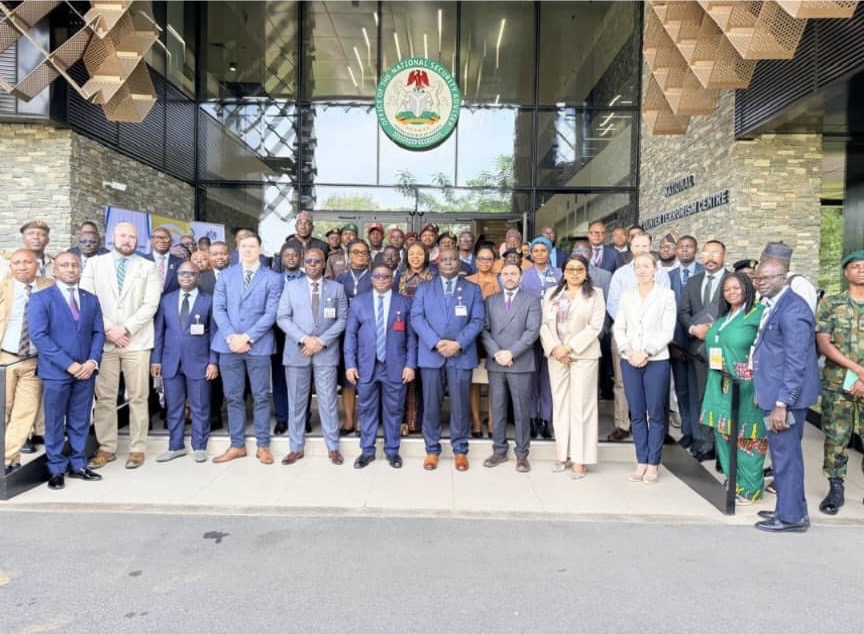
Nigeria has taken another significant step towards strengthening its counterterrorism architecture with the commencement of specialised incident command and intelligence analysis courses jointly organised by the National Counter Terrorism Centre (NCTC), Office of the National Security Adviser (ONSA), and the British High Commission to enhance national preparedness against terrorism and other complex security threats.
The combined opening ceremony of the Gold, Silver and Bronze Incident Commanders’ Courses and the Advanced Intelligence Analysis Course was held on Monday, 29 June 2026, at the National Counter Terrorism Centre in Abuja.
Speaking at the event on behalf of the National Coordinator of the NCTC, Major General Adamu Laka, the Director of Intelligence, NCTC, Brigadier General Peter Gbor, said the programmes underscore Nigeria’s commitment to building a resilient and coordinated national security framework capable of effectively responding to emergencies, major incidents and evolving terrorist threats.
He explained that the Incident Commanders’ Courses are designed to strengthen strategic, operational and tactical leadership, improve decision-making during crises, foster multi-agency collaboration and enhance participants’ proficiency in incident management.
According to Brigadier General Gbor, participants will gain a comprehensive understanding of strategic, operational and tactical concepts applicable to emergencies and major incidents, while mastering crisis management techniques that will contribute to strengthening Nigeria’s emergency preparedness, inter-agency coordination and national incident management framework.
He added that the Advanced Intelligence Analysis Course will equip participants with modern intelligence collection, fusion and analytical methodologies required to effectively support security operations against terrorism and other emerging threats.
Describing the programme as timely, Brigadier General Gbor noted that the knowledge and practical skills acquired would enable participants to contribute more effectively to enhancing Nigeria’s national security, peace, stability and socio-economic development.
He commended the British High Commission for its continued partnership with the NCTC, particularly in providing experienced resource persons and technical support for the specialised training, while also appreciating the Centre’s organisers for their commitment to the successful conduct of the courses.
The Director of Intelligence disclosed that the training will run for 10 days and feature intensive lectures, practical exercises and interactive sessions, after which participants will receive course completion certificates. He urged all participants to actively engage throughout the programme to maximise the benefits of the training.
Also speaking at the ceremony, Anthony Francis of the Joint Counter Terrorism Training and Advisory Team (JCTTAT), who represented the Regional Coordinator of the British High Commission, Ian Tyler, reaffirmed the United Kingdom’s commitment to supporting Nigeria’s efforts to build a stronger and more effective national counterterrorism capability.
Francis said the four programmes, comprising the Intelligence Analysis Course and the strategic, operational and tactical Incident Command Courses, were developed following extensive consultations with the NCTC and frontline responders to ensure personnel possess the skills required to effectively coordinate responses and save lives during major incidents.
He observed that the security landscape across the Sahel continues to evolve, with terrorism, organised crime and violent extremism becoming increasingly complex and transnational, making effective command structures and trusted international partnerships more critical than ever.
He noted that the longstanding strategic partnership between Nigeria and the United Kingdom was recently reinforced during President Bola Ahmed Tinubu’s State Visit to the United Kingdom in March 2026, where both countries reaffirmed their commitment to expanding cooperation in trade, investment and security.
According to Francis, the training team comprises highly experienced professionals with operational backgrounds in intelligence, policing, military operations and crisis management, including responses to major terrorist incidents in the United Kingdom.
He encouraged participants to take full advantage of both the instructors’ expertise and the wealth of operational experience within the classroom, stressing that collaboration and shared learning remain essential to developing stronger counterterrorism capabilities.
Francis added that the knowledge gained during the courses would directly enhance frontline operational effectiveness beyond Exercise RAPID RESPONSE scheduled for September by improving intelligence-led decision-making, command coordination and Nigeria’s overall preparedness to prevent, respond to and recover from terrorist incidents.