

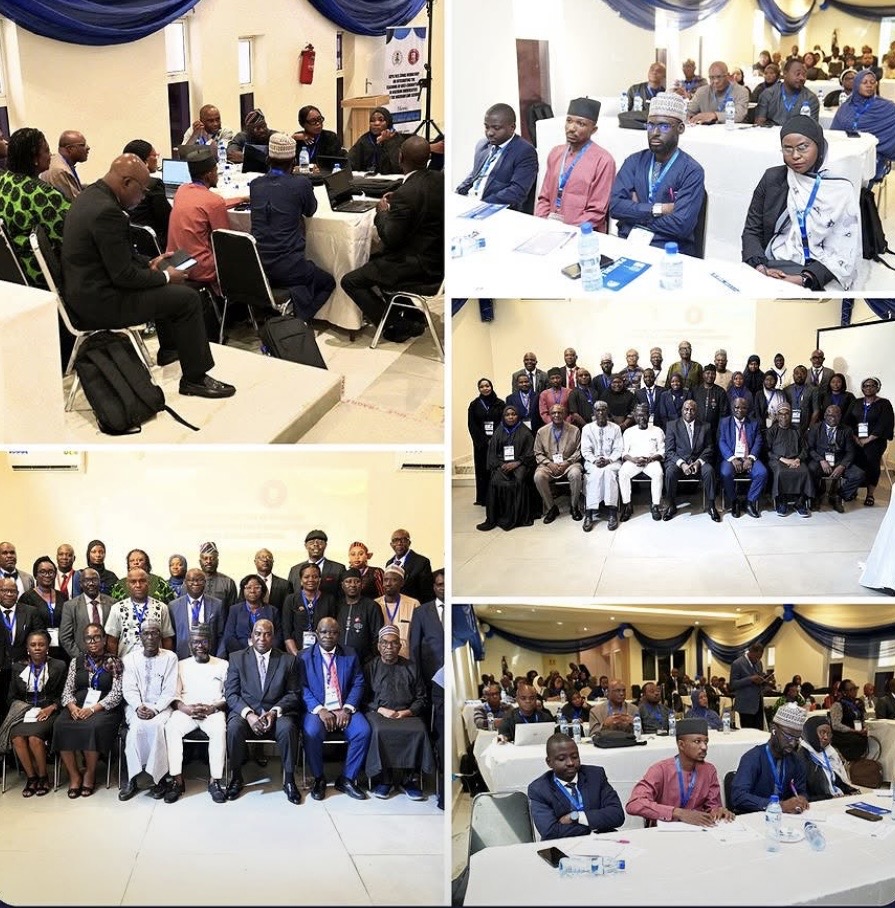
The Independent Corrupt Practices and Other Related Offences Commission (ICPC) has intensified efforts to institutionalise anti-corruption education in Nigeria’s legal education system with a follow-up curriculum development workshop held in Kano.
According to an official signed statement by the Head, Media and Public Communications of the ICPC, Mr. J. Okor Odey, the workshop forms part of the Commission’s ongoing initiative to develop an anti-corruption curriculum for adoption by the Nigerian Law School.
Declaring the workshop open, former Director-General of the Nigerian Law School, Professor Isa Hayatu Chiroma, SAN, described the engagement as a significant milestone in the Commission’s broader strategy to secure the support of Nigeria’s education sector in the fight against corruption.
Professor Chiroma said the initiative highlights the importance of introducing anti-corruption values at the foundational stage of legal education, stressing that future legal practitioners must understand from the outset that combating corruption is not only a legal obligation but also a civic and moral responsibility.
He explained that the workshop builds on an earlier engagement held in Abuja and is expected to produce a draft curriculum that could eventually be adopted by the Nigerian Law School.
“The objective is to draft a curriculum that will be adopted by the Nigerian Law School,” he stated.
Professor Chiroma disclosed that deliberations during the Abuja workshop identified two possible approaches for integrating anti-corruption studies into legal education. These include introducing a stand-alone anti-corruption course or incorporating anti-corruption themes into existing courses within the Nigerian Law School curriculum.
He assured participants that the curriculum development process would be rigorous, transparent and subjected to detailed scrutiny by a committee of experts to ensure that the final document meets the highest standards of legal education.
The former Director-General also commended the quality of resource persons participating in the workshop, expressing confidence that their expertise would produce a credible, practical and implementable curriculum.
The workshop brought together legal educators, curriculum experts and institutional stakeholders to advance the initiative aimed at embedding anti-corruption values into Nigeria’s legal education framework.
Presenting a paper titled “Law Educators, Curriculum Development and Review: Emerging Challenges and the Way Forward,” Professor Garba Saad of Bayero University, Kano, described curriculum development as a continuous process that must respond to evolving societal realities.
He said anti-corruption education could either be introduced as a dedicated course or integrated into existing subjects such as Criminal Law and the Law of Evidence. He added that any proposed curriculum should clearly define the knowledge, competencies and practical skills expected of future legal practitioners.
Professor Saad further emphasised that effective curriculum development requires broad stakeholder participation through needs assessment, consultations, implementation, monitoring and evaluation to ensure relevance and sustainability.
Also speaking at the workshop, Deputy Director and Head of the Open and Distance Learning Division of the National Universities Commission (NUC), Dr. Nte Bisong, highlighted opportunities provided by the Core Curriculum and Minimum Academic Standards (CCMAS) framework for integrating anti-corruption principles into legal education.
Dr. Bisong explained that the objective is to produce lawyers who are intellectually competent, ethically grounded and committed to promoting integrity and accountability.
He traced the evolution of curriculum development in Nigeria and outlined key reforms introduced under the CCMAS framework, including the 70:30 curriculum-sharing formula, which allows the NUC to develop 70 per cent of programme content while universities design the remaining 30 per cent to reflect their institutional strengths.
According to him, the CCMAS framework places strong emphasis on competency-based learning, entrepreneurship, employability, information and communication technology, and the acquisition of 21st-century skills to produce globally competitive graduates.
Dr. Bisong also revealed that the curriculum was developed using the triple-helix model, bringing together academia, industry, professional bodies and government institutions to ensure graduates possess the knowledge, skills and behavioural attributes required by employers and society.
Participants at the workshop reaffirmed that integrating anti-corruption education into legal training represents a long-term investment in strengthening ethical standards within the legal profession and promoting systemic change.
They agreed that the immediate objective of the Kano workshop is to produce a substantive draft anti-corruption curriculum for institutional review and possible adoption by the Nigerian Law School.
A committee is expected to further review and refine the draft curriculum, while additional stakeholder engagements will be held to build consensus and facilitate its eventual adoption.
The Kano workshop is the second in a series of engagements coordinated by the ICPC to develop an anti-corruption curriculum for Nigeria’s legal education sector. While the Abuja workshop laid the conceptual foundation for the initiative, the Kano meeting focused on developing substantive curriculum content and strengthening stakeholder collaboration.
The Commission maintained that sustainable anti-corruption outcomes require not only effective enforcement but also deliberate efforts to transform professional culture by equipping future lawyers with the ethical values required to serve as custodians of justice.