

By Nkechi Eze
President Bola Ahmed Tinubu has directed Ministries, Departments and Agencies (MDAs) to fully embrace technology-driven governance, announcing that 38 ministries and extra-ministerial departments have already transitioned to a secure paperless workflow system as part of ongoing civil service reforms.
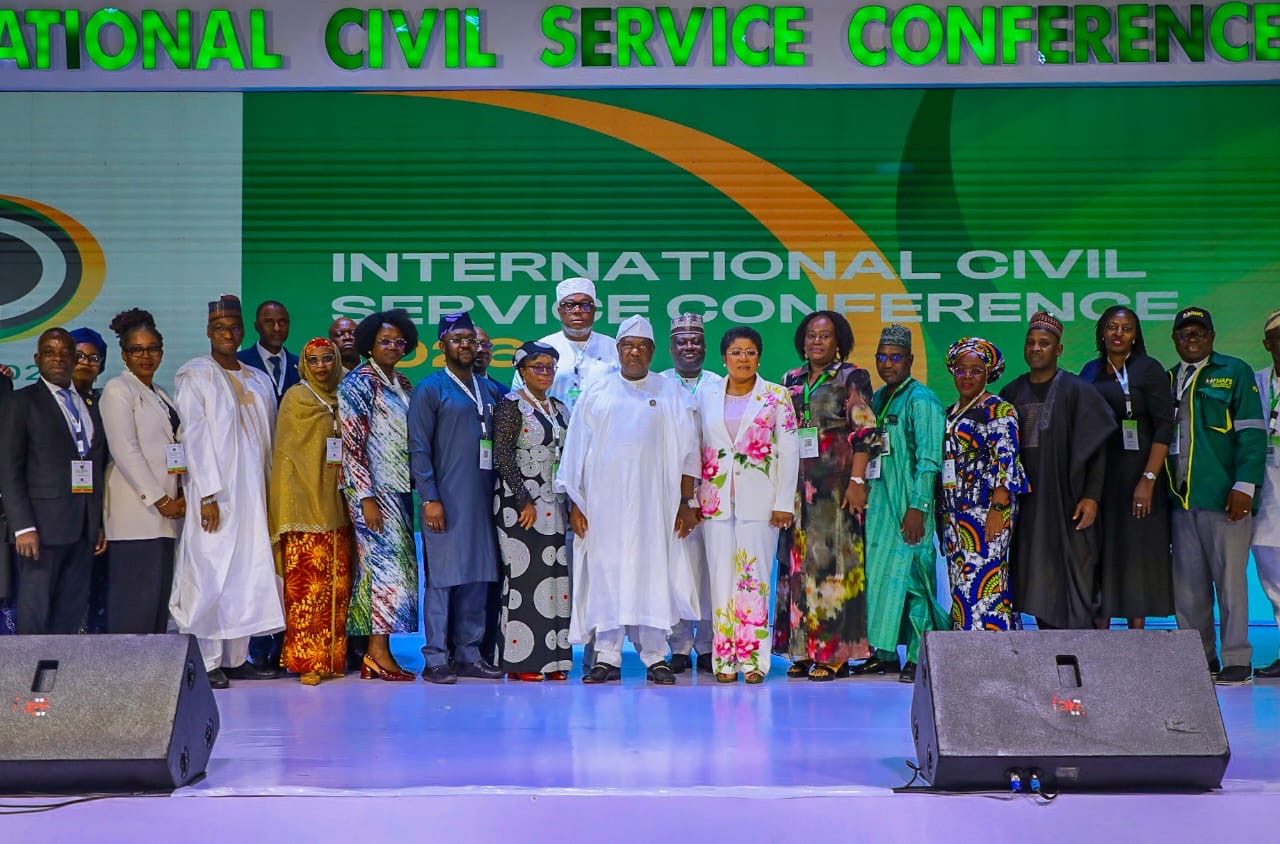
According to an official signed statement by the Special Adviser on Media and Publicity to the Secretary to the Government of the Federation, Yomi Odunuga, the President made the disclosure on Wednesday while declaring open the 2026 International Civil Service Conference in Abuja.
Represented by the Secretary to the Government of the Federation, Senator George Akume, CON, President Tinubu said the Federal Government was driving a major digital transformation within the civil service under the Renewed Hope Agenda, aimed at improving efficiency, transparency and service delivery.
The President stated that reforms initiated by his administration were already producing measurable results, noting that the civil service had moved “from aspiration to execution, and from execution to measurable impact.”
He explained that the deployment of end-to-end electronic workflow systems across 38 ministries and extra-ministerial departments reflects Nigeria’s determination to build a modern public service capable of supporting investment, innovation and inclusive economic growth.
“When we spoke of digitalisation in 2025, some may have considered it an ambition for the distant future. Today, with 38 Ministries and Extra-Ministerial Departments operating on a secure, paperless and end-to-end electronic workflow system, we are sending a clear message: Nigeria is building a public service that enables progress,” Tinubu stated.
The President directed all MDAs to deepen digital work processes and integrate technology into public service operations, insisting that government institutions must become more responsive and citizen-focused.
According to him, the era of manual inefficiency in governance must give way to a system driven by speed, transparency, data-based decision-making and accountability.
Tinubu also revealed that the ongoing Personnel Audit and Skills Gap Analysis approved by his administration was nearing completion, adding that the initiative was aimed at identifying competency gaps and repositioning public servants for modern governance demands.
He linked the reforms to the broader digital infrastructure agenda of the Federal Government, including Project BRIDGE — Building Resilient Digital Infrastructure for Growth — which he recently promoted at the Africa CEO Forum in Kigali.
The President stated that Nigeria was opening its digital infrastructure ecosystem to investors and development partners in a bid to strengthen innovation, connectivity, employment generation and public sector efficiency.
Tinubu further commended the Head of the Civil Service of the Federation, Didi Esther Walson-Jack, for driving reforms under the Federal Civil Service Strategy and Implementation Plan 2021–2025.
He particularly praised the integration of innovative tools such as Service-Wise GPT into public service operations, describing it as evidence of what disciplined leadership and institutional commitment could achieve.
The President urged participants at the conference to use the platform as a catalyst for deeper governance reforms and focus on making institutional changes sustainable and irreversible across the public sector.