

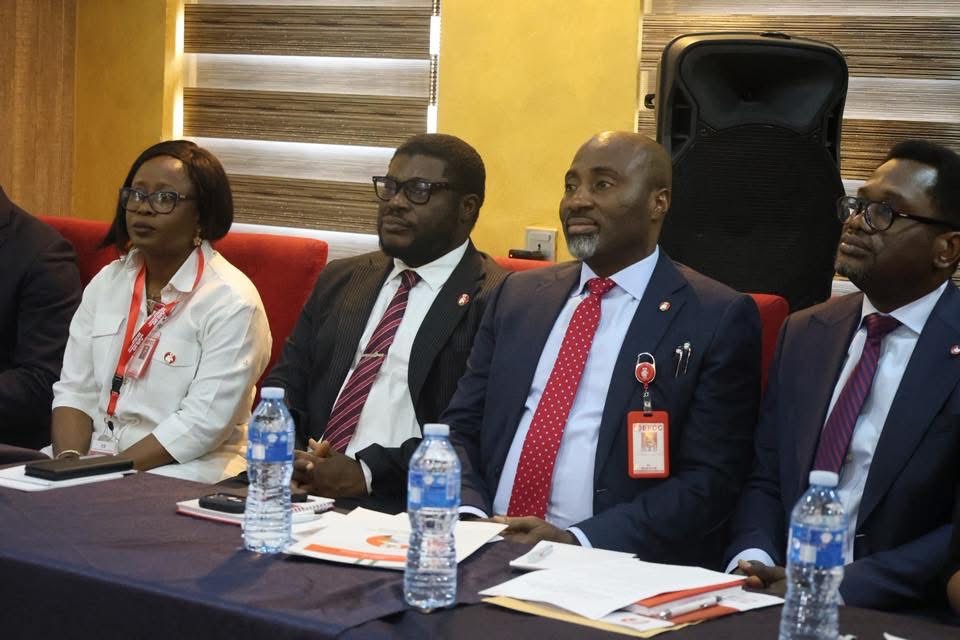
By Nkechi Eze
The Chairman of the Economic and Financial Crimes Commission (EFCC), Ola Olukoyede, has cautioned Non-Profit Organisations (NPOs) across Nigeria to guard against infiltration by terrorist networks seeking to exploit the sector for financing terrorism.
Olukoyede issued the warning during the launch of the National Terrorist Financing Risk Assessment (NTFRA) for the NPO sector held in Abuja on March 10, 2026. The initiative is aimed at strengthening Nigeria’s safeguards against the misuse of charitable organisations for terrorism financing.
Speaking through his Chief of Staff, Michael Nzekwe, the EFCC chairman acknowledged the critical role NPOs play in Nigeria’s socio-economic development, particularly in providing humanitarian assistance, supporting vulnerable populations, promoting education and healthcare, and complementing government efforts in delivering social services.
He noted that the sector is globally recognised by the Financial Action Task Force (FATF) for its contributions but warned that without adequate safeguards, it could be susceptible to abuse by criminal and terrorist networks.
Olukoyede also commended the contributions of NPOs in helping Nigeria exit the FATF grey list in 2025, stressing the importance of protecting the integrity of the sector to maintain national security and public trust in legitimate charitable activities.
He explained that the National Terrorist Financing Risk Assessment for the NPO sector represents a significant step toward consolidating previous gains, adding that the assessment would provide evidence-based insights into the nature, scale and drivers of terrorism financing risks within the sector.
According to him, the outcome of the exercise will guide the development of risk-based regulatory and supervisory measures aimed at strengthening Nigeria’s Anti-Money Laundering and Counter-Financing of Terrorism framework.
Calling for collaboration from stakeholders, Olukoyede urged organisations in the sector to actively support the process through transparency and cooperation to ensure the assessment accurately reflects the realities of the sector.
Also speaking at the event, the Minister of Budget and Economic Planning, Abubakar Atiku Bagudu, commended the EFCC and the Special Control Unit Against Money Laundering (SCUML) for bringing together civil society organisations to strengthen the fight against money laundering and terrorist financing.
Bagudu emphasised the importance of collaboration and knowledge sharing among stakeholders, noting that strong partnerships between government and civil society are vital for enhancing financial transparency and accountability.
The Director of SCUML, Harry Erin, also expressed appreciation to stakeholders for their commitment to improving integrity and transparency within the NPO sector.
He explained that the new assessment would help Nigeria evaluate changes in the terrorism financing risk profile of the sector since the last evaluation in 2023 and refine the country’s risk-based supervisory approach in line with current realities.
Erin reaffirmed SCUML’s commitment to working closely with the NPO sector, government institutions and development partners to ensure that regulatory frameworks remain transparent, supportive and consistent with international best practices.
In his remarks, the Director of International Non-Governmental Organisations (INGOs), Nigeria Forum, Ndubisi Emeka Anyanwu, commended SCUML for initiating the review of the previous National Terrorist Financing Risk Assessment.
He described periodic reviews of national risk assessments as a global best practice that demonstrates institutional commitment to risk-based supervision and aligns Nigeria with international standards in combating terrorist financing.
Anyanwu further reaffirmed the Nigeria INGO Forum’s commitment to sustained collaboration with SCUML and the EFCC, noting that the forum, which coordinates 55 international NGOs operating in Nigeria, remains well positioned to serve as a bridge between regulators and the wider non-profit sector.