

By Nkechi Eze
Amid the evolving dynamics of modern warfare where military operations are often conducted in close proximity to civilian populations, the Nigerian Air Force has intensified efforts to strengthen responsible airpower employment through specialized training designed to prevent civilian casualties and enhance operational accountability.
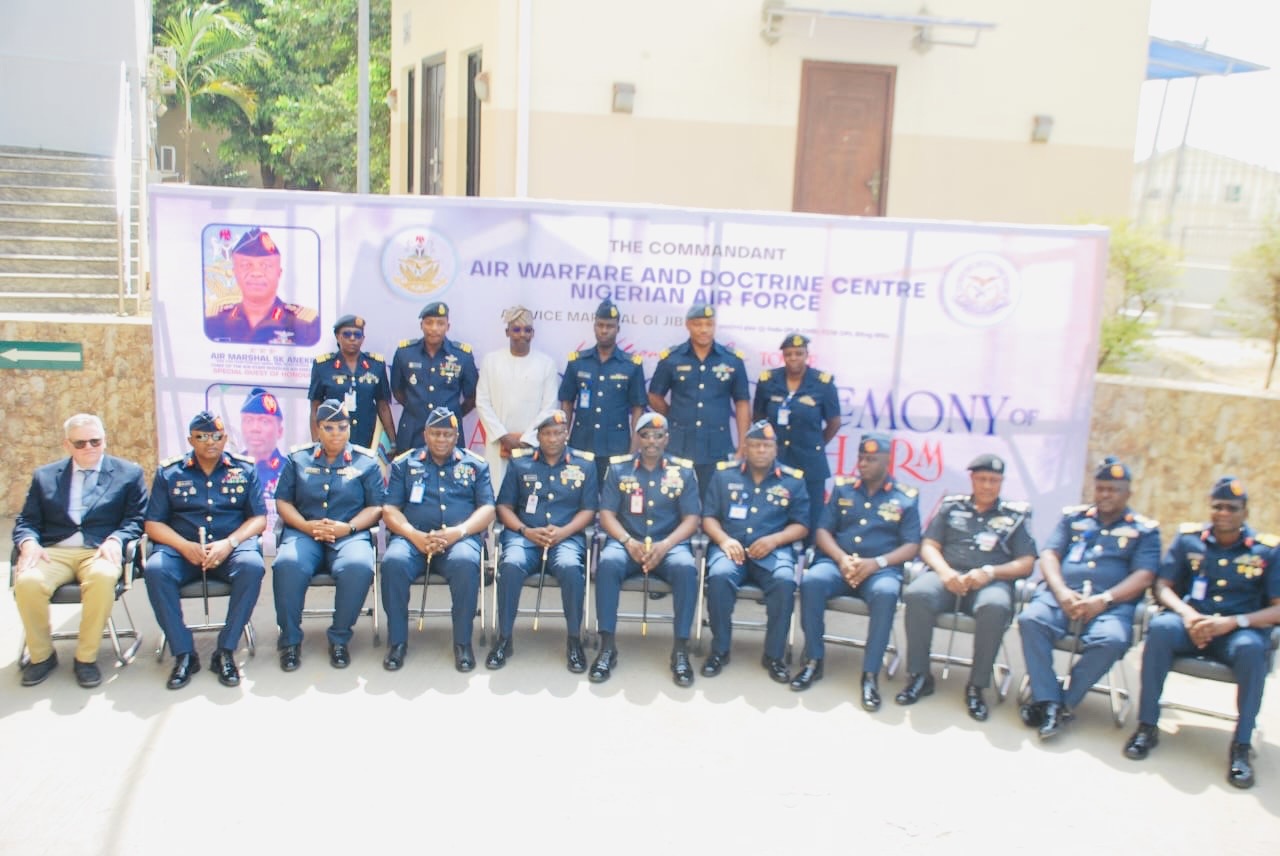
As part of this commitment, the Air Force on Monday inaugurated the Basic Civilian Harm Mitigation (CHM) Course 1 of 2026 at the Air Warfare and Doctrine Centre, marking another step in the service’s ongoing drive to align military operations with global best practices in the conduct of armed conflict.
The Chief of the Air Staff, Air Marshal Sunday Aneke, who was the Special Guest of Honour at the ceremony, was represented by Air Vice Marshal Ayo Bamidele.
Delivering the Chief of the Air Staff’s address, Air Vice Marshal Bamidele described the Civilian Harm Mitigation Basic Course as an important milestone in the professional evolution of the Nigerian Air Force, particularly as the service continues to operate in complex counterterrorism and counterinsurgency environments where civilians often live within or around conflict zones.
He noted that the changing nature of contemporary security challenges demands not only tactical superiority but also a high degree of discipline, restraint and strategic judgment in the application of airpower.
“The Civilian Harm Mitigation Basic Course marks an important milestone in the professional evolution of the Nigerian Air Force,” he said, explaining that the initiative aligns with the Chief of the Air Staff’s command philosophy of building a highly motivated, professional and mission-oriented force capable of delivering precise and decisive airpower effects in support of national security objectives.
According to him, the professionalism of any modern air force is measured not only by its ability to neutralize threats but also by its capacity to protect innocent lives during military operations.
He stressed that civilian harm mitigation lies at the heart of responsible airpower employment, noting that beyond its moral and legal implications, it also serves as a strategic enabler that strengthens operational legitimacy, enhances public confidence and supports the long-term success of military missions.
Bamidele disclosed that the Nigerian Air Force has directed the Air Warfare and Doctrine Centre to conduct Civilian Harm Mitigation courses on a quarterly basis as part of institutional efforts to embed these principles within operational planning and mission execution.
The training, he explained, will rely heavily on scenario-based learning designed to reflect real operational environments, while encouraging participants to apply critical thinking and sound decision-making during complex missions.
Earlier in his welcome remarks, the Commandant of the Air Warfare and Doctrine Centre, Air Vice Marshal Garba Ibrahim Jibia, said the course represents a deliberate step toward institutionalizing Civilian Harm Mitigation as a core operational competency within the Nigerian Air Force.
He observed that although airmen are trained to apply force professionally, the complexity of modern conflict situations requires structured doctrinal guidance and continuous training to ensure that operational decisions are made with a full understanding of their potential impact on civilian populations.
“The Basic CHM Course is designed to deepen understanding, sharpen decision-making and promote honest reflection on the challenges we face in operational theatres where civilians and combatants are often intermingled,” Jibia stated.
He added that the programme will also provide an opportunity for participants to examine operational experiences, extract valuable lessons and translate them into doctrine, tactics and procedures that will further strengthen the Nigerian Air Force’s operational effectiveness.
Jibia commended the Chief of the Air Staff for providing the strategic direction and institutional support required to sustain the programme, noting that the initiative will further enhance the Nigerian Air Force’s reputation as a professional and accountable fighting force.
Also speaking at the event, the Chief of Civil-Military Relations, Air Vice Marshal Edward Gabkwet, explained that the course forms part of the broader Civilian Harm Mitigation and Response Action Plan adopted by the Nigerian Air Force to improve transparency, accountability and operational professionalism.
According to him, the initiative reflects a broader cultural shift within the service towards a learning-driven and people-centred application of airpower.
“Civil-military relations at its core is about trust, trust between the armed forces and the people. Civilian Harm Mitigation sits squarely at the intersection of operational effectiveness and that trust,” he said.
Gabkwet further explained that the Nigerian Air Force has adopted a three-pillar approach to civilian harm mitigation which focuses on prevention through improved operational decision-making, institutional learning and accountability, as well as strengthening public trust through transparent engagement.
He emphasized that civilian harm mitigation should not be seen as a limitation to military effectiveness but rather as a strategic necessity that enhances mission legitimacy while safeguarding the lives and dignity of innocent civilians.
Participants drawn from various operational units of the Nigerian Air Force are expected to undergo intensive training sessions that will equip them with the knowledge and practical skills required to integrate civilian protection considerations into mission planning and execution.
The inauguration of the course underscores the Nigerian Air Force’s determination to balance decisive military action with the responsibility of protecting civilian lives while defending Nigeria’s sovereignty and territorial integrity.