


By Nkechi Eze
The Executive Chairman of the Economic and Financial Crimes Commission (EFCC), Ola Olukoyede, has called on young Nigerians to take an active role in the fight against corruption, stressing that the nation’s future depends largely on the commitment of its youth to integrity, transparency and accountability.
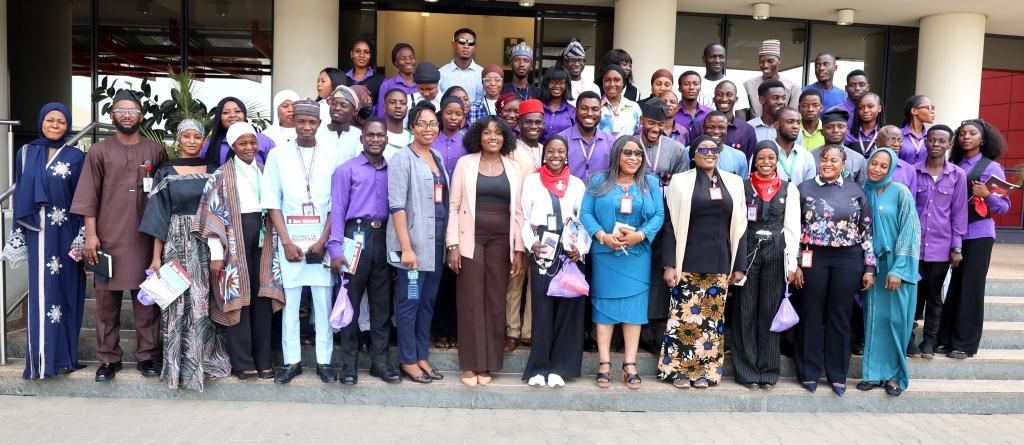
Olukoyede gave the charge when students of Federal Polytechnic Nasarawa visited the Commission’s Corporate Headquarters in Jabi, Abuja, on a study tour.
In an official signed statement, the Commission’s spokesperson, Dele Oyewale, disclosed that the EFCC boss underscored the strategic role of young people in shaping the country’s destiny and urged them to align with the Commission’s anti-corruption drive.
Represented by Deputy Commander of the EFCC, DCE Nwanyinma Okeanu, Olukoyede encouraged the students to contribute meaningfully to national development by upholding ethical standards and resisting negative influences. He warned that any country whose youth population is deeply involved in fraud and financial crimes cannot secure a stable and prosperous future.
He further cautioned against cybercrime and other fraudulent practices, noting that the short-term gains associated with such activities often result in severe long-term consequences, including imprisonment and lasting reputational damage. He urged the students to remain focused on their studies and serve as good ambassadors of their families, institutions and communities.
Also speaking, the Head of the Enlightenment and Re-Orientation Unit of the Commission, Assistant Commander of the EFCC, ACE II Aisha Mohammed, enlightened the students on the Commission’s tripartite mandate of prevention, investigation and prosecution of economic and financial crimes. She explained that the EFCC has strengthened its preventive strategies through the establishment of Integrity Clubs and Zero Tolerance Clubs in educational institutions across the country, as well as sustained collaboration with key stakeholders.
Mohammed advised the students to cultivate contentment and avoid the pressure to live beyond their means, stressing that ethical discipline among the youth is essential for building a corruption-free society.
In a separate presentation on cybersecurity, Inspector of the EFCC, Kayode Eniola, educated the students on common forms of cybercrime, including phishing, hacking and online romance scams. She explained that cybercrime involves criminal activities perpetrated through digital communication tools and internet-enabled platforms, often resulting in financial losses, privacy breaches and reputational harm for victims. She encouraged the students to adopt preventive measures such as using strong passwords, updating software regularly, avoiding suspicious links and logging out of shared devices after use.
The visit featured an interactive session during which students asked questions about the Commission’s operations, as well as a quiz competition to assess their understanding of the lectures. Two students emerged winners and were presented with souvenirs.
In her closing remarks, Chioma Obasi, a student of the Polytechnic, expressed appreciation to the EFCC for the warm reception and the knowledge gained during the visit, describing the engagement as enlightening and impactful while noting that it further strengthened the bond between her institution and the Commission.