

By Nkechi Eze
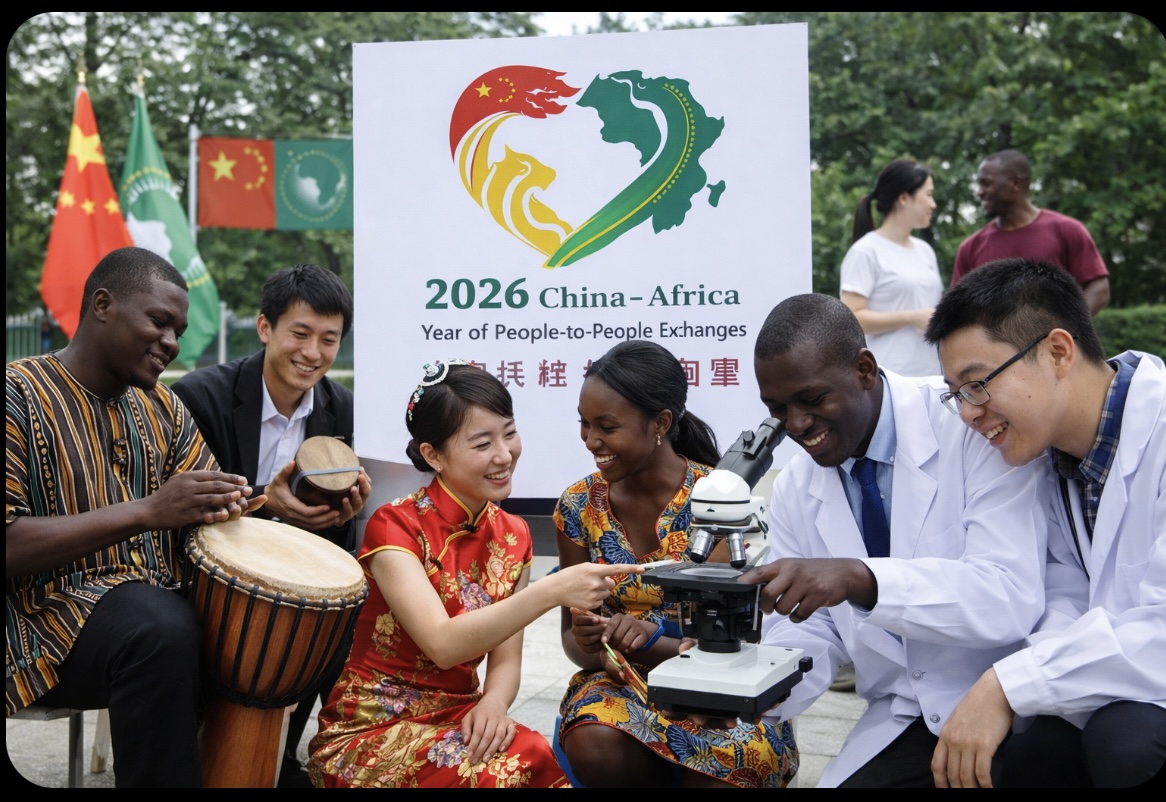
Beyond summits, treaties and trade statistics, the true strength of international partnerships is often measured in human connections. For Africa and China, the expanding framework of people-to-people exchanges represents one of the most enduring pillars of their relationship, one that reaches into classrooms, communities, creative spaces and everyday lives. As both sides prepare to jointly host nearly 600 cultural and people-centred activities under the 2026 China–Africa Year of People-to-People Exchanges, Africa stands to gain profoundly from a partnership increasingly defined by shared experience, mutual learning and collective aspiration.
At its core, people-to-people exchange places Africans not just as beneficiaries of cooperation, but as active participants in shaping a shared future with China. Through cultural exchanges, educational partnerships, youth programmes and professional collaborations, Africa gains access to platforms that build human capital, amplify African voices and strengthen confidence in African identity within a global setting.
One of the most tangible benefits for Africa lies in education and skills development. Over the years, China has opened its universities, research institutes and technical training centres to thousands of African students and professionals. These exchanges equip young Africans with practical skills in science, technology, engineering, medicine, agriculture and governance—skills directly aligned with Africa’s development priorities. Beyond academic knowledge, participants return with global exposure, cross-cultural competence and networks that position them as bridges between Africa and the wider world.
Cultural exchange is another powerful gain. African art, music, film, fashion and heritage are increasingly showcased in China, while Chinese culture finds resonance across African cities. This two-way flow corrects long-standing stereotypes, replaces distance with familiarity, and allows Africans to tell their own stories on global platforms. In doing so, Africa’s rich civilisations are not diluted but elevated, contributing to a deeper global appreciation of the continent’s diversity and creativity.
Youth engagement stands out as a defining strength of the people-to-people agenda. By prioritising youth exchanges, internships, innovation forums and volunteer programmes, China is investing directly in Africa’s future leaders. These young Africans gain exposure to China’s development experience, poverty alleviation strategies, urban planning models and technological innovation. More importantly, they learn that modernization can take multiple paths, an empowering lesson for a continent charting its own development trajectory.
Governance and development experience-sharing further strengthens Africa’s gains. Through dialogue and exchange, African policymakers, civil servants and professionals engage with Chinese counterparts on issues ranging from infrastructure development and digital transformation to rural revitalisation and social welfare delivery. These interactions do not impose a model, but offer practical insights that African countries can adapt to their unique realities, reinforcing sovereignty and self-determined development.
For Africa, people-to-people exchanges also deepen trust. They humanise diplomacy and give substance to political and economic cooperation. When artists collaborate, students study together, journalists exchange ideas and communities interact, bilateral relations move beyond official statements into lived experience. This trust forms a resilient foundation for long-term cooperation, even amid global uncertainty.
From China’s perspective, these exchanges demonstrate a partnership rooted in respect, equality and shared growth. From Africa’s perspective, they signal a relationship that values African people, culture and potential not merely resources or markets. This mutual respect is why Africa increasingly views China not just as a partner, but as a trusted friend.
As the 2026 China–Africa Year of People-to-People Exchanges unfolds, its true impact will not only be measured in the number of activities held, but in the lasting connections formed. For Africa, the gains are clear: empowered youth, strengthened institutions, global visibility, cultural confidence and a partnership that places people at the heart of development.
In building bridges between societies, China and Africa are doing more than exchanging cultures, they are shaping a shared future grounded in understanding, solidarity and common progress.