

By Nkechi Eze
The Inspector-General of Police, IGP Olatunji Disu, has reaffirmed the commitment of the Nigeria Police Force to combating illegal weapons trafficking through enhanced operational capacity, intelligence sharing and regional cooperation.
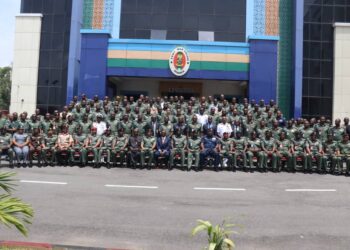
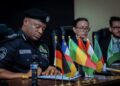
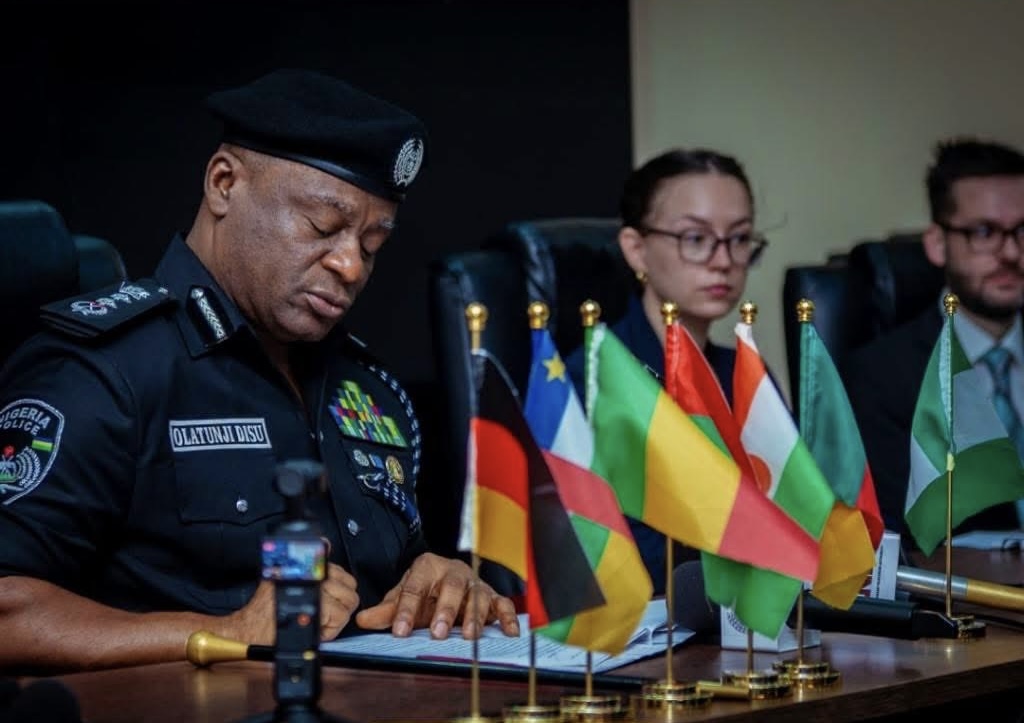
Disu stated this on Monday, October 12, 2026, while declaring open the Small Arms and Light Weapons Identification and Tracing (SALW-IT) Simulation Programme in Abuja, a five-day initiative aimed at strengthening law enforcement officers’ capacity to identify, mark, register and trace illicit firearms, light weapons and ammunition.
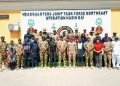
According to an official statement signed by the Force Public Relations Officer, CSP Ani Iniedu, the programme, scheduled to run from October 12 to 16, has drawn participants from Nigeria, Chad, the Central African Republic, Mali, Algeria, Côte d’Ivoire, Burkina Faso, Cameroon, Niger, Libya, Benin and the Republic of the Congo.
The training combines technical instruction with practical exercises, including simulations at the Nigeria Police Simulation Centre, to equip participants with the skills required to identify illicit weapons and trace their sources and movement across borders.
The IGP described the proliferation of illegal arms as a major security challenge across Africa, noting that illicit weapons fuel terrorism, banditry, kidnapping and organised crime.
He explained that effective weapons identification and tracing would enable investigators to uncover trafficking networks, identify financiers and establish supply routes, thereby supporting intelligence-led operations against individuals and groups involved in the illegal arms trade.
Disu emphasised that the benefits of the programme would extend beyond the participating officers, as the knowledge and skills acquired would be cascaded through structured training and knowledge-sharing initiatives across police commands and formations.
He said the initiative would improve officers’ ability to identify, trace and recover illicit weapons, generate actionable intelligence and strengthen routine policing and specialised security operations.
The police chief also highlighted the relevance of the training to Nigeria’s preparations for upcoming elections, stressing that disrupting illegal arms supplies would help prevent electoral violence and intimidation while protecting voters and electoral personnel.
He called for stronger cooperation among African countries through timely intelligence sharing, coordinated investigations and mutual assistance in locating and lawfully apprehending suspects involved in transborder crimes.
According to him, cooperation through established legal and institutional frameworks remains essential to preventing criminal networks from exploiting national borders to evade arrest and prosecution.
Disu further disclosed that Inspectors-General of Police from West and East African countries would meet to deliberate on crime-related challenges and develop strategies for tackling transborder criminal activities.
He commended the African Union Mechanism for Police Cooperation (AFRIPOL), the Bonn International Centre for Conflict Studies (BICC), INTERPOL, relevant African Union entities and experts from the German Armed Forces Verification Centre for supporting the programme.
The IGP urged participants to share operational experiences, strengthen professional relationships and apply the knowledge gained to improve law enforcement and public safety in their respective countries.
He reaffirmed the Nigeria Police Force’s commitment to regional and continental arms-control initiatives, pledging sustained institutional support and operational cooperation to translate the training into tangible improvements in crime prevention, public safety and election security.