


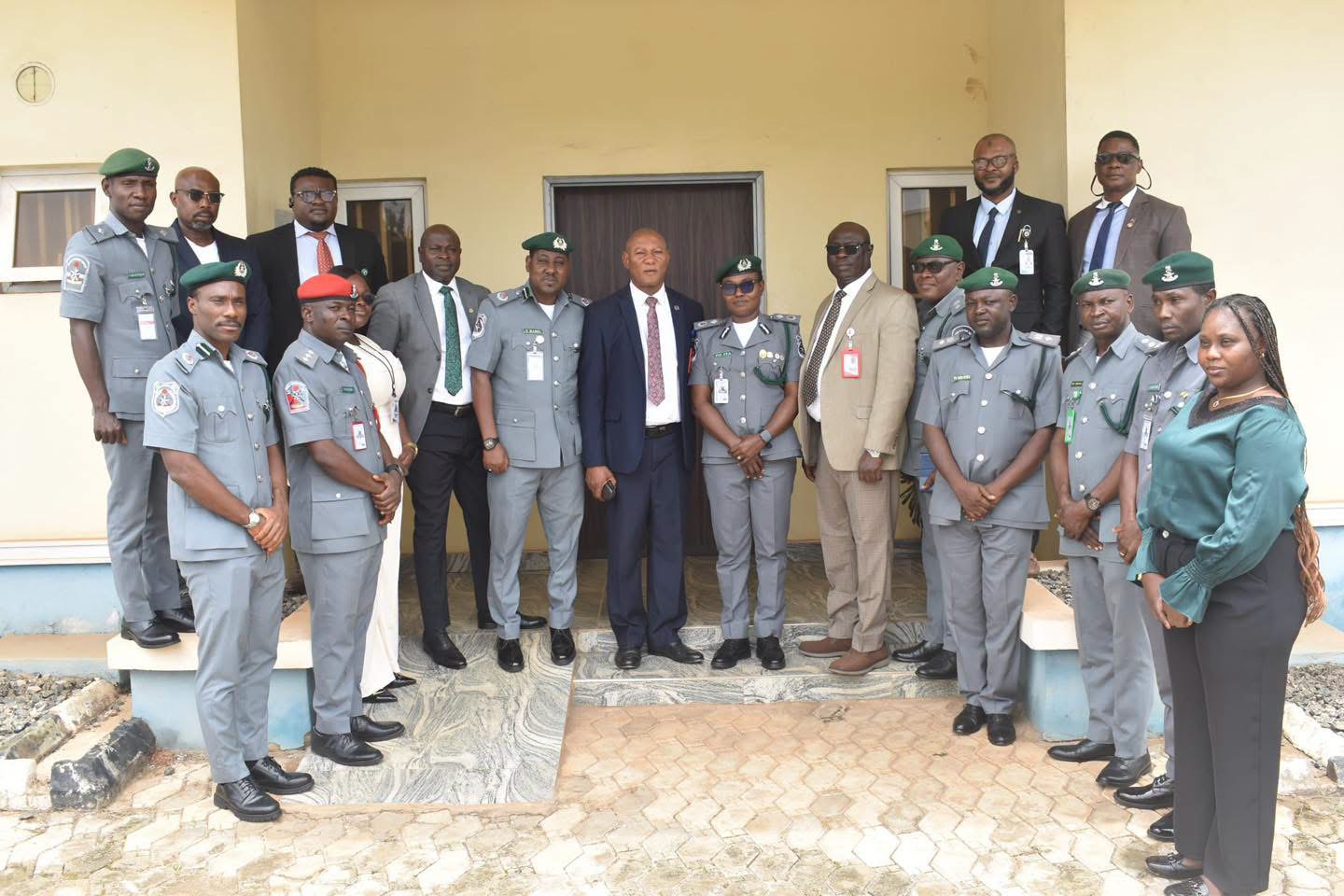
The Independent Corrupt Practices and Other Related Offences Commission (ICPC) and the Nigeria Customs Service (NCS) have called for stronger institutional collaboration to safeguard government revenue, strengthen accountability and prevent corrupt practices in Customs administration.
The call was made when the newly appointed Customs Area Controller for the Ondo/Ekiti Command, Deputy Comptroller Patience O. Ita, paid a courtesy visit to the ICPC Ondo State headquarters in Akure.
Speaking during the meeting, the Resident Anti-Corruption Commissioner (RACC) for Ondo and Ekiti States, Tiku Andrew Menge, stressed the importance of integrity within the NCS, given its strategic responsibilities in border management, enforcement and trade facilitation.
Menge warned that revenue leakages and abuse of regulatory powers could undermine public confidence in government institutions while creating opportunities for corrupt practices.
He said the ICPC’s mandate went beyond the investigation and prosecution of corruption cases, explaining that the Commission also focuses on preventing corruption by identifying systemic weaknesses and strengthening institutional controls.
According to him, effective preventive measures can create an institutional environment where corrupt practices become difficult to initiate or sustain.
The RACC also advocated greater adoption of technology, automation and data-driven processes in Customs administration, saying these would improve transparency, traceability and accountability by reducing excessive human discretion.
He, however, noted that technology alone would not eliminate corruption without ethical leadership, effective supervision and strong internal control mechanisms.
Menge further argued that corruption prevention and trade facilitation were complementary rather than conflicting objectives.
He explained that transparent, predictable and efficient Customs procedures could reduce the incentive for businesses and individuals to resort to informal channels, thereby creating a more secure environment for legitimate trade.
To strengthen cooperation between the two institutions, the RACC proposed practical engagements focused on corruption-risk assessment, integrity sensitisation and stakeholder dialogue.
He stressed that such collaboration should be driven by the public interest and mutual respect for the mandates of both agencies rather than by a supervisory relationship.
Responding, Deputy Comptroller Ita said her visit was aimed at establishing a constructive working relationship with the ICPC following her recent deployment to the Ondo/Ekiti Command.
She assured the Commission of the command’s readiness to sustain engagement on issues of mutual interest, particularly compliance, enforcement and effective public service delivery.
Menge, however, cautioned that any collaborative arrangement between the agencies must respect the statutory independence of both institutions.
He concluded with a reminder that underscored the importance of accountability in institutional partnerships: “Partnership creates trust; it does not create immunity.”
The meeting ended with both agencies expressing readiness to deepen cooperation in promoting integrity, protecting public revenue and improving the effectiveness of public institutions.