The Minister of Defence, General Christopher Gwabin Musa (Retired), has called for collective action by government, security agencies, traditional institutions, communities and other stakeholders to tackle insecurity and restore lasting peace across the North Central region.
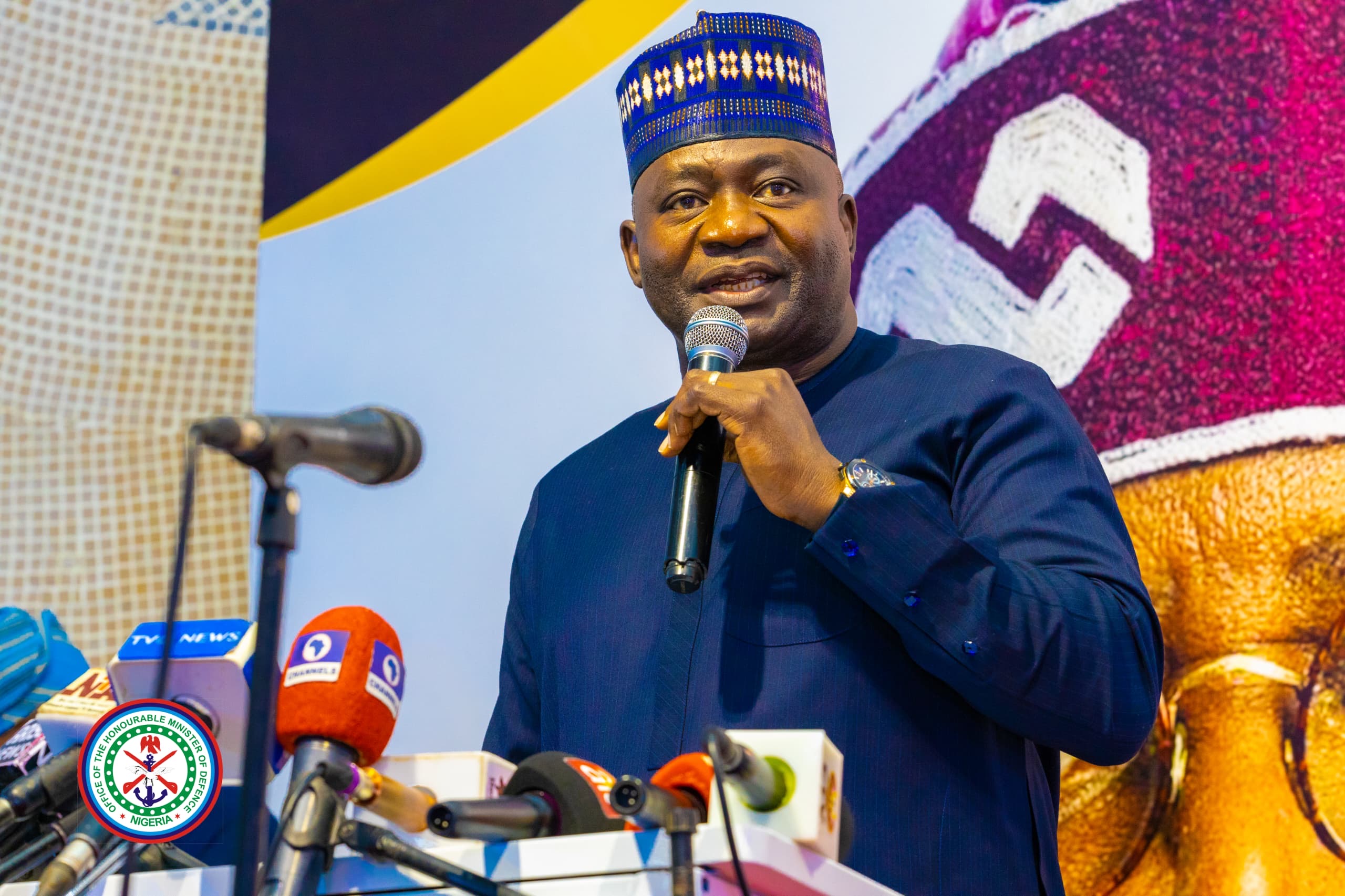
General Musa made the call on Monday at the 2026 North Central Regional Security Summit held in Makurdi, Benue State, stressing that the region’s complex security challenges could not be effectively addressed by military action alone.
He said recurring communal conflicts, farmer-herder disputes, banditry, kidnapping, proliferation of illicit arms and other forms of criminality continued to threaten lives, livelihoods and economic activities across parts of the region.
The Defence Minister said the Armed Forces and other security agencies had an important responsibility to protect lives, restore security and create the space for normal life to return, but emphasised that sustainable stability required a broader and coordinated approach.
“These challenges are complex and they cannot be resolved by military action alone,” he said.
According to him, timely intelligence, effective inter-agency coordination, conflict prevention, meaningful engagement with communities, responsible governance and economic opportunities were essential components of a comprehensive response to insecurity.
“Our objective must therefore go beyond responding to threats as they arise. We must also address the conditions that allow insecurity to take root and persist,” General Musa said.
He said the Federal Government’s approach was consistent with the Renewed Hope Agenda of President Bola Ahmed Tinubu, GCFR, President and Commander-in-Chief of the Armed Forces, Federal Republic of Nigeria, which places the security and wellbeing of Nigerians at the centre of national development.
General Musa noted that the strategic importance of the North Central extended beyond its geographical boundaries, describing the region as critical to agriculture, food security, commerce and national cohesion.
He said insecurity in the region therefore had consequences for the wider Nigerian economy and national stability.
“Security and development are inseparable. A farmer cannot cultivate with confidence when access to his farmland is threatened; a trader cannot sustain a business where movement is unsafe; and communities cannot prosper when their people live in constant fear,” he said.
The Minister stressed that the ultimate measure of success should be the restoration of public confidence, revival of legitimate economic activities and the ability of citizens to live without fear.
He described the summit, themed “Collaborative Approaches to Strengthening Security and Regional Stability,” as an important opportunity for stakeholders to develop practical responses tailored to the security realities of the North Central.
General Musa urged participants to have an honest and constructive assessment of the security situation, identify gaps in coordination and determine how information could be shared more effectively across state and institutional boundaries.
He said the summit must not end with a mere restatement of existing security challenges, but should produce practical recommendations with clear responsibilities, realistic measures and mechanisms for implementation and follow-through.
The Minister’s call for collective action was reinforced by the keynote address delivered by former Chief of Defence Intelligence, Air Vice Marshal Monday Riku Morgan (Rtd), who identified fragmentation of the security response as a major weakness in the region’s fight against insecurity.
Morgan said the North Central did not necessarily suffer from a lack of security institutions, but from inadequate integration among existing institutions and stakeholders.
“My submission is that the challenge is not principally the absence of security institutions. It is the fragmentation of the security response,” he said.
He argued that intelligence often emerged first from farmers, traditional rulers, community members, local security personnel and intelligence operatives, but could fail to produce results when it did not rapidly reach the appropriate command structure.
Morgan therefore advocated a security architecture based on permanent intelligence fusion, inter-agency coordination, community participation, technology-enabled surveillance and rapid response.
He proposed the North-Central Integrated Security and Resilience Model, which would combine intelligence integration, institutional coordination and community-based early-warning mechanisms.
Among other recommendations, he called for the establishment of a Regional Security Fusion Centre linked to the Office of the National Security Adviser and the National Counter Terrorism Centre, as well as permanent State Security Coordination Centres across the region.
He also advocated stronger security networks at the local level involving security agencies, traditional institutions, local governments, community leaders, farmers, pastoralists and credible civil society organisations.
Morgan stressed that the objective should be lawful information sharing and early warning rather than vigilante justice.
He further recommended greater use of retired military, intelligence, police and security professionals in intelligence analysis, training, strategic planning, emergency preparedness and lessons-learned processes.
He proposed a Regional Security Advisory and Training Reserve to harness the expertise of retired professionals without creating a parallel armed force.
The former intelligence chief also called for the establishment of a North Central Security Endowment Fund, jointly financed by the Federal Government and the North Central governors, with transparent governance and sustainable funding to support implementation of the proposed security architecture.
He said the ultimate objective should not be the deployment of soldiers to every community, but the creation of a system where credible intelligence reaches the right commander, the appropriate capability is mobilised and threatened communities receive protection before attacks occur.
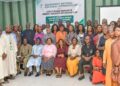
The summit brought together policymakers, security professionals, state and local government authorities, traditional leaders and other stakeholders to deliberate on collaborative strategies for strengthening security and stability across the North Central.