

The Joint Task Force North East, Operation HADIN KAI (OPHK), has moved to strengthen collaboration with universities across the region as part of efforts to create safer campuses and protect students, staff and academic communities from emerging security threats.
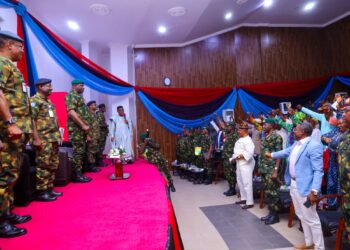
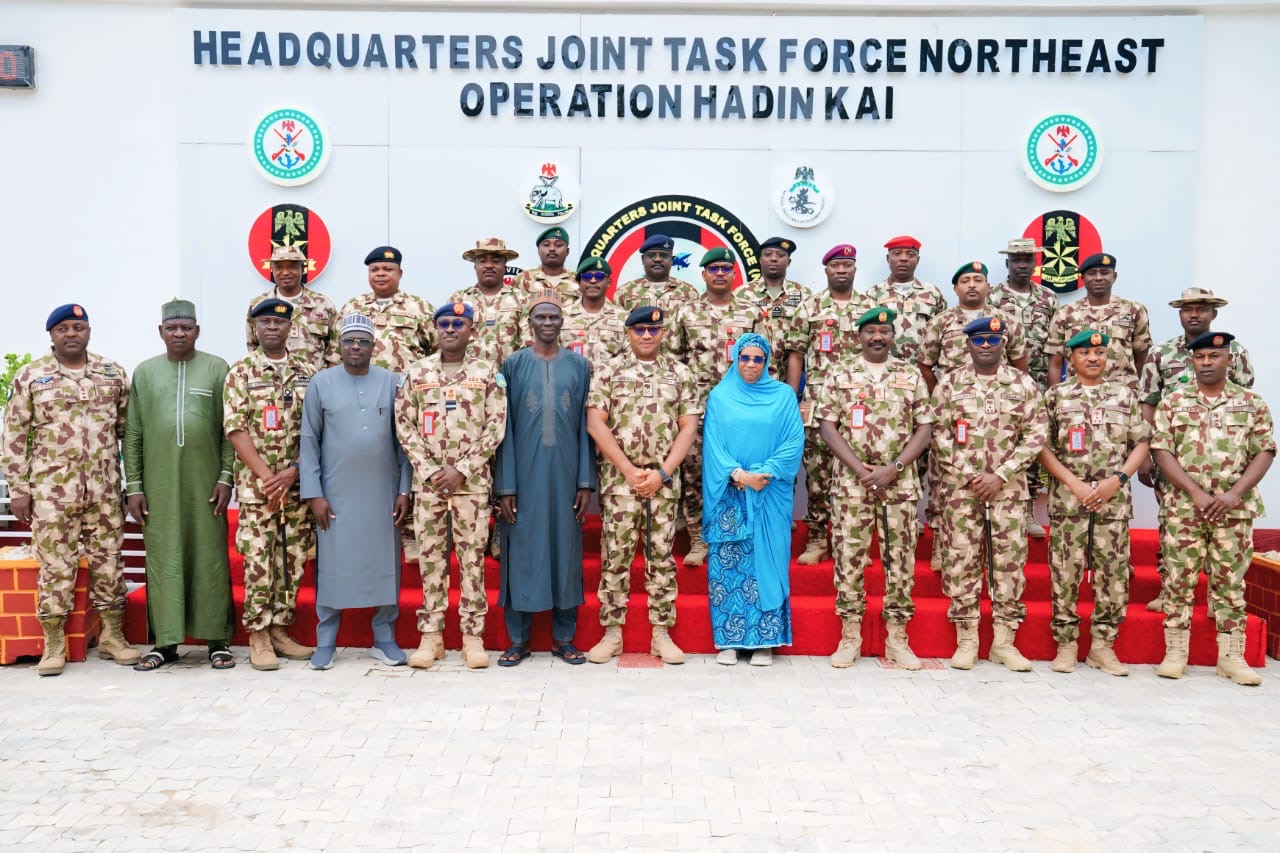
The initiative formed part of an engagement on Monday, August 24, 2026, when a delegation of university leaders visited the Theatre Command Headquarters of Operation HADIN KAI.
The delegation was led by former Vice Chancellor of Ahman Pategi University, Patigi, Kwara State, Professor Ali Audu Sani, and included the Vice Chancellor of Al-Ansar University, Borno State, Professor Fanna Inna Abdulrahman, and Vice Chancellor of Borno State University, Professor Babagana Gutti.
According to an official statement issued by Captain Mohammed Goni, Acting Military Information Officer, Headquarters Joint Task Force North East, the university leaders commended President Bola Ahmed Tinubu, GCFR, President and Commander-in-Chief of the Armed Forces, Federal Republic of Nigeria, for his continued support for counter-terrorism and counter-insurgency operations in the North East.
They also commended OPHK troops for their sacrifices and commitment, noting that the improving security situation had boosted confidence and provided a more conducive environment for academic activities.
The university authorities acknowledged security assessments carried out by OPHK, which provided recommendations on perimeter protection, surveillance, communication and emergency preparedness.
They disclosed that some of the recommendations had already been implemented, including the strengthening of perimeter security, installation of surveillance cameras and improvement of communication systems.
The university leaders further pledged to sustain cooperation with security agencies and ensure timely information-sharing to support early warning and effective response to potential threats.
Responding, the Theatre Commander, Operation HADIN KAI, Major General Abdulsalam Abubakar, thanked the university leaders for recognising the sacrifices of troops and reaffirmed the Command’s commitment to protecting educational institutions as critical national assets.
He stressed that security and education were closely linked, noting that human-capacity development and community resilience remained essential to achieving lasting peace in the North East.
Major General Abubakar also highlighted the role of universities in the non-kinetic aspect of counter-terrorism, particularly in addressing radicalisation, misinformation and extremist narratives.
He said educated and resilient youths were less susceptible to terrorist recruitment, while universities could promote patriotism, responsible citizenship and resistance to extremist propaganda.
The Theatre Commander assured the delegation that OPHK would continue to combine kinetic operations with proactive security measures, strategic engagement and intelligence-led protection of vulnerable institutions.
He urged university authorities to sustain the implementation of security recommendations, strengthen internal vigilance and maintain effective communication with security agencies to facilitate early warning and timely response to emerging threats.
The engagement underscored the shared commitment of OPHK and the academic community to strengthening civil-military cooperation, protecting educational institutions and creating a safer environment for learning, research and sustainable development across the North East.