The African Union (AU) and the United Nations (UN) have called for stronger cooperation between Africa and China in the media and creative sectors, saying deeper collaboration in content production, digital technology, skills development and professional exchanges could unlock new economic opportunities and strengthen ties between the peoples of both regions.
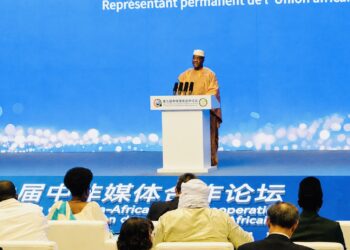
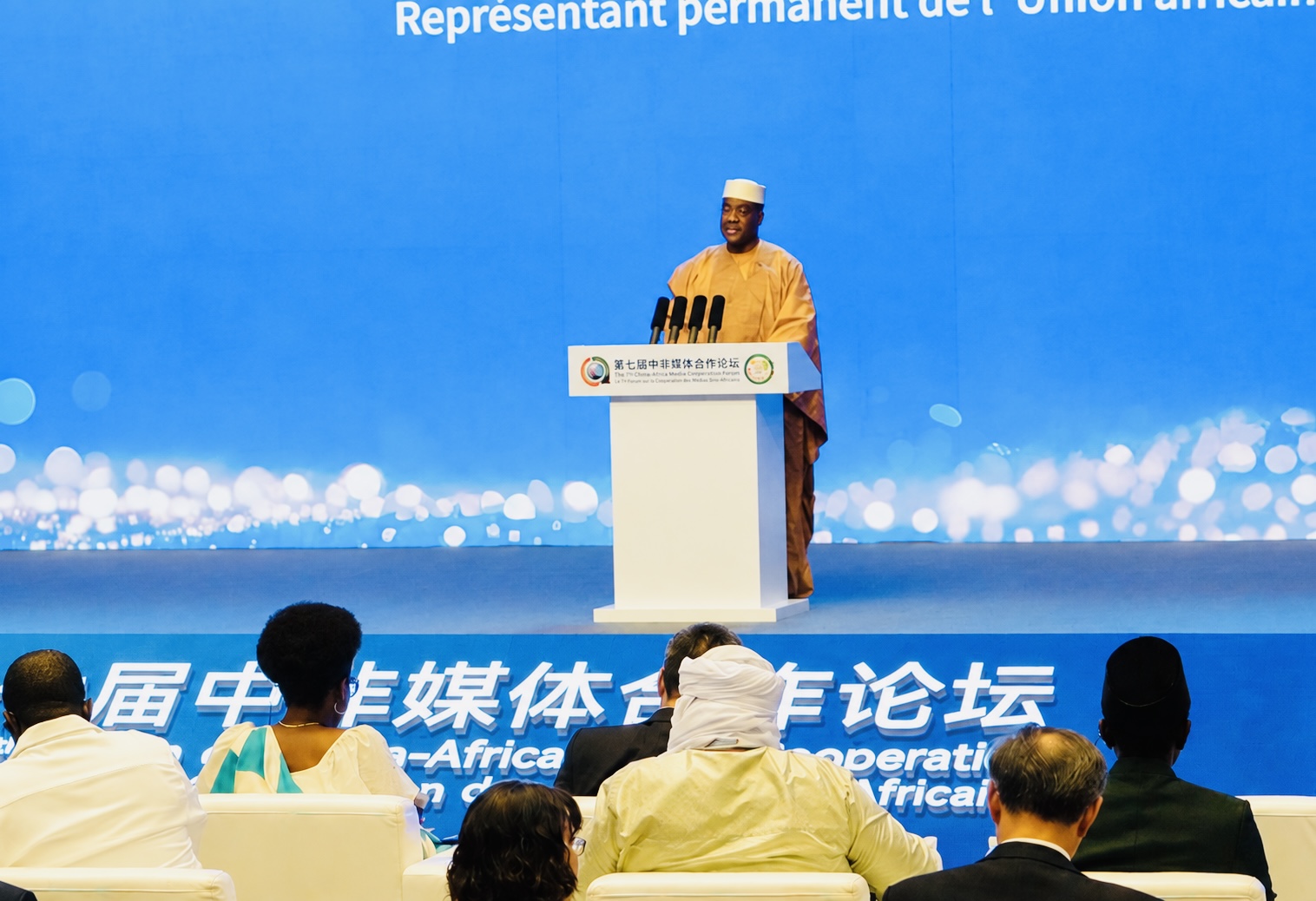
The call was made on Thursday at the opening of the 7th China-Africa Media Cooperation Forum in Beijing, which brought together Chinese officials, African information ministers, journalists, media executives, creative professionals and members of the diplomatic community.
The forum, themed “Share Development Opportunities, Shape the Audio-Visual Future,” is focused on advancing cooperation in audiovisual content, cultural exchange, technological innovation and the development of the creative economy.
Speaking at the forum, the African Union’s Permanent Representative to China, Alhaji Mohamed Sarjoh Bah, said Africa-China media relations should evolve beyond conventional content exchanges to strategic partnerships capable of turning the creative industry into a major driver of economic growth.
Bah said Africa’s creative sector had the potential to generate employment, attract investment and promote innovation, urging both sides to develop integrated value chains spanning film, broadcasting, animation, gaming, digital content and cultural entrepreneurship.
He said the continent must also take greater ownership of its narratives by ensuring that African stories accurately capture its diversity, progress, aspirations and contemporary realities.
“For too long, Africa has been viewed through lenses that do not reflect the aspirations, achievements and the realities of its people,” Bah said.
The AU envoy also urged Africa and China to deepen cooperation in emerging technologies, including artificial intelligence, big data, cloud computing and next-generation communication platforms.
He stressed that technological advancement must be accompanied by safeguards that promote inclusion, transparency, fairness and accountability.
Bah further advocated increased scholarships, partnerships between universities and research institutions, knowledge transfer and skills development, particularly for young Africans, describing the continent’s youthful population as a strategic asset.
“At the African Union, we firmly believe that empowering our youth is not merely a policy choice; it is a strategic necessity,” he said.
He urged media organisations to assume a more active role in promoting development, peace and solidarity between Africa and China rather than merely reporting on the relationship.
Also speaking, UN Under-Secretary-General and Special Adviser on Africa, Ahunna Eziakonwa, called for a shift in global perceptions of Africa, stressing that the continent should increasingly be recognised for its resources, ideas, creativity and youthful population.
“Africa today is not a continent of scarcity. It is resource rich, it is idea rich, and above all, it is young,” Eziakonwa said.
She noted that Africans would account for about one in every four people globally by 2050, with the majority of the continent’s population under 30 years of age.
According to her, young Africans are already producing, streaming and distributing content at a scale that is attracting increasing international attention, citing Nigeria’s Nollywood, Nairobi’s animation sector and audiovisual productions emerging from Africa-China partnerships as examples.
Eziakonwa encouraged African and Chinese media organisations to move from simply transmitting content to jointly creating it, while promoting training partnerships that would equip young filmmakers with skills in emerging technologies.
She particularly called for the application of artificial intelligence to African languages and contexts, saying such initiatives would strengthen Africa’s control over its narratives and support the aspirations of the African Union’s Agenda 2063.
“When African broadcasters and Chinese counterparts co-create rather than merely transmit, when young filmmakers train together, when new technologies, including artificial intelligence, are put to work in African languages and African contexts, we’re not simply exchanging content,” she said.
In the keynote address, Cao Shumin, Deputy Head of the Publicity Department of the Communist Party of China Central Committee and Minister of the National Radio and Television Administration, called for deeper two-way media cooperation between China and Africa.
Cao said existing media partnerships had contributed to strengthening people-to-people relations through the exchange and co-production of quality audiovisual content.
She advocated expanded two-way content distribution and greater cooperation in technological innovation, including the adoption of emerging technologies to enhance media production.
Cao also called for more exchanges involving journalists, broadcasters, producers and other media professionals, saying regular professional engagements would strengthen networks and create opportunities for sustained collaboration.
She noted that China and African countries had already undertaken several audiovisual co-productions and urged both sides to expand cooperation into emerging areas, including artificial intelligence and AI-generated content.
The forum also features the China-Africa Audio-Visual Programme Exchange, China-Africa Audio-Visual Youth Cooperation Initiative and a China visit programme for African media practitioners.
The initiatives are expected to promote professional development, joint content production and youth exchanges while leveraging radio, television and audiovisual platforms to deepen people-to-people relations and support broader economic and trade cooperation between Africa and China.