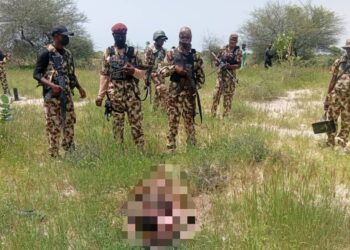


The public reaction to Inspector-General of Police (IGP) Olatunji Disu’s remarks on the Orire abduction has once again exposed a recurring pattern in Nigeria’s security discourse: the tendency to reduce complex operational realities to simplistic narratives. Within hours of his comments, social media was awash with claims that the police were “complaining” or making excuses. Yet, a closer examination of what the IGP actually said presents a very different picture.
Speaking on the rescue operation following the abduction in Oriire Local Government Area of Oyo State, the IGP described the enormous pressure under which officers worked. He spoke of personnel searching relentlessly, day and night, while simultaneously facing intense public scrutiny. He also noted that the police endured constant comparisons with foreign law enforcement agencies and widespread criticism even as operations were still ongoing.
These remarks were interpreted by some as an admission of weakness. In reality, they were an acknowledgement of the operational environment in which policing in Nigeria is carried out.
Modern policing is often judged by outcomes, but rarely by the conditions under which those outcomes are pursued. Across the world, security operations are difficult, unpredictable and resource-intensive. Even in countries with sophisticated technology, extensive surveillance systems, advanced forensic capabilities and significantly better police-to-population ratios, kidnappings, hostage situations and terrorist attacks still occur.
Nigeria’s policing environment is considerably more challenging. The country has one of the world’s lowest police-to-population ratios, with estimates consistently falling below the United Nations recommendation of one police officer to every 450 citizens. Officers frequently operate across vast rural terrains with limited mobility, inadequate communications infrastructure, ageing operational equipment and insufficient technological support. Criminal networks, meanwhile, have become increasingly organised, mobile and well-armed, exploiting forests, difficult terrain and weak telecommunications coverage to evade security forces.
Despite these realities, public expectations continue to rise. Every kidnapping is expected to be resolved almost instantly, every rescue operation is expected to produce flawless results and every operational delay is viewed as evidence of incompetence. The rise of social media has amplified this pressure, creating an environment where officers conduct live operations under continuous public commentary, speculation and, sometimes, misinformation.
The Oriire abduction illustrated this challenge. As security agencies worked to rescue victims and track the perpetrators, online commentary often outpaced verified information. Rumours circulated rapidly, criticism intensified and comparisons with elite foreign tactical units became commonplace. Yet hostage rescue operations are among the most delicate forms of policing. Every operational decision carries life-or-death consequences for victims, suspects and security personnel alike. Public disclosure of tactical details, speculative reporting or premature conclusions can jeopardise ongoing operations.
The IGP’s observation that officers faced condemnation while still in the field speaks to a broader issue. Security operations do not occur in isolation from public perception. Morale matters, confidence matters and community trust matters. Constantly portraying every operational challenge as institutional failure risks weakening the very agencies society depends upon during emergencies.
This is not to argue that the Nigeria Police Force is beyond criticism, far from it. The institution continues to grapple with well-documented challenges, including inadequate funding, manpower shortages, welfare concerns, corruption, insufficient investigative capacity, delayed response times in some areas and the need for broader institutional reforms. Public accountability remains essential, and constructive criticism is necessary for improvement.
However, accountability should not be confused with indiscriminate condemnation.
Effective policing is fundamentally built on partnership between law enforcement and the public. Around the world, successful crime prevention depends heavily on timely intelligence, community cooperation and public trust. Citizens who promptly report suspicious activities, provide credible information and support investigations significantly improve security outcomes. Conversely, delayed reporting, reluctance to share intelligence, fear of retaliation or the spread of unverified information can complicate investigations and reduce the chances of successful rescue operations.
Nigeria’s security architecture is increasingly recognising this reality. Community policing initiatives, intelligence-led operations and stronger collaboration among security agencies have become central pillars of the country’s evolving security strategy. The Armed Forces, the Nigeria Police Force, the Department of State Services, the Nigeria Security and Civil Defence Corps and other agencies now place greater emphasis on intelligence gathering and inter-agency cooperation rather than relying solely on reactive force.
The rescue of abducted victims in various parts of the country over the past year has often resulted from painstaking intelligence work, surveillance, local cooperation and coordinated operations rather than dramatic armed confrontations. Many successful operations receive relatively little public attention, while failures dominate headlines and online conversations. This imbalance shapes public perception, creating the impression that security agencies rarely succeed even when evidence suggests otherwise.
Another dimension often overlooked is the psychological burden carried by frontline officers. Long deployments, hazardous operating environments, exposure to traumatic incidents and relentless public criticism can affect morale and operational effectiveness. Around the world, police organisations increasingly recognise officer wellness as an operational necessity, not a luxury. An exhausted, overstretched and demoralised police force cannot consistently deliver optimal results regardless of individual commitment.
The conversation sparked by the IGP’s comments should therefore move beyond whether the police are “complaining.” The more important question is whether Nigeria is creating the conditions necessary for effective policing.
Can a force expected to secure more than 200 million people continue to operate with significant resource constraints? Can officers consistently outperform heavily armed criminal networks without sustained investment in technology, mobility, forensic capabilities, communications equipment and welfare? Can public confidence improve if every setback is magnified while every success receives fleeting attention?
Security is not a spectator activity where citizens simply observe, criticise and wait for results. It is a collective responsibility that requires government investment, institutional reform, professional policing, responsible media reporting and active community participation.
The Nigeria Police Force must continue to improve professionalism, transparency and accountability, government must continue investing in recruitment, training, equipment and welfare, communities must strengthen intelligence sharing and cooperation, the media must continue holding institutions accountable while ensuring operationally sensitive information is handled responsibly and citizens, too, must recognise that security cannot succeed through criticism alone.
The Orire abduction should therefore serve as more than another social media debate. It should remind Nigerians that effective policing is neither the responsibility of the police alone nor something that can be achieved through public outrage.
When society simultaneously demands world-class performance from an under-resourced institution, withholds critical cooperation, measures every operation in real time through social media and reserves its loudest voice for failures, it creates an impossible standard.
The Nigeria Police Force is not without fault. Reform remains necessary and overdue. But pretending that the institution alone bears responsibility for every security challenge ignores the broader ecosystem within which policing operates.
If Nigeria truly seeks lasting improvements in public safety, the conversation must evolve from assigning blame to building capacity. Because when the next emergency comes, the same officers who are criticised today will once again be the first people the nation calls.
Nkechi Eze is the publisher of NewsPeg Magazine and online and she writes from Abuja