

The Federal Government has reaffirmed its commitment to transforming correctional services across Africa through technology, data-driven decision-making, institutional reforms and stronger regional collaboration.
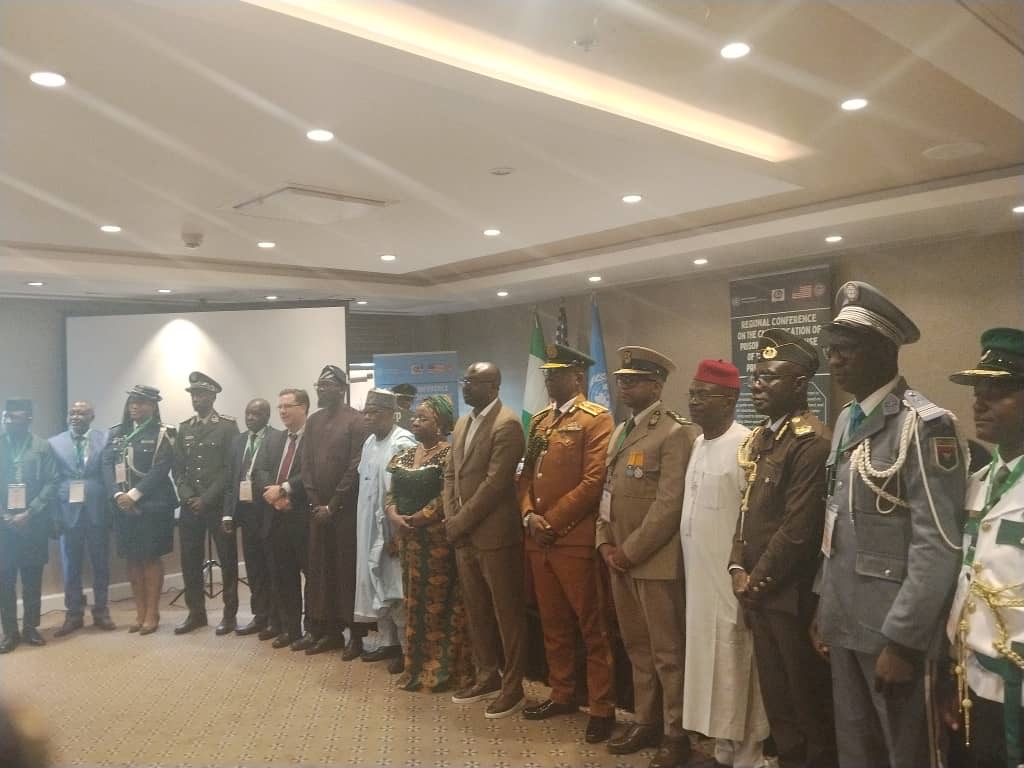
According to an official signed statement by the Head of Press and Public Relations, Mary Ali, the Minister of Interior, Hon. Dr. Olubunmi Tunji-Ojo, made the commitment while declaring open the United Nations Office on Drugs and Crime (UNODC) Regional Conference on Prisoner Classification and the Use of Technology in Prison Settings in Africa.
Speaking at the conference, the Minister stressed that modern correctional systems must evolve to meet the realities of the 21st century, describing technology as an indispensable tool for building secure, efficient and humane prison systems across the continent.
Tunji-Ojo commended the UNODC, the African Correctional Services Association (ACSA), the United States Bureau of International Narcotics and Law Enforcement Affairs (INL), and other development partners for convening the regional conference, describing it as a vital platform for promoting common correctional standards across Africa.
“The approach to correctional service management in the 19th century cannot be the same as the 21st century. Technology is no longer optional—it is essential to building secure, efficient and humane correctional systems,” the Minister said.
He noted that sustainable reforms begin with a proper understanding of existing challenges, urging correctional administrators to focus on identifying problems, developing appropriate solutions and establishing clear timelines for implementation.
Highlighting Nigeria’s recent achievements, the Minister disclosed that the country has recorded no successful prison attacks or jailbreaks since the current administration assumed office, attributing the milestone to investments in digital transformation, improved data management and stronger collaboration among security agencies.
He explained that the digitisation of inmate records, including biometric data and photographs, has significantly strengthened Nigeria’s capacity to monitor offenders and respond promptly to security threats.
According to him, while technology enhances operational efficiency, it cannot replace the human element, stressing that investments in digital infrastructure must be matched with continuous capacity building for correctional personnel.
Tunji-Ojo also called on African countries to integrate correctional services into their broader national security architecture and strengthen information sharing among law enforcement agencies across the continent to prevent criminals from exploiting weak cross-border systems.
“I look forward to an Africa where a criminal fleeing one country cannot simply find refuge in another because our systems are connected and our institutions collaborate,” he said.
The Minister further advocated a shift in correctional philosophy from incarceration to rehabilitation, urging governments to transform correctional centres into institutions that promote restoration, skills development and hope for offenders.
He also emphasised the need to strengthen legal frameworks governing borstal institutions and juvenile justice, warning against housing young offenders alongside hardened criminals.
Tunji-Ojo disclosed that Nigeria has expanded educational, vocational and skills acquisition programmes within its correctional facilities, with thousands of inmates currently enrolled in formal education, postgraduate studies and various rehabilitation initiatives aimed at reducing recidivism and improving post-release reintegration.
“There is nothing wrong in Africa that cannot be put right by Africans. Let us become agents of transformation and work together to build correctional systems that strengthen justice, improve security and restore hope,” the Minister stated.
He concluded by urging African nations to embrace technology as a key driver of correctional reforms while deepening regional cooperation to strengthen internal security and justice administration across the continent.