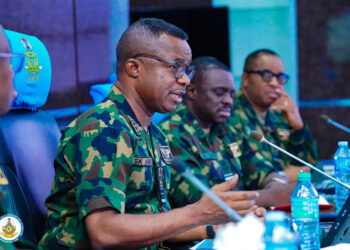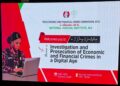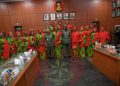
The National Counter Terrorism Centre (NCTC), Office of the National Security Adviser (ONSA), has inaugurated the second edition of the Multi-Agency Anti-Kidnap Fusion Cell (MAAKFC) State Expansion Programme and Stakeholders’ Meeting in Abuja as part of efforts to strengthen intelligence-led collaboration against kidnapping and organised crime in Nigeria.
According to an official statement signed by the Head of Strategic Communication for the National Coordinator, NCTC-ONSA, Abu I. Michael, the five-day programme, supported by the United Kingdom National Crime Agency (UK-NCA), brings together representatives of security, intelligence and law enforcement agencies, relevant Ministries, Departments and Agencies (MDAs), as well as international partners, including the British High Commission, to review progress, strengthen operational coordination and enhance Nigeria’s response to kidnapping.
Speaking on behalf of the National Security Adviser, Mallam Nuhu Ribadu, mni, the National Coordinator of NCTC, Major General Adamu Garba Laka, described kidnapping as one of Nigeria’s most pressing security challenges, noting that criminal groups have continued to adopt sophisticated tactics, exploit technology and operate across multiple jurisdictions.
Represented by the Director of Intelligence, Brigadier General Peter Gbor, Major General Laka said addressing the evolving threat requires sustained inter-agency collaboration, timely intelligence sharing and coordinated operational responses.
He said the establishment of the Multi-Agency Anti-Kidnap Fusion Cell had significantly enhanced intelligence integration, operational coordination, geospatial analysis and information sharing among security agencies, contributing to the disruption of kidnapping networks, successful rescue operations and strengthened investigative capabilities.
The National Coordinator stressed that although significant progress had been made, sustained collaboration remained essential to closing operational gaps exploited by criminal elements. He urged participants to use the stakeholders’ meeting to assess existing challenges, harmonise operational procedures, strengthen investigation and prosecution processes, and develop practical recommendations to improve Nigeria’s capacity to prevent kidnapping and safeguard citizens.
Also speaking, the International Liaison Officer of the UK National Crime Agency, Mr. Matt Mountain, reaffirmed the United Kingdom’s commitment to supporting Nigeria in tackling serious and organised crime.
He commended Nigerian security agencies for their professionalism, courage and dedication in responding to kidnapping incidents despite increasingly complex operational challenges.
Mountain noted that effective responses to kidnapping begin at the state level, where initial intelligence gathering, operational decisions and engagement with victims’ families usually take place. He said strengthening collaboration between state commands and the Multi-Agency Anti-Kidnap Fusion Cell would facilitate faster intelligence sharing, improve operational coordination, enhance support for victims’ families and increase the chances of rescuing victims and prosecuting offenders.
He added that the UK would continue to support Nigerian-led initiatives through practical cooperation, professional exchanges and capacity-building while respecting Nigeria’s leadership in addressing its security challenges.
Earlier, the Director of Intelligence, Brigadier General Peter Gbor, said kidnapping had evolved into not only a major public safety concern but also a significant source of funding for terrorist and organised criminal groups.
He explained that the Multi-Agency Anti-Kidnap Fusion Cell, operationalised by the National Security Adviser on 19 December 2024, has become a critical platform for integrating intelligence, coordinating responses and supporting security agencies with advanced technical capabilities.
According to him, the second phase of the State Expansion Programme builds on the successes of the inaugural rollout by strengthening communication channels between state operational commanders and the Fusion Cell. He added that participants would undergo intensive Kidnap Management Training based on the United Nations Kidnap Manual while reviewing the Cell’s Standard Operating Procedures and Terms of Reference to further improve operational effectiveness nationwide.