

The Nigeria Customs Service (NCS) has reinforced its commitment to protecting Nigerian manufacturers and preserving jobs by intercepting prohibited imported goods valued at over N273 million in Cross River State.
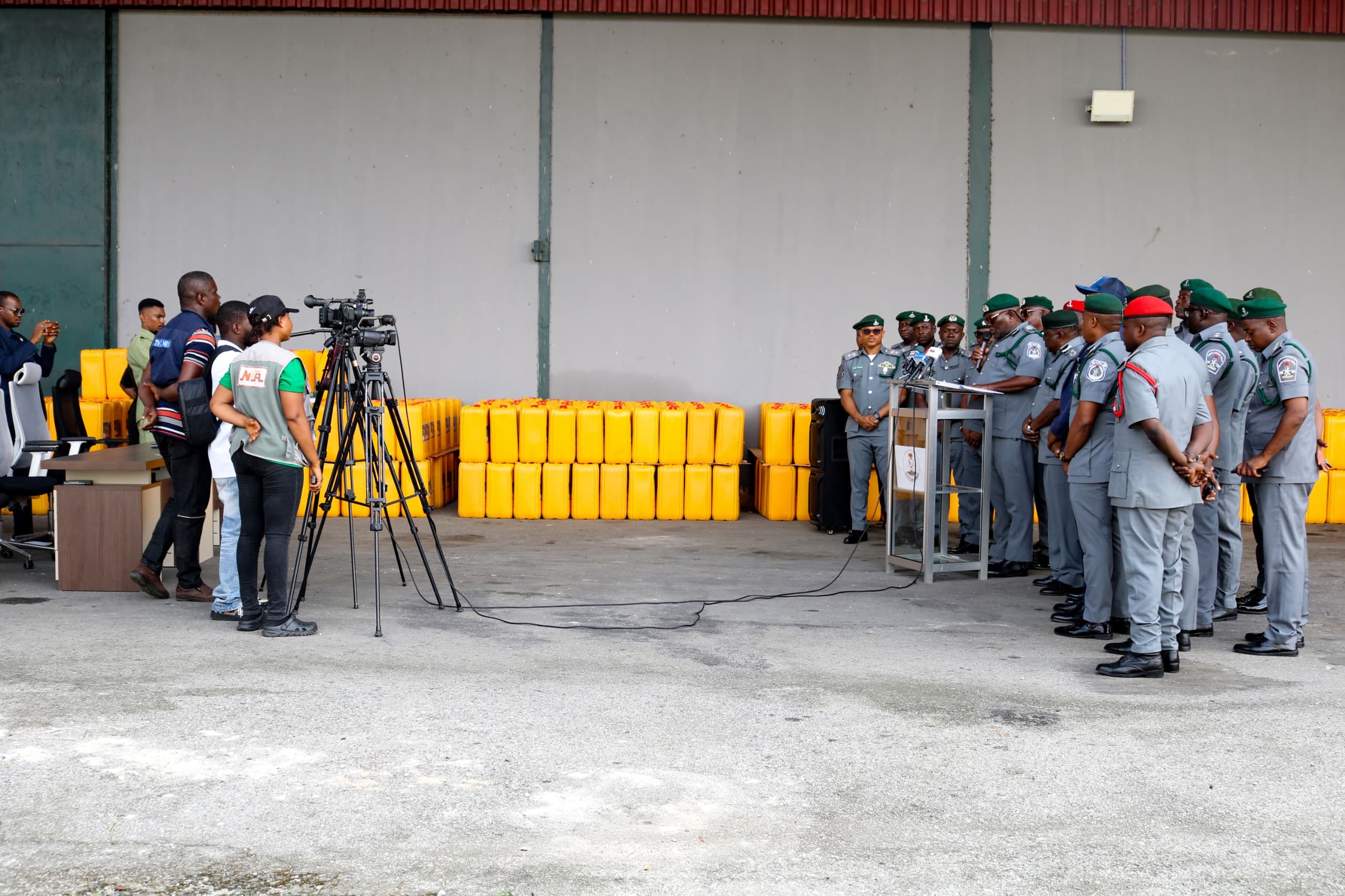
Speaking during a press briefing in Calabar on Wednesday, 24 June 2026, the Customs Area Controller, Cross River/Calabar Free Trade Zone/Akwa Ibom Area Command, Comptroller Giwa Dauda, said the operation was part of ongoing efforts to safeguard local manufacturers from the adverse effects of smuggling and illegal importation.
According to him, officers intercepted two 20-foot containers carrying 1,996 kegs of foreign refined vegetable oil along the Odukpani-Calabar Highway on 14 June 2026. “The products, with a Duty Paid Value (DPV) of N195.5 million, were concealed in a truck intercepted during a routine patrol operation”, he added.
Comptroller Dauda noted that vegetable oil remains one of the products in which Nigerian manufacturers have made significant investments. He explained that allowing the import of prohibited foreign products into the domestic market would undermine local production capacity, discourage investment, and threaten thousands of jobs across the agricultural and manufacturing value chains.
He stressed that “These products are listed under the Federal Government’s import prohibition policy, which seeks to stimulate local production, promote self-sufficiency, and strengthen Nigeria’s industrial base.”
Beyond the vegetable oil seizure, the Command also intercepted 1,500 used tyres and 105 jumbo bales of second-hand clothing. Combined with other seizures, the total Duty Paid Value of the prohibited items stood at N273.7 million.
The Area Controller further disclosed that officers intercepted 800 litres of Premium Motor Spirit (PMS), bringing the total volume of petrol seized by the Command in 2026 to 5,760 litres. “The product was subsequently disposed of in accordance with approved safety procedures due to its highly combustible nature”, he stated.
The Customs Area Controller also warned smugglers and economic saboteurs to desist from illegal importation activities, stressing that such practices weaken local industries, distort market competition, and undermine government efforts to achieve economic diversification through industrialisation.