

By Nkechi Eze
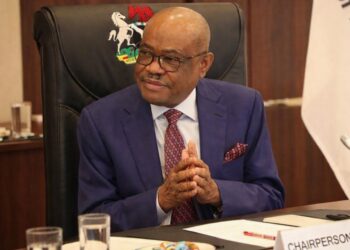
The Honourable Minister of Works, Senator Engr. David Umahi, CON, has said that President Bola Ahmed Tinubu’s four legacy highway projects will form an integrated transport network linking all six geopolitical zones of Nigeria, as the ECOWAS Bank for Investment and Development (EBID) advances plans to finance a key section of the Calabar-Abuja Super Highway.
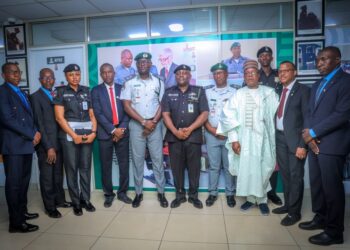
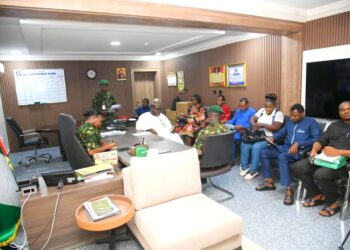
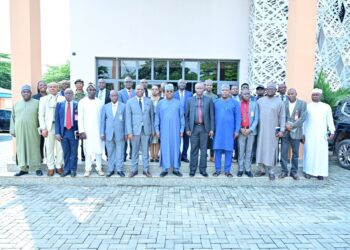
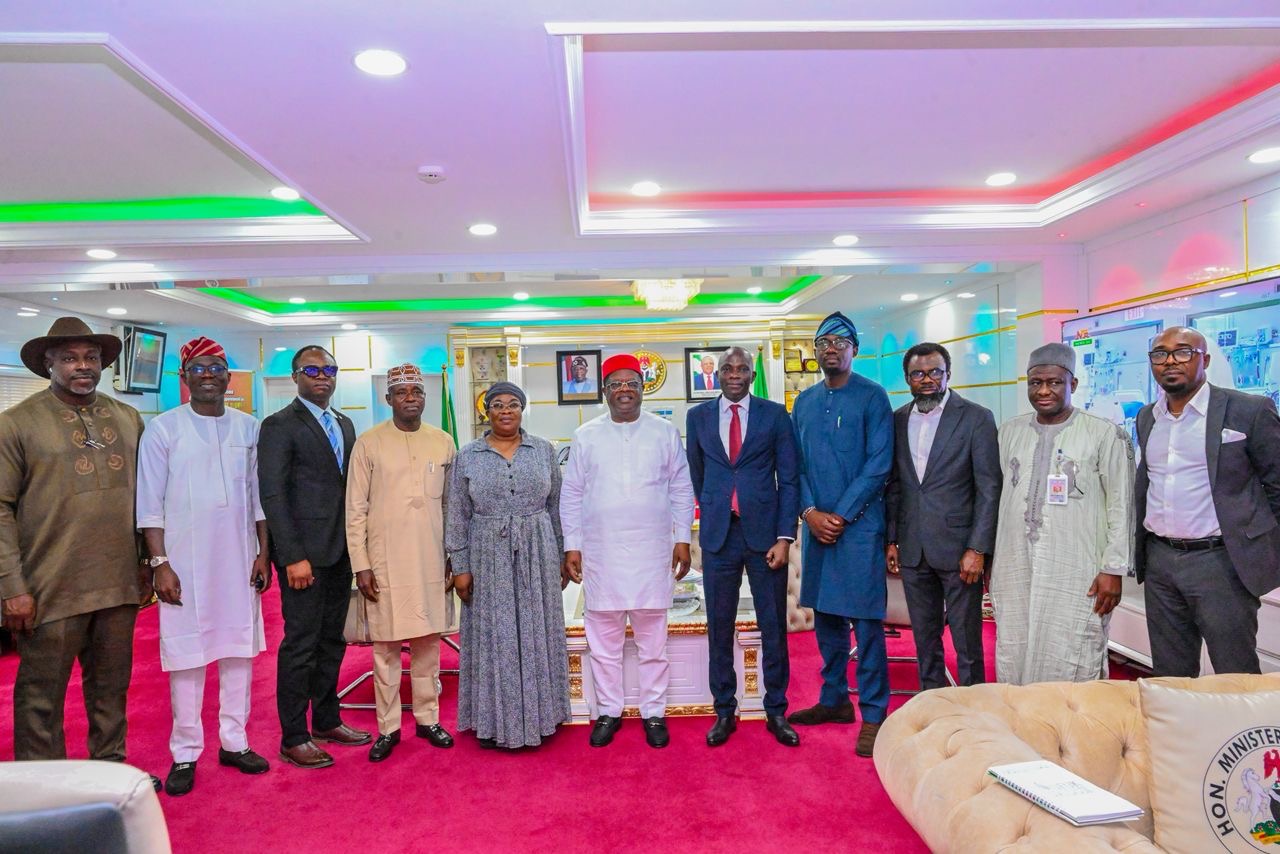
According to an official signed statement by the Senior Special Assistant to the Honourable Minister of Works (Media), Francis Nwaze, Umahi made the disclosure on Monday while receiving a delegation from EBID led by Maimouna Sidibe, Head of the Basic Infrastructure Division, Department of Public Sector Corporations, at the Ministry’s headquarters in Abuja.
The delegation is currently undertaking appraisal activities ahead of the approval of financing for Section One of the Trans-Sahara Super Highway, one of President Tinubu’s flagship infrastructure projects.
Umahi explained that the President’s four legacy road projects were deliberately designed as an interconnected transport network capable of driving economic growth, enhancing food security and accelerating regional integration across the country.
“Let me say that the entire four Legacy Projects of Mr. President are interconnected in a loop,” the Minister stated.
He explained that the 750-kilometre Lagos-Calabar Coastal Highway links directly with the Trans-Sahara Super Highway through Ndibe Beach in Cross River State.
According to him, Section One of the Trans-Sahara Super Highway covers 123.64 kilometres from Ndibe Beach to the Benue border, while additional sections traversing Benue, Kogi and Nasarawa states have already been awarded for construction.
Describing the corridor as a strategic economic asset, Umahi noted that the route has historically served as a major agricultural and commercial passage linking several food-producing areas of the country.
“It has long existed and remains a major food corridor. It is critical to food sufficiency in our country,” he said.
The Minister added that the highway would connect key agricultural belts in Ebonyi, Benue and Cross River states, while significantly reducing travel time between Calabar and Abuja.
“This route will shorten travel time from Calabar to Abuja to about four hours. It is therefore a very important corridor,” he stated.
Umahi further revealed that the Federal Government plans to maximize the economic potential of the corridor by utilizing existing dams along the route for irrigation and renewable energy projects, creating opportunities for industrial development and employment generation.
“There are many benefits to this project. Beyond tolling and corridor development for investment returns, it will generate numerous jobs, both direct and indirect. There will be factories along the corridor, power projects, and significant traffic volumes on the road,” he said.
The Minister also explained that the Trans-Sahara Super Highway would connect with another of the President’s legacy projects through the Abuja-Akwanga Road corridor, extending through Jos, Bauchi, Gombe, Biu and Maiduguri.
He disclosed that the recently flagged-off Gombe-Biu section spans 125 kilometres and is being developed as a six-lane carriageway, while procurement processes are ongoing for the Bauchi-Gombe segment.
Umahi further outlined plans to connect the Lagos-Calabar Coastal Highway to the Sokoto-Badagry Super Highway through a new route beginning from Victoria Island and passing through a 3.5-kilometre tunnel, Ogogoro Island and Snake Island before linking with Badagry.
“When you look at all of this on a map, you see a loop. All the geopolitical zones are included,” he said.
“If you start from Sokoto, you can access all six geopolitical zones within two days. It is a remarkable development.”
The Minister commended Infioues, the contractor handling Section One of the Trans-Sahara Super Highway, disclosing that construction work had already surpassed 20 per cent completion.
He stressed the need to fast-track the loan approval process to ensure uninterrupted project execution as construction progresses.
“My concern is that we need to fast-track the loan component because once they reach 30 percent completion, payments will become necessary,” he said.
Umahi described the EBID delegation’s visit as timely and commended the bank for its commitment to supporting the project.
“That is why your visit is very timely, and we commend you highly. I also appreciate the meeting we had earlier. It was very fruitful, and I believe we are aligned in terms of enthusiasm and speed of execution,” he added.
Earlier, the leader of the EBID mission, Maimouna Sidibe, reaffirmed the bank’s commitment to supporting the project, describing it as a priority infrastructure investment.
“We are very honored to contribute to the financing of this very important project, which have been submitted last week to our first credit committee,” she said.
Sidibe disclosed that the project had already received favourable consideration from the bank’s first credit committee and had progressed to the appraisal stage.
“The members find this project very important and encourage the department to come to finalize the instruction of the projects,” she stated.
She explained that the delegation’s mission included consultations with relevant government agencies and inspections of project sites to assess implementation progress, environmental compliance and social safeguards.
According to her, the project is expected to proceed to the bank’s second credit committee next week before being presented to the Board of Executive Directors in early July for final approval.
Sidibe commended the Federal Government’s commitment to the project, noting that substantial counterpart funding obligations had already been fulfilled.
“I have to say that the project is of a very top priority for the administration, and that’s why the administration have paid 30 percent of the counterpart money,” she said.
She also praised the quality of work already executed on the project and expressed confidence in the long-term durability of the infrastructure.
“The members of the credit committees said that this technology is very, very good and already experienced on Lagos-Calabar, and the road duration will be at least for 50 years,” Sidibe added.