

By Nkechi Eze
The National Drug Law Enforcement Agency and the Nigeria Customs Service have formalised a new collaborative framework aimed at strengthening inter-agency coordination and reinforcing Nigeria’s borders against the influx of illicit drugs and transnational organised crime.
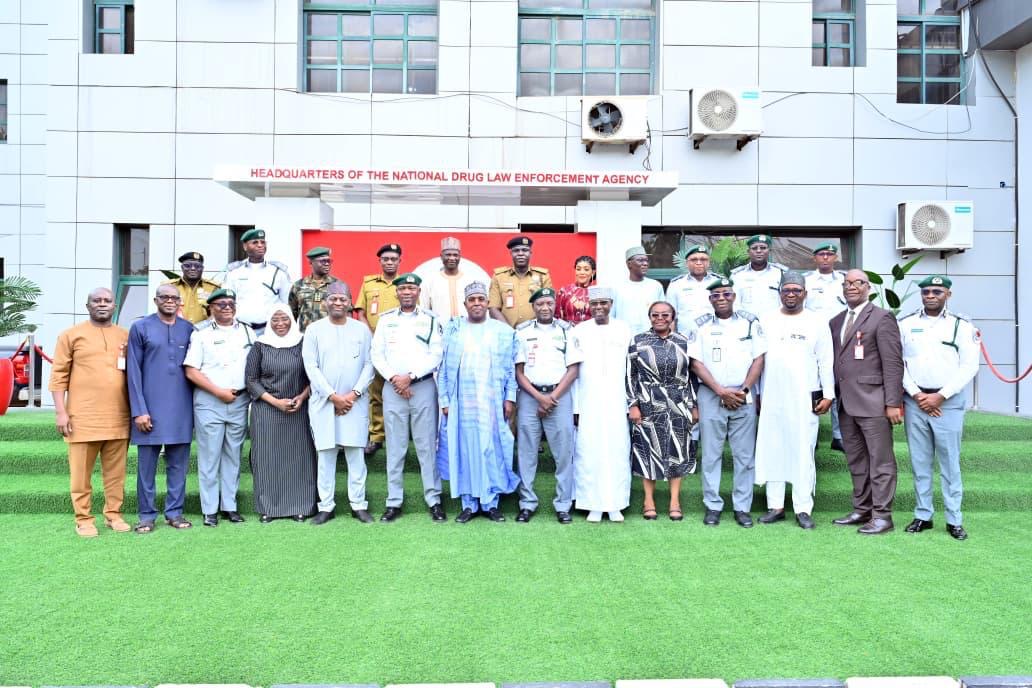
In a statement made available by Femi Babafemi, Director of Media and Advocacy, NDLEA, the agreement was reached during a high-level meeting held at the Agency’s National Headquarters in Abuja on Monday, April 27, 2026. The meeting culminated in the signing of a communiqué by the Chairman and Chief Executive Officer of NDLEA, Brigadier General Mohamed Buba Marwa (retd), and the Comptroller-General of Customs, Dr Bashir Adewale Adeniyi.
Both agencies acknowledged that the evolving sophistication of transnational criminal networks, particularly in drug trafficking, demands a more coordinated and intelligence-driven institutional response. The newly adopted framework is designed to eliminate operational overlaps, reduce inter-agency friction, and ensure seamless intelligence sharing between both organisations.
Speaking on the development, the leadership of the two agencies reaffirmed their commitment to professionalism, mutual respect, and effective collaboration in carrying out their statutory mandates of safeguarding national security while facilitating legitimate trade.
The communiqué outlines key areas of cooperation, including the establishment of a secure and structured platform for the exchange of actionable intelligence to preempt criminal activities, as well as the creation of joint task forces at strategic operational points, guided by clearly defined leadership structures and operational protocols.
It also emphasised the need for strict adherence to the distinct legal mandates of each agency to prevent undue interference, alongside the formation of a Standing Inter-Agency Committee tasked with resolving operational disputes swiftly and amicably.
Further provisions include enhanced collaboration across seaports, airports, and land borders to ensure effective enforcement operations without duplication of duties or disruption to lawful trade activities.
Marwa and Adeniyi described the partnership as a critical national security priority, noting that aligning the operational strengths of both agencies would create a more formidable barrier against the trafficking of illicit substances and significantly improve the security architecture at Nigeria’s entry and exit points.