By Nkechi Eze
The Minister of Works, David Umahi, has raised alarm over the growing misuse of newly constructed roads by fuel tankers and other heavy-duty vehicles, warning that the practice poses a serious threat to the durability of critical national infrastructure.
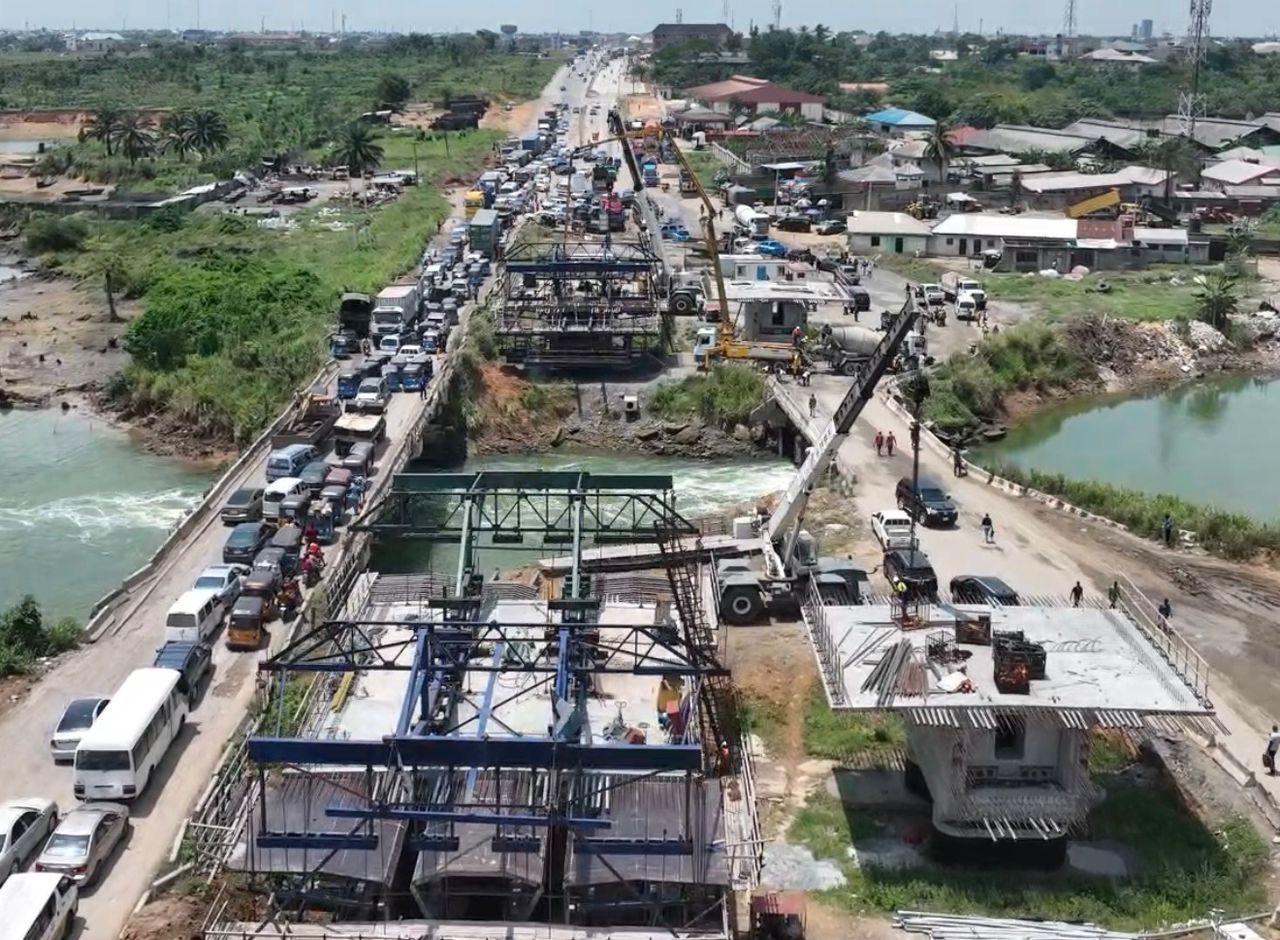
Umahi sounded the warning during an inspection of the Aleto Bridge project in Rivers State on Saturday, March 21, 2026, where he decried the increasing trend of trucks parking on completed sections of roads instead of using designated facilities.
According to a statement issued by his Senior Special Assistant on Media, Francis Nwaze, the Minister expressed concern after witnessing a complete obstruction of a newly completed stretch of road by stationary fuel tankers.
“Yesterday I was passing through this road, the entire road we have completed was totally blocked… not by moving vehicles but fuel tankers, they parked on the road,” Umahi said.
He stressed that road infrastructure is not designed to withstand prolonged static pressure from heavy vehicles, warning that such misuse could rapidly deteriorate the roads.
“No road project anywhere in the world is designed for static loads, they will destroy the road,” he cautioned.
Highlighting the scale of investment, Umahi disclosed that the Aleto Bridge project costs over ₦230 billion, with ₦156 billion allocated to phase one and ₦83 billion for phase two, emphasizing the need to protect such national assets.
“Is that what we should fold our hands and allow it to be destroyed?” he queried.
Despite the concerns, the Minister expressed satisfaction with the quality and pace of work by the contractor, RCC, while commending President Bola Ahmed Tinubu for his intervention in ensuring the continuity of the project.
“I want to thank RCC very highly and commend Mr President for his heart of love toward the Niger Delta,” he said.
Umahi revealed that although funding support from the Nigerian National Petroleum Company Limited ceased in August 2025, the President swiftly approved an alternative funding arrangement, ensuring that construction work continued without disruption.
“We are not owing RCC on this project… it is a very, very highly skilled and technical project and I’m very happy with the quality of work,” he added.
Describing the Aleto Bridge as a landmark engineering project, the Minister noted that it incorporates modern concrete pavement technology, solar-powered lighting, environmental landscaping, and reinforced structural components designed for long-term durability.
He also disclosed plans to integrate young Nigerian engineers into the project under a mentorship programme championed by the President, aimed at building local technical capacity.
“We are making efforts on President Tinubu mentorship programme where young engineers will come and study what we’re doing here. They are our future leaders and it is a technical project to behold,” Umahi stated.
Providing timelines, the Minister said one carriageway of the project is expected to be completed before May 25, 2026, while the first phase is projected for full delivery by August 2026. He added that the second phase, which includes multiple flyovers and bridges, is also expected to be completed within the year.
Umahi further explained that the project was redesigned from asphalt to concrete pavement on the directive of President Tinubu to enhance durability.
“We inherited this project from zero ground. It was the President that directed that we should redesign using concrete and then you can see the result,” he said.
He concluded by urging Nigerians, especially road users and transport operators, to take responsibility for protecting public infrastructure.
“Let us protect our own. The minister cannot be here and everywhere. The road is being done and it’s been perfectly done but we have a duty to protect it,” he appealed.