

By Nkechi Eze
The Chairman/Chief Executive Officer of the Nigerians in Diaspora Commission (NiDCOM), Abike Dabiri-Erewa, has underscored the importance of Migration Studies in strengthening diaspora engagement and improving migration governance in Nigeria.
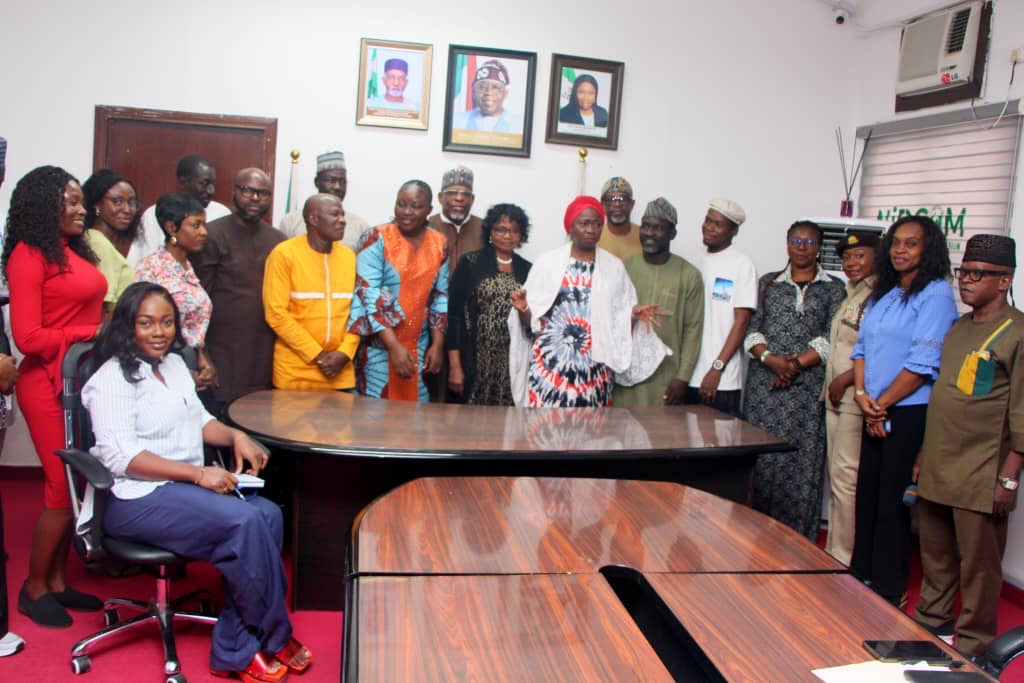
She made this known while receiving the Director, Coordinator and Master’s students of the Centre for Migration Studies, University of Abuja, during a field trip to the Commission’s headquarters in Abuja.
According to a statement signed by the Head of Media, Public Relations and Protocols of NiDCOM, Abdur-Rahman Balogun, Dabiri-Erewa described the Migration Studies programme as a strategic opportunity to build capacity, deepen knowledge and enhance institutional effectiveness in managing migration-related issues.
She reaffirmed NiDCOM’s readiness to support the Centre and emphasized the need for sustained collaboration between academia and government agencies in addressing migration challenges.
“Migration Studies provides an opportunity to learn, build capacity and tap into a reservoir of academic knowledge that can strengthen institutional effectiveness,” she said, adding that continuous learning remains critical to improving service delivery and diaspora engagement.
Leader of the delegation and Director of the Centre, Dr Ifunanya Daniels, conveyed greetings from the Vice-Chancellor of the University of Abuja and expressed appreciation to NiDCOM for hosting the students.
She explained that the visit was organised to give the Master’s students practical exposure and hands-on experience in migration governance, complementing their classroom training.
Daniels noted that the Centre for Migration Studies, established four years ago, was created to deepen research, policy engagement and academic discourse on migration issues in Nigeria and beyond. She encouraged NiDCOM staff to enrol in the programme, describing it as a strong capacity-building platform capable of enhancing professional competence.
Also speaking, the Coordinator of the Centre, Dr Peter Adeyanju, highlighted the significance of the field trip in broadening students’ understanding of migration policy and administration. He disclosed that ten admission slots had been reserved for interested NiDCOM staff and commended those already enrolled, describing them as worthy ambassadors of the Commission.
During the visit, Dabiri-Erewa provided an opportunity for NiDCOM staff who are currently students of the Centre to share their experiences, further underscoring the value of continuous learning in strengthening diaspora-focused policies and programmes.
The engagement reinforced the existing partnership between NiDCOM and the University of Abuja, reflecting a shared commitment to advancing structured migration governance and enhancing Nigeria’s diaspora engagement framework.