


By Nkechi Eze
An election observer with the Centre for Democracy and Development (CDD), Mgbeahuike Chibuike, has raised concerns over poorly coordinated security roadblocks and last-minute polling unit changes, warning that the situation contributed to confusion and low voter turnout in parts of the Federal Capital Territory Area Council election.
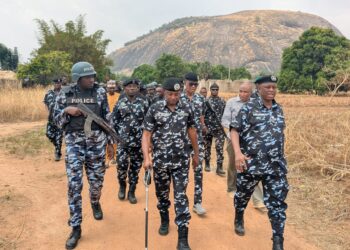
Speaking while conducting roving observation across polling locations, Mgbeahuike said security checkpoints caused significant delays for voters and election observers, creating frustration and affecting participation.
“One of the things we observed was a serious security blockade. Around the area we were coming into, the security block was not neat at all. It delayed us for more than 30 minutes, and there was a long queue of vehicles,” he said.
He explained that the delays worsened the difficulties faced by voters, particularly those already struggling to locate their polling units.
“That kind of delay and confusion discourages people. Some of them don’t even know where their polling units are, and when you now add roadblocks and delays, it makes the situation worse,” he added.
Mgbeahuike said the observer team encountered many voters moving around in search of their polling locations due to last-minute changes and poor communication.
“We have seen quite a number of people moving around who don’t seem to know where to go. There seem to be some last-minute changes, and a lot of people are walking around trying to locate their polling units,” he said.
He noted that some voters received information about their polling locations only shortly before the election, while others remained uncertain even on election day.
“Some received messages moments ago, some last night, but election day is not the day people should spend time trying to locate where they will vote,” he said.
According to him, the confusion significantly contributed to low turnout in many polling units observed by his team.
“When you look at the number of registered voters in some polling units, you see figures like 751 or 749, but the number of those who have voted is far less. The turnout is low compared to the number of registered voters,” he said.
Mgbeahuike added that the observer team noticed generally low voter presence while travelling through different parts of the city to polling areas.
He also said that although there were situations that appeared suspicious, including possible inducement of voters, observers could not confirm vote buying without concrete evidence.
“Good enough, we saw officials of the EFCC in one of the primary schools. We have seen scenarios that look transactional, but unfortunately, you can’t really establish it conclusively,” he said.
He stressed that proper planning, clear communication with voters, and well-coordinated security arrangements are essential to ensuring voter confidence, smooth election processes, and increased participation in future elections.