

By Nkechi Eze
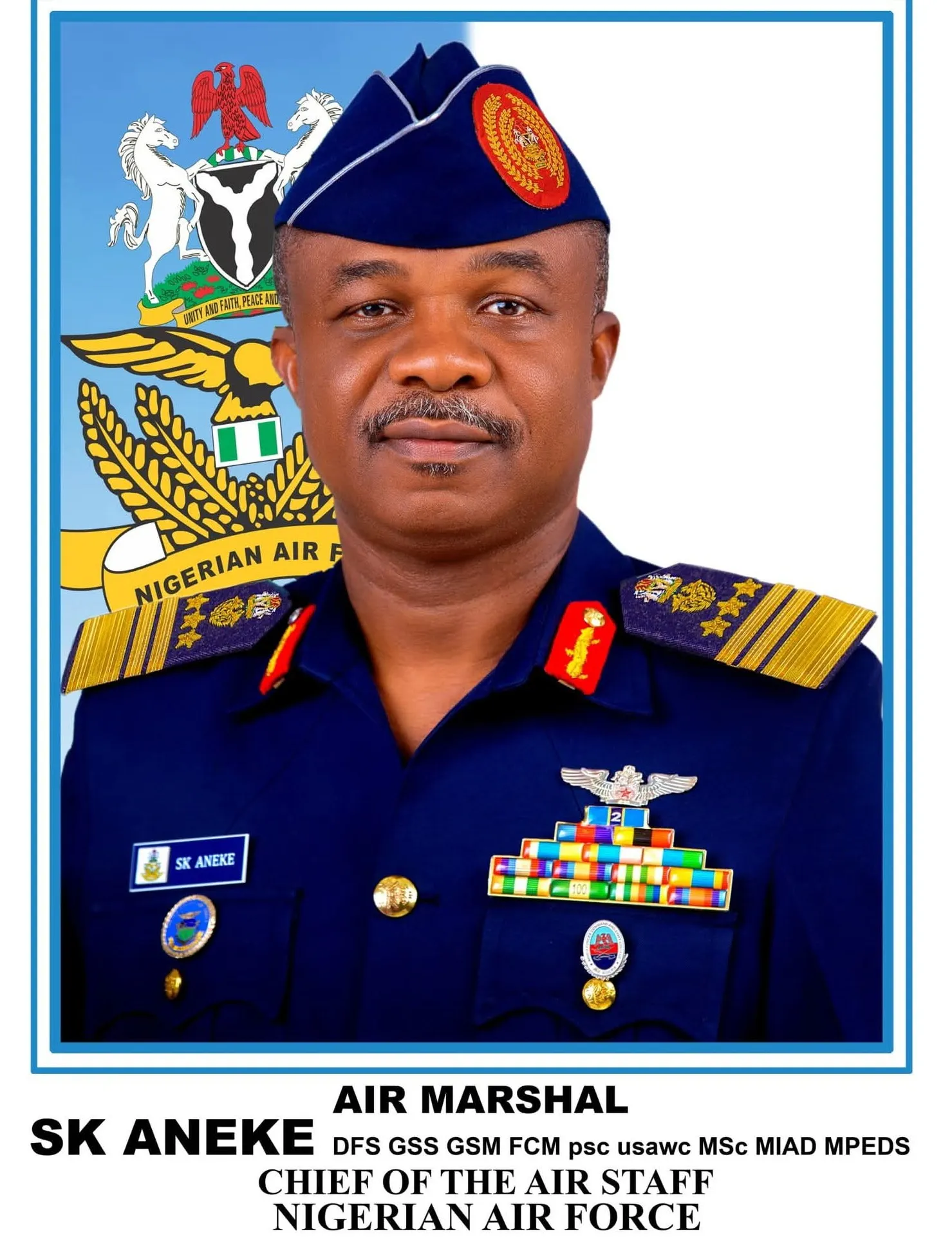
The Nigerian Air Force has entered a new phase of operational strength and institutional renewal as the Chief of the Air Staff, Air Marshal Sunday Kelvin Aneke, marks his first 100 days in office with a series of measurable achievements that have reinforced combat readiness, improved operational efficiency, and repositioned the Service as a more responsive instrument of national security.
Since assuming command, Air Marshal Aneke has steered the Air Force through a period defined by strategic clarity, disciplined leadership, and purposeful reforms aimed at advancing what he has consistently described as a smarter and more effective Air Force. His leadership within this short period has translated into tangible progress across multiple fronts, including enhanced aircraft serviceability, expansion of operational activities, infrastructure renewal, and improved welfare for personnel.
The Service has recorded notable improvements in aircraft availability, a critical factor in sustaining ongoing air operations across various theatres. This increase in operational platforms has enabled the Air Force to expand the tempo, reach, and effectiveness of its missions, thereby strengthening its capacity to provide timely air support to ground forces, conduct surveillance, and respond swiftly to emerging threats. These gains have significantly reinforced the Air Force’s role as a decisive force multiplier in Nigeria’s broader security architecture.
In addition to boosting operational readiness, the Air Chief has also prioritized infrastructure development to support mission effectiveness. Targeted upgrades across several Air Force units and bases have enhanced operational support systems, improved maintenance capacity, and provided a more conducive environment for personnel to perform their duties. These infrastructure improvements reflect a deliberate effort to build sustainable institutional capacity while ensuring that operational gains are supported by modern and efficient facilities.
Equally significant has been the renewed emphasis on personnel welfare, morale, and professional development. Recognizing that the strength of the Air Force ultimately lies in the quality and well-being of its personnel, Air Marshal Aneke has introduced initiatives designed to improve living and working conditions, while also strengthening training programmes to align with evolving operational realities. The renewed focus on mission-driven training has ensured that officers and airmen remain prepared, adaptable, and capable of meeting the complex demands of modern air warfare.
The progress recorded within the first 100 days has not been viewed as isolated achievements but rather as part of a broader, coordinated effort to align the Air Force’s operational capability with Nigeria’s national security priorities. The leadership has emphasized accountability, efficiency, and strategic planning as key pillars for long-term transformation, ensuring that institutional reforms translate into sustained operational success.
Observers within defence and security circles note that the pace and scope of developments witnessed under Air Marshal Aneke’s leadership reflect a clear vision for the future of the Service, anchored on resilience, innovation, and operational excellence. The early results have strengthened confidence in the Air Force’s ability to adapt to emerging threats while maintaining its dominance in the air domain.
As the Nigerian Air Force continues to consolidate these gains, the first 100 days of Air Marshal Aneke’s tenure have set a decisive tone for what many see as a transformational era. The foundation laid within this period has positioned the Service on a trajectory of sustained growth, enhanced combat capability, and strengthened institutional relevance, reinforcing its critical role in safeguarding Nigeria’s sovereignty and supporting national stability.