

By Ehimen Ejodame
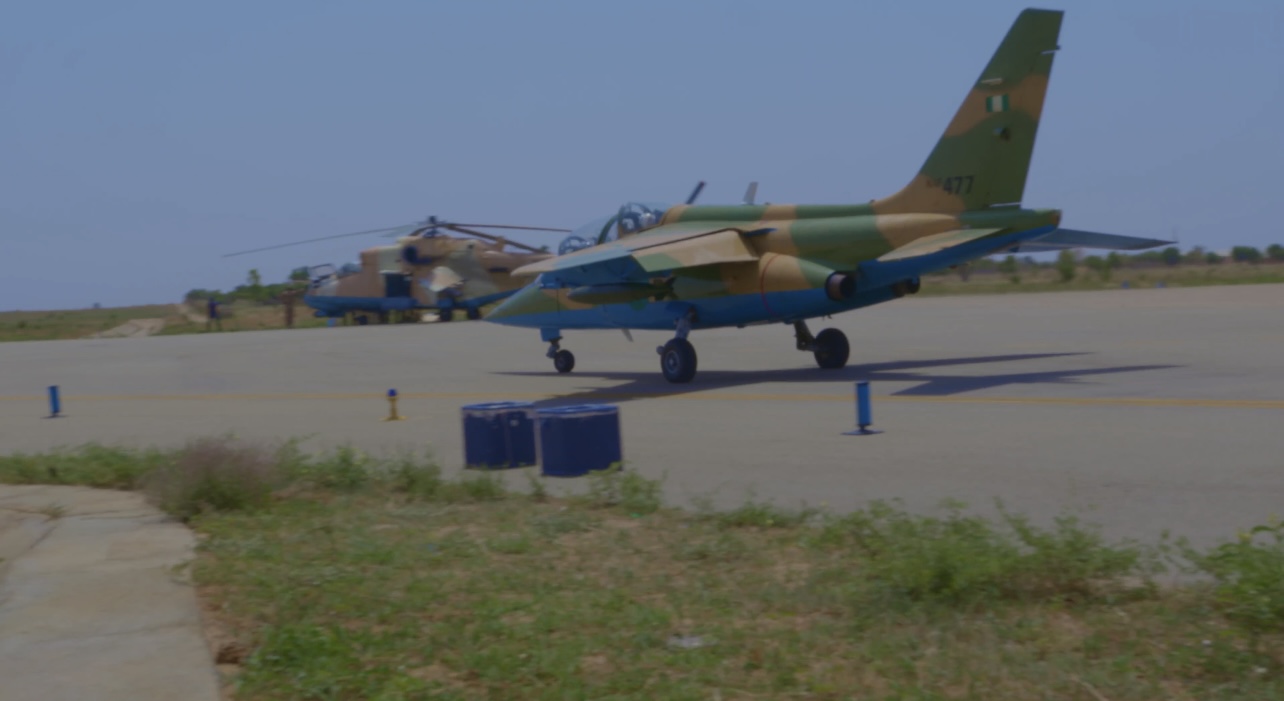
The Nigerian Air Force’s Alpha Jet has carved for itself an enduring place in the nation’s military history as one of the most iconic combat aircraft ever to serve in the country’s inventory, with a legacy forged through decades of intense operations, regional interventions, and relentless contributions to national security.
Inducted into the Nigerian Air Force in the early 1980s, the Alpha Jet did not merely expand the Service’s aircraft holdings; it ushered in a new era of fast-jet capability, operational confidence, and combat versatility. Conceived as both an advanced trainer and a light-attack aircraft, the platform quickly demonstrated that it could fight as fiercely as it could train, evolving into a dependable workhorse that shaped generations of Nigerian pilots while simultaneously delivering decisive effects on the battlefield.
The defining combat pedigree of the NAF Alpha Jet was first etched in West Africa, where Nigerian Air Force aircraft operating under the Economic Community of West African States Monitoring Group (ECOMOG) spearheaded air operations in Liberia and Sierra Leone. During these campaigns, Alpha Jets flew sustained and high-risk combat missions, striking hostile targets, disrupting enemy logistics chains, and providing relentless close air support to friendly forces. These operations not only contributed significantly to the restoration of relative stability in the sub-region but also established Nigeria as a dominant air power within West Africa.
Years later, the Alpha Jet once again projected Nigerian resolve beyond its borders during the 2017 stabilisation operations in The Gambia, supporting regional efforts to enforce democratic mandates. Its presence in theatre underscored Nigeria’s readiness to deploy credible air power in defence of constitutional order and regional peace, further reinforcing the aircraft’s reputation as a symbol of Nigerian air power projection.
On the home front, the Alpha Jet became synonymous with speed, precision, and authority. Its sleek silhouette and sudden appearance over contested areas earned it the fear-tinged nickname “Dudu Birds,” a reflection of both its dark profile and the decisive impact it delivered wherever it was deployed. Rugged, responsive, and battle-tested, the aircraft dominated airspace in multiple internal security operations, shaping the tempo of engagements and reinforcing the Nigerian Air Force’s reputation for responsiveness and lethality.
As Nigeria confronted the evolving threats of insurgency, terrorism, and armed criminality, the Alpha Jet once again answered the call. Re-activated, sustained, and driven into high-tempo operations, the aircraft delivered punishing effects against hostile elements across various theatres. It escorted strike packages, interdicted enemy movements, and provided close air support to troops in contact with lethal accuracy. The thunder of its engines over hostile territory became both a physical and psychological weapon, degrading enemy morale while reassuring friendly forces on the ground of overwhelming air dominance.
This formidable combat legacy, however, was not achieved without sacrifice. The Nigerian Air Force continues to honour the gallant Alpha Jet aircrew who flew into danger without hesitation, some of whom paid the supreme price in defence of the nation. Their courage and professionalism remain permanently etched into Nigeria’s air power history and form a core part of the institutional memory and fighting spirit of the Service.
Today, under the leadership and strategic vision of the Chief of the Air Staff, Air Marshal Sunday Kelvin Aneke, the legacy of the Alpha Jet is not being consigned to history but is actively shaping the future. The Nigerian Air Force is aggressively modernising its fleet, inducting advanced multi-role and lead-in fighter aircraft to assume and expand the missions once undertaken by the Alpha Jet, with greater persistence, improved sensors, enhanced survivability, and superior combat effectiveness.
Through this deliberate and carefully managed transition, the Alpha Jet’s legacy is being institutionalised rather than retired. It represents a bridge between generations of Nigerian air power, linking a proven combat icon to a new era of sharper, smarter, and deadlier capabilities. As newer platforms take to the skies, they do so standing firmly on the shoulders of the Alpha Jet, an aircraft whose raw power, proven combat performance, and historic contributions remain indelibly etched in the proud annals of the Nigerian Air Force.