


By Nkechi Eze
The Independent National Electoral Commission (INEC) has pledged to deliver what it described as a landmark 2027 General Election, firmly anchored on five non-negotiable pillars: freedom from interference, fairness to all contestants and political parties, credibility that meets global standards, transparency at every stage of the process, and full inclusion of all eligible Nigerians, regardless of physical ability or location.
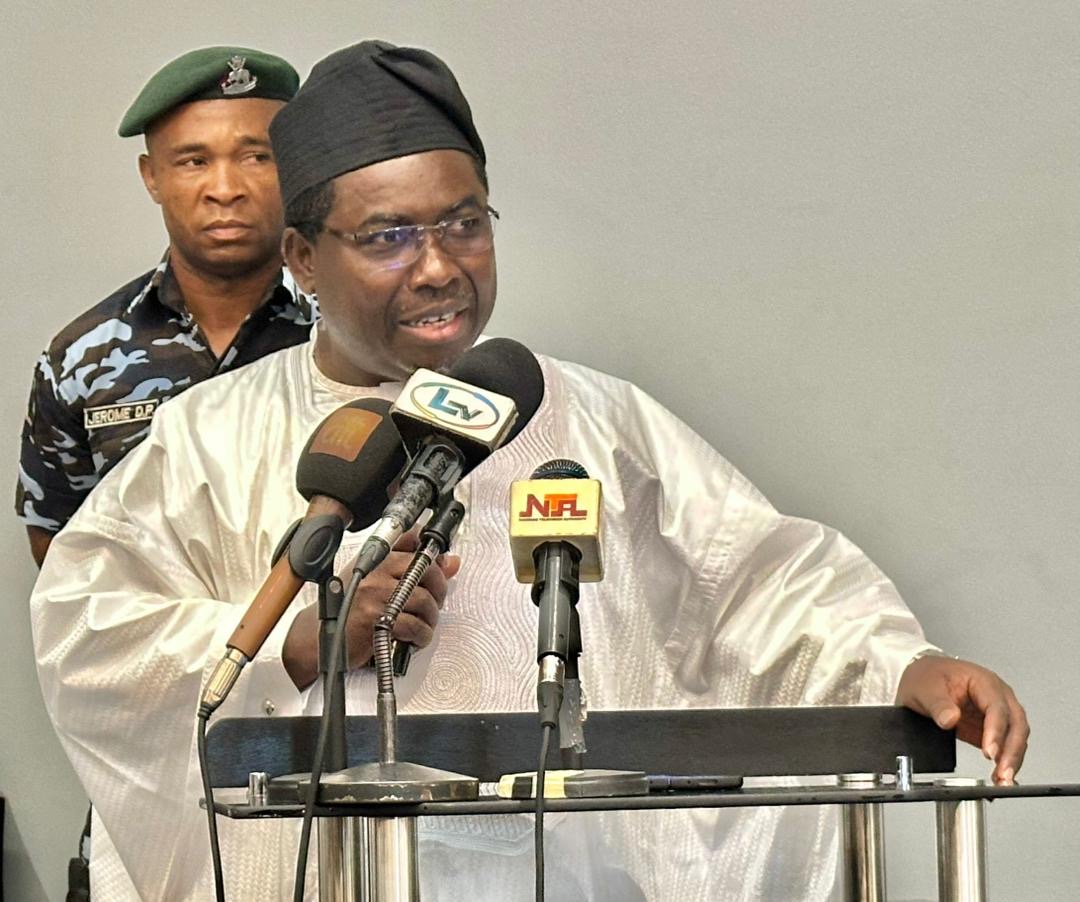
The commitment was articulated by the newly appointed Chairman of the Commission, Professor Joash Amupitan, SAN, while delivering his opening address at the 2026 Induction and Strategic Retreat for INEC leadership held in Lagos on January 9 and 10. The two-day retreat, hosted at the Radisson Blu Hotel, Ikeja, brought together National Commissioners, Resident Electoral Commissioners and senior officials for induction, strategic alignment and forward planning.
Describing the five principles as the bedrock of the Commission’s work ahead of the 2027 electoral cycle, Professor Amupitan said they constitute “the unshakeable foundation upon which all our preparations, decisions and actions must rest.” According to him, “Our task is clear: elections must be free, fair, credible, transparent and inclusive. These are not aspirations; they are obligations.”
Reflecting on his first months in office since assuming leadership on October 23, 2025, the INEC Chairman commended staff of the Commission for what he described as their professionalism and dedication during the Anambra State off-cycle governorship election held on November 8, 2025. He noted that the peaceful conduct of the poll was a reassuring signal of the Commission’s capacity under pressure. “The Anambra election was my first major test as Chairman, and I am proud of the commitment and discipline displayed by our personnel,” he said, while also extending New Year greetings and describing 2026 as “a year of institutional renewal and heightened readiness.”
Looking ahead, Professor Amupitan identified a series of imminent electoral exercises as critical testing grounds for INEC’s systems and operational resolve. These include the February 2026 Federal Capital Territory Area Council elections, as well as the forthcoming off-cycle governorship elections in Ekiti and Osun states. He stressed that these polls would be used to refine core electoral processes. “These elections are not routine; they are opportunities to fine-tune our technology, our logistics and our efficiency ahead of the national contest in 2027,” he said. Key focus areas, he added, include the Bimodal Voter Accreditation System (BVAS), voter register management, Continuous Voter Registration, logistics planning and overall operational performance.
A major focus of the Chairman’s address was the need to earn and sustain the confidence of Nigeria’s rapidly expanding youth electorate. Describing young voters as digitally savvy and highly discerning, he warned that trust could no longer be taken for granted. “We are dealing with a generation that demands real-time transparency and has little tolerance for opacity,” Professor Amupitan said. “If we get it right now, we do not just win an election; we win the lifelong trust of millions of young Nigerians in democracy itself.”
He reaffirmed the Commission’s strict adherence to the Electoral Act 2022 and all relevant amendments, describing the rule of law as INEC’s “operating system.” Over the course of the retreat, participants deliberated on 17 key thematic areas, including election security, logistics challenges, management of ad-hoc staff, inter-agency collaboration, enforcement of internal party democracy, and transparency in political party financing.
Echoing earlier welcome remarks by the Lagos State Resident Electoral Commissioner, Professor Ayobami Salami, who described Lagos as Nigeria’s commercial and political nerve centre, the INEC Chairman underscored the importance of unity and institutional cohesion. He said early coordination, leadership capacity building and clear communication were essential in meeting rising public expectations.
Setting an ambitious goal beyond Nigeria’s borders, Professor Amupitan declared that INEC aims not only to conduct a successful general election but also to emerge as Africa’s leading Election Management Body. “The eyes of over 200 million Nigerians and indeed the entire continent are upon us,” he told participants. “The 2027 General Election must be a watershed moment. Our success must become a continental standard.”
While pledging continued attention to staff welfare and the provision of tools and an enabling environment, the Chairman issued a firm warning against misconduct. “Integrity is non-negotiable,” he said. “Any compromise, whether by omission or commission, will attract consequences.”
The retreat concluded with calls for breaking down institutional silos, encouraging open communication and constructive feedback, and forging a united, purpose-driven Commission. As Nigeria approaches one of its most consequential electoral moments, Professor Amupitan’s message was unmistakable: by rigorously upholding its five pillars, INEC has an opportunity to restore public trust and leave behind a legacy of transparent, credible and world-class elections.