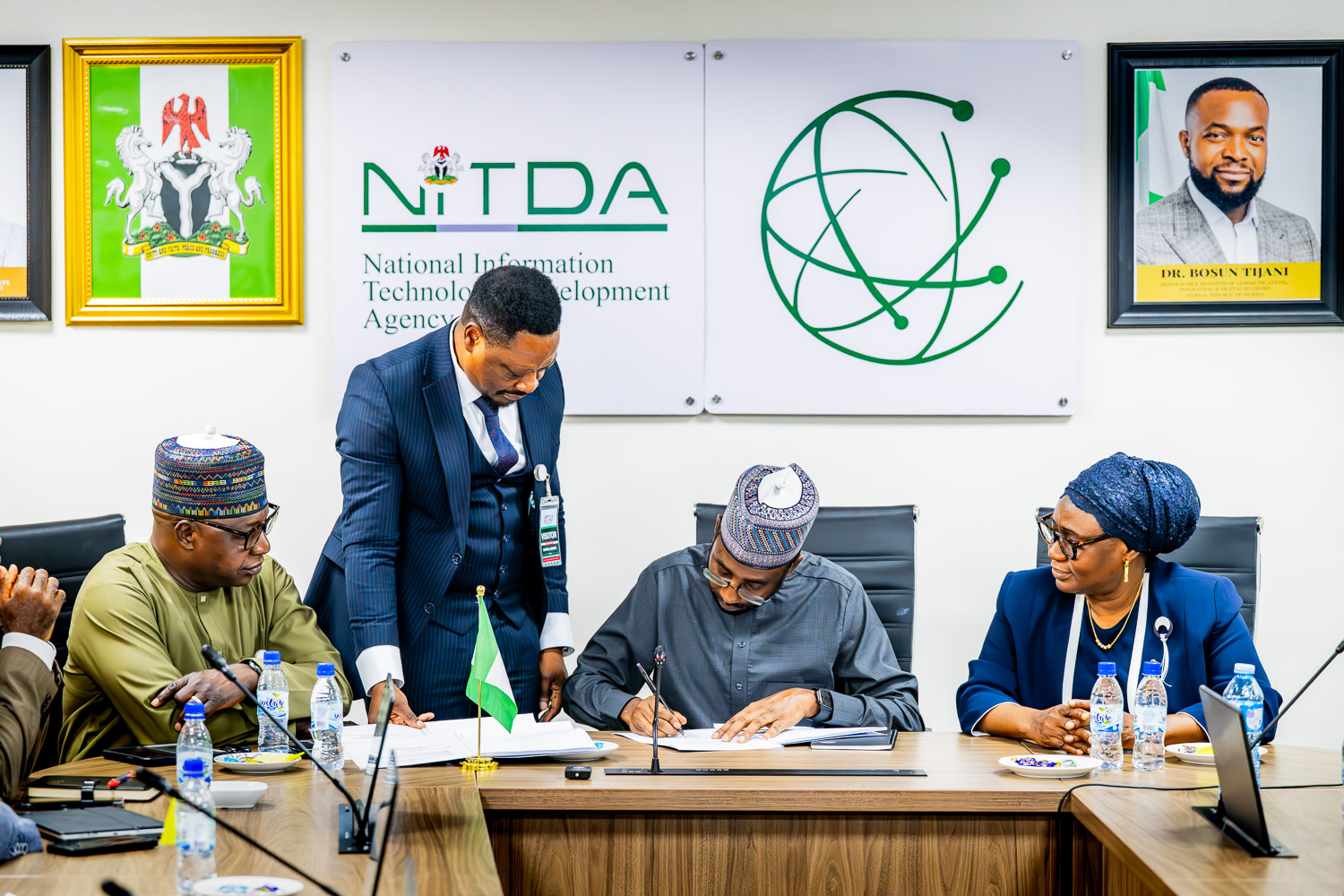
The National Information Technology Development Agency (NITDA) has unveiled a comprehensive regulatory framework aimed at setting new standards for cloud infrastructure in Nigeria, as part of efforts to strengthen the country’s digital sovereignty and accelerate the growth of the digital economy.
The new framework, unveiled in Abuja, forms the core of the National Sovereignty Cloud Initiative (NSCI), a strategic Federal Government programme coordinated by NITDA to establish a secure, trusted and globally competitive cloud ecosystem.
The regulatory instruments include the National Computing Guideline, the National Cloud Technical Guideline, the National Digital Infrastructure Assurance Framework and the National Cloud Investment Strategy. Together, they are expected to provide clear regulatory direction, technical standards and investment incentives for Nigeria’s expanding cloud computing sector.
Speaking at the unveiling, the Director General of NITDA, Kashifu Inuwa Abdullahi, CCIE, said the initiative lays the foundation for a resilient cloud infrastructure capable of protecting Nigeria’s digital assets while driving innovation and investment.
He explained that the regulatory instruments would provide the certainty and assurance needed to build a trusted cloud ecosystem that safeguards Nigeria’s digital sovereignty and supports sustainable economic growth.
Abdullahi said the long-term objective is to position Nigeria as a cloud infrastructure hub for West and Central Africa by investing in local digital infrastructure.
“We should position ourselves not to serve Nigeria alone, but to serve West and Central Africa. Nigeria is already the digital gateway to West Africa and can extend to every part of Africa. But we can only realise that goal when we build our infrastructure. So, today’s event is the first step in that direction,” he said.
He commended members of the NSCI Technical Working Group and other stakeholders for developing the regulatory instruments, adding that effective collaboration among regulators would be critical to their successful implementation.
Permanent Secretary of the Federal Ministry of Communications, Innovation and Digital Economy, Engr. Nadungu Gagare, said the initiative reflects the Federal Government’s commitment to protecting Nigeria’s digital assets by ensuring that government data remains within the country’s jurisdiction and under local operational control.
According to him, the framework will not only strengthen data sovereignty and regulatory compliance but also stimulate investment in local cloud infrastructure, create jobs and support indigenous technology companies.
The Governor of the Central Bank of Nigeria (CBN), Dr Olayemi Cardoso, represented by the Director of the Payment System Supervision Department, Dr Rakiya Opemi Yusuf, described the initiative as evidence of growing collaboration among government institutions responsible for Nigeria’s digital transformation.
He noted that while the CBN regulates the financial ecosystem, NITDA provides the national framework for cloud governance, digital infrastructure and assurance, stressing that both institutions play complementary roles in building a secure national digital architecture.
Cardoso reaffirmed the apex bank’s commitment to working with NITDA and industry stakeholders to position Nigeria as Africa’s trusted destination for digital finance and cloud innovation.
Also speaking, the Managing Director and Chief Executive Officer of Galaxy Backbone Limited, Prof. Ibrahim Adeyanju, said the initiative comes at a crucial time, particularly following the CBN’s directive requiring banks and other financial institutions to localise their data.
He expressed optimism that the new standards would encourage greater investment in local cloud services, develop indigenous digital expertise and create employment opportunities similar to those generated by the liberalisation of Nigeria’s telecommunications sector.
To drive implementation, NITDA announced that it will establish the Sovereign Cloud Governance Committee (SovGov) within the next two weeks. The committee will comprise representatives of relevant government institutions, sector regulators, industry players and the private sector, with NITDA serving as its secretariat.