

…as IGP Disu Announces Expanded Intelligence-Led Operations, Inter-State Security Coordination, and New Anti-Crime Enforcement Drive
By Nkechi Eze
The Inspector-General of Police, Olatunji Disu, has announced significant operational achievements by the Nigeria Police Force, including the arrest of eight suspected terrorists, the rescue of 88 kidnapped victims, and the recovery of 114 firearms, while unveiling sweeping new security directives aimed at strengthening national policing architecture.
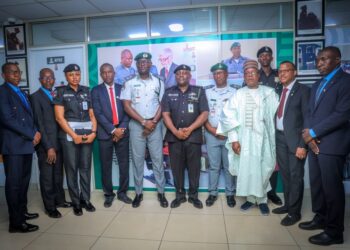
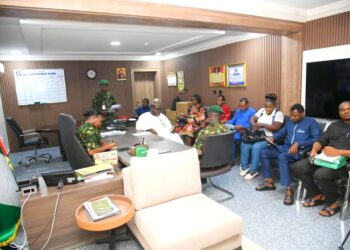
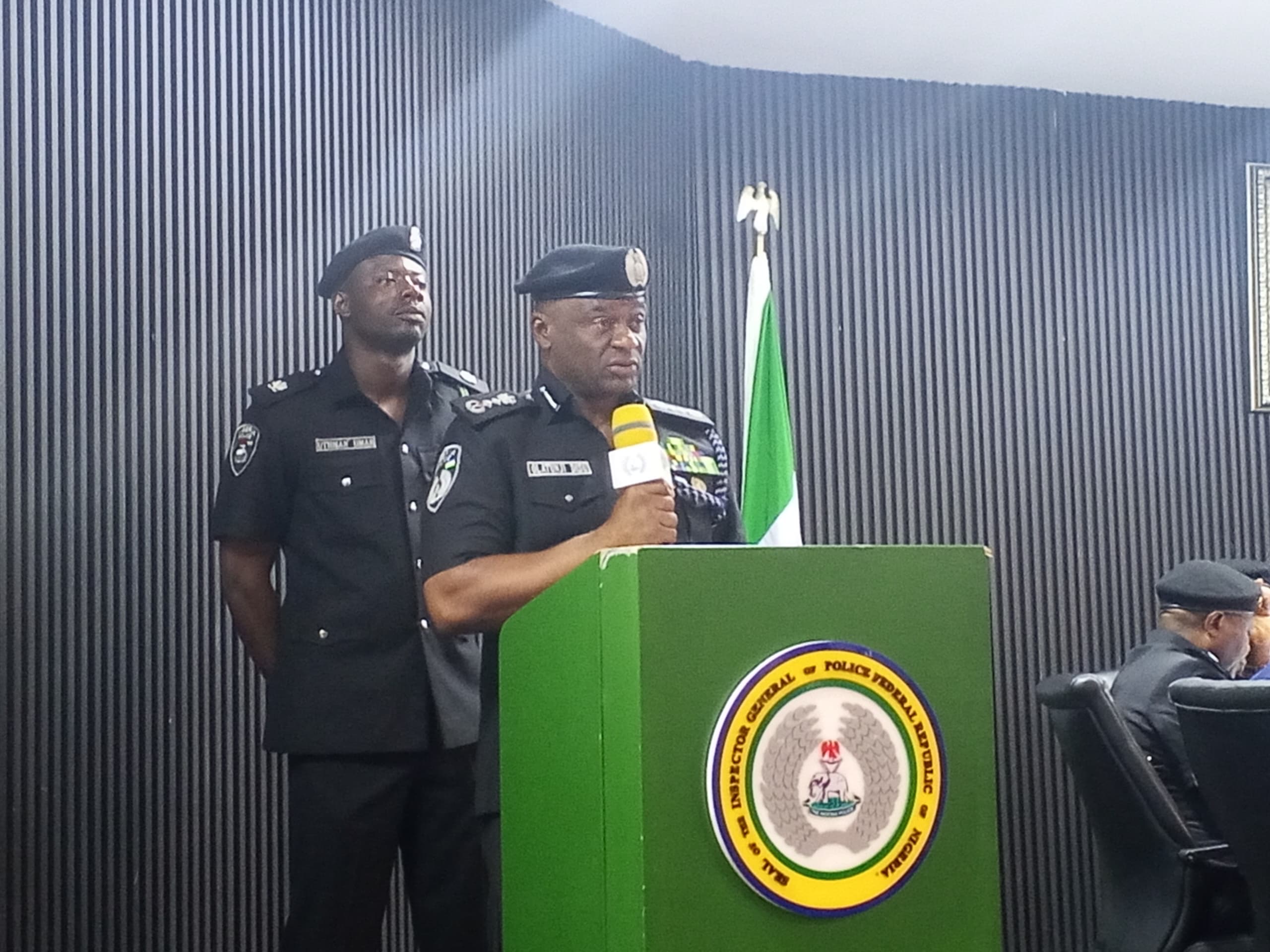
Speaking on Tuesday at the monthly conference with strategic senior officers held at the Goodluck Ebele Jonathan Peacekeeping Centre, Force Headquarters, Abuja, the IGP said the Force continues to record measurable gains across multiple theatres of operation despite persistent security challenges across the country.
According to him, the Nigeria Police Force remains firmly committed to intelligence-driven policing, strategic deployments and inter-agency collaboration, which he said have continued to yield significant operational outcomes.
“Across various parts of the country, we continue to confront evolving threats associated with kidnapping, armed robbery, cult-related violence, terrorism, banditry, farmer-herder conflicts, cyber-enabled crimes, and other emerging criminal activities,” he said, stressing that policing must remain “proactive, intelligence-driven and adaptive.”
The police chief assured Nigerians that ongoing rescue operations for abducted schoolchildren in Oyo State remain active, adding that the Force, in collaboration with sister security agencies, has deployed full operational capacity to ensure their safe return.
“The abduction of schoolchildren in Oyo State remains an active operation. We are making progress, and we will not rest until every child is brought home safely,” he stated.
He also highlighted a recent successful rescue operation in Oyo State where Mrs. Olaide Busayo Adegoke John-Paul and her twin sons were freed unharmed, describing the outcome as evidence of effective intelligence-led policing.
In a detailed operational briefing, the IGP revealed that since the last conference on May 5, 2026, police operatives had arrested 8 suspected terrorists, 29 murder and culpable homicide suspects, 65 armed robbery suspects, 55 kidnapping suspects, and 42 suspected cultists. He added that 88 kidnapped victims were rescued within the same period.
He further disclosed the recovery of 114 assorted firearms, 843 rounds of ammunition, and 28 stolen vehicles across various operations nationwide.
A notable example, he said, occurred in the Federal Capital Territory where intelligence-led surveillance led to the interception and arrest of five suspected kidnappers en route to Abuja.
“Through coordinated intelligence and operational deployment, the suspects were successfully intercepted and arrested before they could execute their plans,” he explained, describing the operation as proof of the effectiveness of proactive policing.
The IGP announced a major restructuring of police command operations with the deployment of Deputy Inspectors-General of Police to geopolitical zones effective June 15, 2026, describing the move as a deliberate effort to strengthen supervision and operational coordination.
“This deployment is not ceremonial. It is intended to bring leadership closer to the field, improve response mechanisms, and ensure that emerging security threats receive prompt and coordinated attention,” he said.
He also ordered the immediate introduction of “Handshake Patrols” between Commissioners of Police in neighbouring states, aimed at dismantling criminal networks that exploit jurisdictional boundaries.
“Security must be approached from a regional rather than a purely territorial perspective,” the IGP emphasized, directing coordinated patrols along interstate entry and exit routes alongside enhanced intelligence sharing.
On media engagement, he urged senior officers to improve communication with journalists, stressing the importance of timely clarification of facts and proactive dissemination of information to counter misinformation.
“Public perception can influence confidence in our institutions as much as operational outcomes,” he noted.
Reaffirming the importance of community policing, the IGP described citizens as critical partners in intelligence gathering and crime prevention, directing Commissioners of Police to institutionalise monthly stakeholder engagements with community leaders and key societal groups.
“Intelligence remains the foundation of successful policing. The most valuable intelligence often comes not from sophisticated technology but from ordinary citizens who trust the police enough to share information,” he said.
In a firm directive addressing road security concerns, the police chief ordered a nationwide crackdown on vehicles operating without registration plates or with concealed or tampered number plates.
“Any vehicle found without number plates or with deliberately obscured, concealed, or tampered registration numbers will be stopped, impounded, and subjected to the appropriate legal processes,” he warned, directing immediate enforcement by all commands.
He commended President Bola Ahmed Tinubu for his support to police reforms and reiterated the Force’s commitment to professionalism, discipline, and improved operational efficiency.
The IGP concluded that the Nigeria Police Force remains focused on building a more accountable, trusted, and operationally effective institution capable of responding decisively to Nigeria’s evolving security challenges.