By Nkechi Eze
The Chairman of the Independent Corrupt Practices and Other Related Offences Commission, Musa Adamu Aliyu, has called on the media to take a frontline role in combating money laundering and terrorist financing, describing journalists as critical partners in safeguarding Nigeria’s economic integrity and democratic institutions.
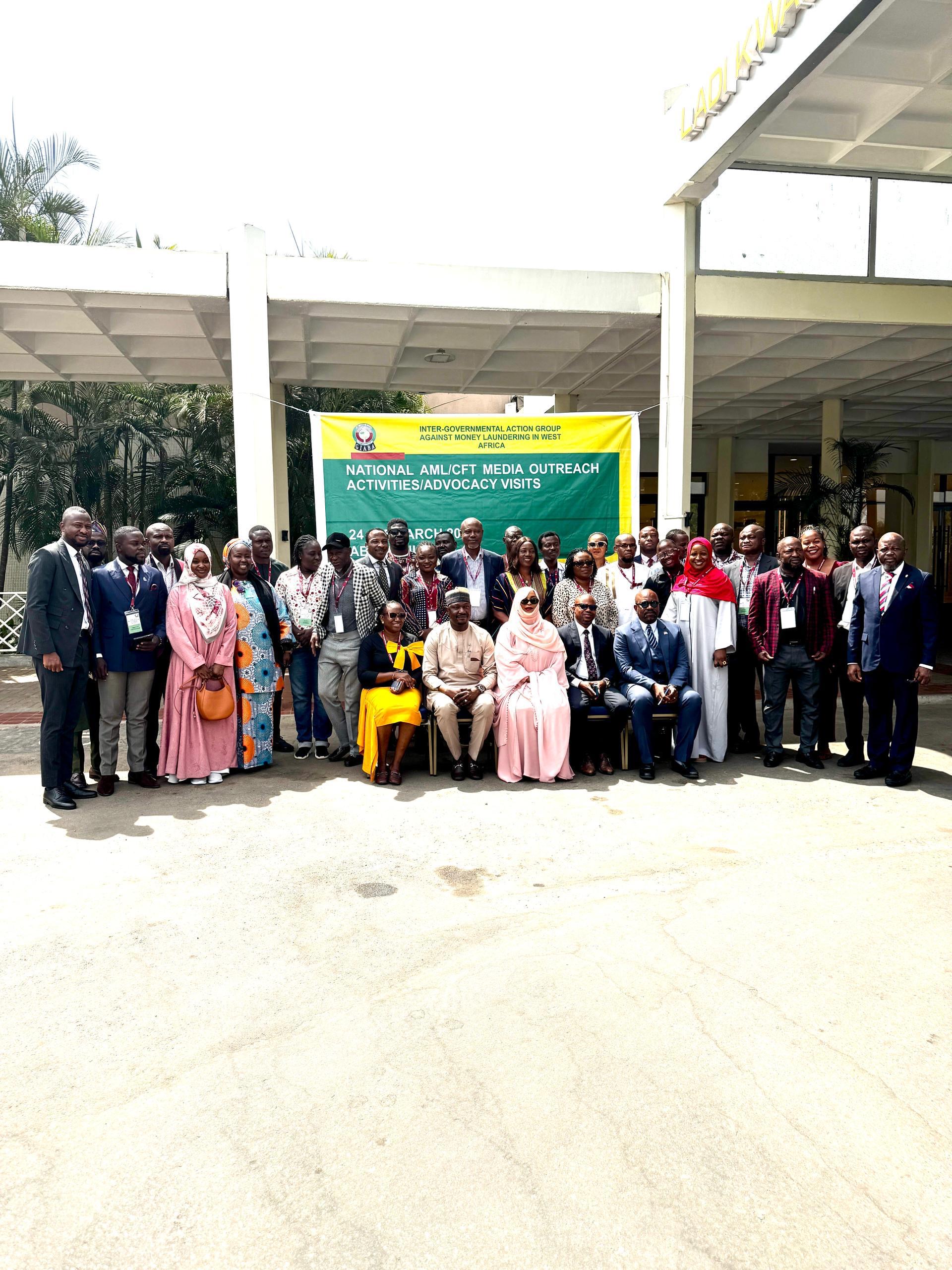
Aliyu made the call at the National Anti-Money Laundering/Countering the Financing of Terrorism (AML/CFT) Media Outreach organised by the Nigerian Financial Intelligence Unit in collaboration with the Intergovernmental Action Group Against Money Laundering in West Africa in Abuja. His remarks were delivered by the Head of Media and Public Communications at ICPC, Mr. J. Okor Odey.
He warned that money laundering and terrorist financing remain among the most destabilising threats to national security and economic stability, noting that their impact erodes public trust, distorts markets, and deprives citizens of critical development resources.
The ICPC boss highlighted the growing sophistication of financial crimes, driven by digital technology, social media, and artificial intelligence, which allow criminal networks to exploit anonymity and rapidly move illicit funds across borders.
He, however, commended the NFIU for deploying advanced analytics and real-time transaction monitoring systems, describing such innovations as essential in staying ahead of evolving financial crimes.
“The media must go beyond information dissemination to intentionally promote anti-corruption ideals and financial integrity. Investigative journalism, public interest programming, and responsible reporting are vital tools for exposing illicit financial flows and deterring wrongdoing,” he said.
Also speaking, the Chief Executive Officer of the NFIU, Hafsat Abubakar Bakari, emphasised the shared responsibility between journalists and financial intelligence institutions in promoting transparency and accountability.
“Journalists turn the light of truth on critical issues, while we trace financial flows to ensure that illicit networks do not operate in the shadows. This partnership is essential in strengthening accountability and responsible governance,” she said.
In his contribution, Director-General of GIABA, Edwin W. Harris Jr., represented by Timothy Melaye, stressed that the media remains a vital stakeholder in the regional fight against financial crimes.
He noted that GIABA, as a specialised institution of ECOWAS, is mandated to promote compliance with international AML/CFT standards, including those of the Financial Action Task Force, while addressing regional realities.
“The fight against financial crimes cannot succeed without the media. Journalists must deepen their understanding of AML/CFT issues and communicate them in accurate and accessible language,” he said, adding that the initiative would help build a network of journalists focused on reporting economic and financial crimes across West Africa.
Representing the Minister of Information and National Orientation, Mohammed Idris, the Executive Secretary of the Nigeria Press Council, Dr. Dili Ezughah, reaffirmed the Federal Government’s commitment to tackling corruption and financial crimes.
“The media is not just a bystander but a powerful force in shaping national discourse and educating citizens on the dangers of money laundering and terrorist financing,” he said.
Similarly, the Attorney-General of the Federation and Minister of Justice, Lateef Olasunkanmi Fagbemi, represented by Mr. Olubunmi Ikupolati, underscored the importance of public awareness in addressing financial crimes.
“The Federal Government remains resolute in strengthening AML/CFT frameworks through enhanced intelligence-sharing, inter-agency collaboration and institutional support,” he said, adding that an informed citizenry is key to identifying and reporting suspicious activities.
The outreach programme brought together media professionals, regulators, and key stakeholders to strengthen collaboration, enhance capacity, and deepen public understanding of anti-money laundering and counter-terrorism financing issues.
Participants expressed optimism that the engagement would catalyse more impactful reporting and foster a stronger, united front against financial crimes in Nigeria.