


By Nkechi Eze
The Chairman and Chief Executive Officer of the Nigerians in Diaspora Commission (NiDCOM), Abike Dabiri-Erewa, has paid a condolence visit to the palace of the late Akran of Badagry, His Royal Majesty, Babatunde Akran, describing the monarch as a visionary leader whose reign left a lasting impact on cultural preservation and diaspora engagement.
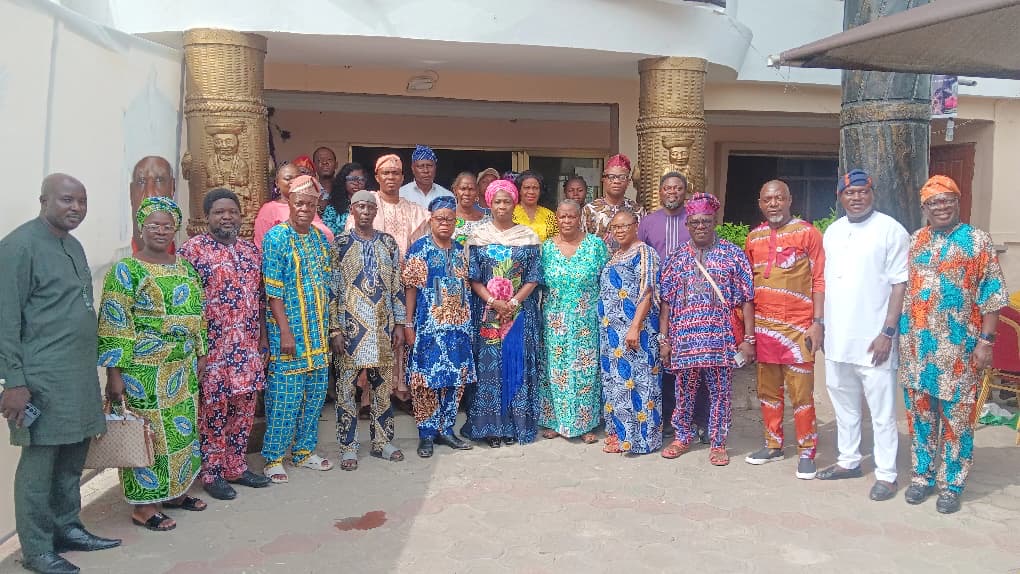
Dabiri-Erewa was received at the palace by the Regent, chiefs, and members of the royal family, where she conveyed her heartfelt condolences and paid tribute to the late monarch’s contributions to the socio-economic and cultural advancement of Badagry and Nigeria.
According to a statement signed by NiDCOM’s Head of Media, Public Relations and Protocols Unit, Abdur-Rahman Balogun, the NiDCOM boss noted that the late Oba’s reign was defined by peace, progress, and initiatives that strengthened the historic and cultural significance of Badagry as a gateway for reconnecting Africans in the diaspora with their ancestral roots.
She particularly commended the institutionalisation of the Badagry Door of Return Festival, describing it as a landmark initiative that elevated the town’s global profile and reinforced its symbolic importance in the African diaspora narrative.
Dabiri-Erewa emphasised that the monarch’s enduring commitment to heritage preservation and diaspora relations would remain a defining legacy for future generations.
In response, the chiefs and family members of the late monarch expressed appreciation for the visit and reaffirmed their commitment to sustaining a strong and cordial relationship between the palace, the people of Badagry, and NiDCOM.
As part of her visit, the NiDCOM Chairman also inspected the site of the permanent Door of Return, currently under construction. She commended the Governor of Lagos State, Babajide Sanwo-Olu, for approving the project, describing it as a landmark tourism initiative that will further strengthen cultural ties and reconnect the historic African diaspora with the continent.
She noted that the project would serve as a powerful symbol of remembrance, reconciliation, and renewed connection between Africa and its global diaspora.