

By Nkechi Eze
The Civil Society Legislative Advocacy Centre and the Transition Monitoring Group have raised serious concerns over widespread voter apathy, logistical failures and alleged political interference in recent elections conducted across the Federal Capital Territory, Rivers and Kano states, warning that declining public confidence in the electoral process poses a growing threat to Nigeria’s democracy.
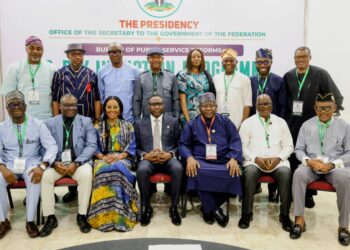
In a joint statement signed by Auwal Musa Rafsanjani, who serves as Executive Director of CISLAC and Chairman of TMG, the groups said although the elections were largely peaceful in many polling units, observers documented significant irregularities and operational weaknesses that undermined the credibility and inclusiveness of the process.
The organisations warned that Nigerians are increasingly losing faith in elections, cautioning that when citizens stop participating, democracy itself is endangered.
“When citizens no longer turn out to vote, it is no longer an election but a selection,” the statement said, describing the trend as dangerous for democratic governance and national stability.
Central to their concerns was the generally low voter turnout recorded across polling units in the affected areas. Observers reported that in some locations, as few as 10 voters were recorded throughout the day, a situation the groups described as alarming and indicative of deepening voter apathy.
They warned that persistent disengagement from the electoral process could erode public confidence and weaken the legitimacy of elected leaders if not urgently addressed.
The groups also highlighted serious accessibility challenges faced by persons with disabilities, despite assurances by the Independent National Electoral Commission that provisions had been made to accommodate all voters.
Reports from monitoring teams, including those from TAF Africa and the Joint National Association of Persons with Disabilities, indicated that polling units in rural area councils such as Kwali and Abaji were located in places inaccessible to wheelchair users.
They further disclosed that assistive materials such as magnifying glasses and Braille posters were missing in more than 60 per cent of the polling units observed, calling for a comprehensive audit of INEC’s accessibility measures to ensure inclusivity in future elections.
Logistical shortcomings were also evident, particularly within the Abuja Municipal Area Council, where delayed deployment of electoral personnel and materials caused late commencement of voting in several polling units.
Beyond logistics, CISLAC and TMG raised troubling allegations of voter suppression, especially targeting women in densely populated communities.
According to observers, economic intimidation was allegedly deployed to discourage women from joining voting queues, widening existing gender participation gaps and undermining the principle of equal political participation.
The groups further accused the Minister of the Federal Capital Territory, Nyesom Wike, of actions they said could undermine public confidence in the process.
They alleged that Wike appeared at multiple polling units across Abuja during the elections, describing his presence as inappropriate, particularly as he is not a registered voter in the FCT and has no constitutional role in the conduct of elections.
They called on President Bola Ahmed Tinubu to ensure that all public officials strictly adhere to the law and refrain from actions capable of eroding trust in the electoral system.
The organisations also reiterated their opposition to the movement restrictions imposed ahead of the polls, arguing that such measures may have contributed to low voter turnout and suppressed participation.
Observers equally reported confusion caused by the relocation of some polling units without adequate public communication, a development they said may have disenfranchised voters who were unable to locate their designated voting centres.
Incidents of vote buying were also documented in some areas, highlighting the continued vulnerability of Nigeria’s elections to monetary inducement and manipulation.
In Rivers State, CISLAC and TMG expressed concern over what they described as a security siege, alleging that heavy militarisation of local government areas discouraged participation, particularly among women who traditionally form a significant portion of early voters.
In Kano and Rivers states, the groups also questioned the absence of major political parties from the ballot during bye elections conducted by INEC.
They described the development as suspicious and unusual, especially in Kano, where major opposition parties have historically participated actively in elections.
The organisations urged INEC to provide a clear explanation to dispel perceptions of deliberate exclusion and restore public confidence.
They also raised concerns over gender representation, citing criticism by the Centre for Information Technology and Development over the complete absence of women in the leadership of newly elected local government councils in Kano.
According to the organisation, the outcome represents a major setback for gender inclusion and falls short of the 35 per cent affirmative action target.
Further concerns were raised over disruptions to INEC’s Result Viewing Portal, known as IReV, which was reportedly inaccessible during the collation of results.
CISLAC and TMG stressed that the credibility of elections depends heavily on transparency and called on INEC to ensure that collation and declaration of results are conducted with the highest standards of integrity and professionalism.
They also urged security agencies to maintain strict neutrality, particularly during sensitive stages such as result collation.
Despite the challenges, the groups reaffirmed their commitment to strengthening electoral reforms and promoting accountability.
They emphasised the urgent need for INEC and other stakeholders to address the identified shortcomings, warning that failure to do so could further weaken public confidence and undermine the integrity of future elections in Nigeria.