

By Nkechi Eze
China has trained more than 10,000 Nigerians across critical sectors as part of sustained efforts to strengthen people-to-people relations and deepen bilateral cooperation between China and Nigeria, the Chinese Ambassador to Nigeria, Yu Dunhai, has disclosed.
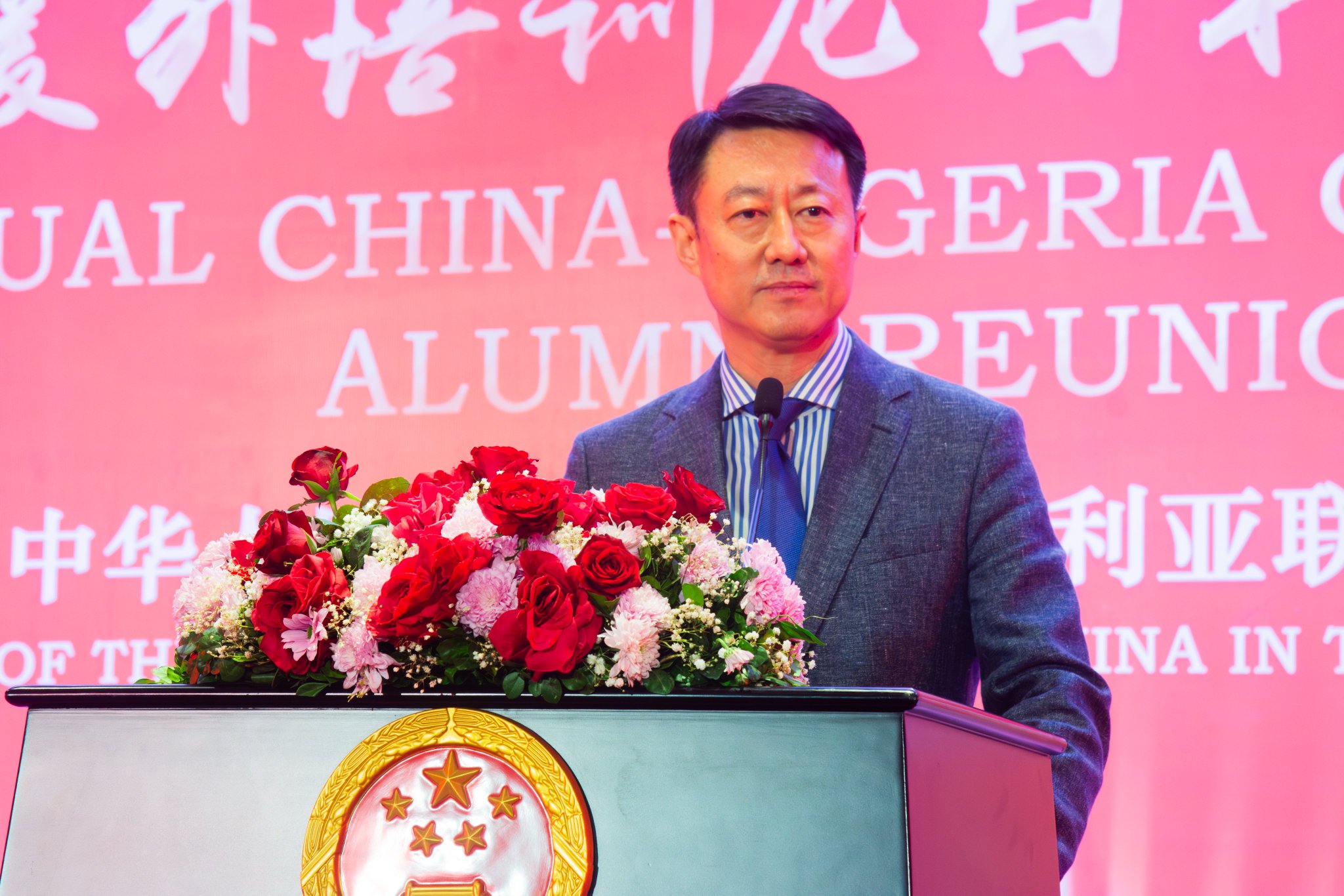
Ambassador Yu made the revelation at the first annual China–Nigeria Government Exchange Programme Alumni Reunion Gala, held at the Abuja Continental Hotel. The event, organised by the Chinese Embassy in Nigeria, brought together alumni of the exchange programme, senior public officials and development stakeholders from across the country, creating a platform for reflection, networking and renewed commitment to bilateral engagement.
Speaking at the gathering, the ambassador said the reunion was designed to consolidate the growing community of programme alumni, strengthen professional networks, encourage the exchange of ideas and enhance their collective contribution to China–Nigeria relations. He explained that China’s training support for Nigerians spans a wide range of sectors, including governance, poverty alleviation, agriculture, manufacturing, public health, trade and investment, science and technology, innovation, as well as the blue and digital economies.
According to him, the initiative has not only built individual capacity but has also contributed meaningfully to Nigeria’s broader economic and social development. He noted that beneficiaries of the programme are spread across major cities such as Abuja, Lagos, Maiduguri, Ibadan and Benin City, underscoring the nationwide reach and impact of the training.
Yu attributed China’s long-standing commitment to capacity building in Nigeria to the enduring bilateral relationship between both countries, which spans over five decades. He described Nigeria and China as natural partners that have consistently supported each other on issues of national interest and key international platforms.
Highlighting diplomatic cooperation, the ambassador pointed to China’s support for Nigeria’s growing role in global affairs, including its recent recognition as a BRICS partner country, its return to the International Maritime Organisation and its aspiration to join the G20. He also acknowledged Nigeria’s continued support for China’s One-China policy, describing it as a strong symbol of mutual trust and respect.
On the economic front, Yu revealed that bilateral trade between China and Nigeria has exceeded 22 billion dollars this year, already surpassing the total recorded in the previous year. He added that Chinese direct investment in Nigeria has grown by 130 per cent, while Nigeria’s exports to China have increased by more than 200 per cent.
He further highlighted the implementation of China’s zero-tariff policy for all products from African countries, including Nigeria, describing it as a major opportunity to expand Nigeria’s access to the Chinese market and strengthen its competitiveness in global trade.
Also speaking at the event, the Permanent Secretary of the Federal Capital Territory Social Development Secretariat, Olubunmi Olowookere, commended the Chinese government for the hospitality, professionalism and depth of learning offered during the training programmes. She said the exposure was particularly valuable to her work in social welfare, poverty reduction, community development and the protection of vulnerable groups.
Olowookere explained that the programme provided participants with hands-on exposure to people-centred development models and innovative social protection strategies, enabling them to observe and learn from practical experiences beyond classroom theory. She noted that the experience has equipped beneficiaries with the skills needed to design and implement more inclusive policies and programmes in Nigeria.
In his goodwill message, the Director General of the Centre for Management Development (CMD), Bitrus Chinoko, described the exchange programme as a practical demonstration of effective international cooperation. He said the Centre has benefited immensely from its collaboration with the Chinese government through various capacity-building initiatives.
Chinoko disclosed that under the China Aid for Shared Future Initiative, 69 CMD staff participated in 28 China-sponsored training programmes between March and August 2025. According to him, the programmes exposed participants to modern management tools, global best practices and innovative development approaches, significantly strengthening institutional capacity and performance.
The reunion, participants noted, not only celebrated past achievements but also reinforced a shared commitment to sustaining the momentum of China–Nigeria cooperation through knowledge exchange, mutual respect and people-centred development.