

By Nkechi Eze
The Chairman of the Independent National Electoral Commission (INEC), Professor Joash Amupitan, SAN, has charged Resident Electoral Commissioners (RECs) across the 36 states and the Federal Capital Territory (FCT) to ensure effective operational readiness, strict adherence to electoral guidelines and institutional neutrality ahead of the 2027 General Elections.
Amupitan warned that the Commission would not tolerate administrative lapses, operational failures or any compromise of its impartiality, stressing that Nigerians expect competence, transparency and credible outcomes from the electoral body.
According to an official statement issued by the Commission, the INEC Chairman gave the charge on Wednesday, November 25, 2026, while declaring open a strategic consultative meeting with RECs in Abuja, as the Commission intensifies preparations for the January 16 and February 6, 2027 elections.
He described the current stage of the electoral process as critical, noting that the responsibility of translating electoral reforms and technological improvements into successful field operations rested largely on the RECs.
“The Nigerian people are not asking us for excuses or explanations after the fact; they are asking for competence, impartiality, transparency, and courage in the execution of our constitutional mandate,” he said.
The INEC Chairman identified the RECs as the Commission’s chief operational commanders in the field, urging them to take personal responsibility for ensuring that directives from the national headquarters were effectively implemented across their respective states.
He noted that the elections would involve more than 100 million registered voters across 177,299 polling units, with 57,000 newly procured Bimodal Voter Accreditation System (BVAS) devices and over 1.41 million ad hoc personnel to be deployed.
According to him, the scale of the exercise leaves little room for administrative errors, warning that lapses in any state could undermine public confidence in the entire electoral process.
Amupitan identified the nationwide mock accreditation and result transmission exercise scheduled for Saturday, November 28, as a major test of the Commission’s preparedness for the elections.
He explained that the exercise would assess the performance of upgraded BVAS devices, logistics arrangements and automated result validation safeguards on the INEC Result Viewing Portal (IReV).
He consequently directed all RECs to personally supervise preparations in their states and submit comprehensive technical audit reports to the national headquarters by Monday, November 30.
The reports, he said, must identify network dead zones, device anomalies and procedural bottlenecks requiring urgent intervention by the Commission’s technical teams.
On election logistics, Amupitan stressed the need for timely deployment of personnel and materials to ensure early commencement of voting, warning that delayed opening of polling units could generate suspicion, anxiety and avoidable tension.
He also urged the RECs to strengthen collaboration with security agencies and make effective use of the Commission’s Election Risk Management (ERM) maps to ensure proactive, intelligence-led and location-specific election security arrangements.
The Chairman further cautioned against the growing threat of misinformation, disinformation and synthetic media, urging the Commissioners to maintain regular engagement with political parties, election observers, civil society organisations and the media to promote accurate and timely information.
On institutional neutrality, he maintained that INEC would not protect any official found compromising the Commission’s impartiality or facilitating electoral malpractice.
“Under the Electoral Act 2026, the Commission will not shield any staff member or official who compromises neutrality, facilitates malpractice, or breaches statutory rules,” he declared.
He urged the RECs to use the consultative meeting to identify operational challenges, resolve outstanding issues and strengthen coordination ahead of the mock exercise and the general elections.
Amupitan also charged them to maintain close supervision of Electoral Officers, personally monitor field audits and provide the national headquarters with honest assessments of developments in their states rather than relying solely on secondhand reports.
“Your leadership sets the ethical and operational tone in your respective states,” he reminded the Commissioners.
The INEC Chairman said the conduct of the RECs in the coming weeks would significantly influence the credibility of the elections, urging them to uphold the highest standards of professionalism and accountability.
In a related development, Amupitan has condemned rising political violence, attacks on electoral officials and threats against journalists ahead of the 2027 elections, calling for stronger security measures to protect the electoral process.
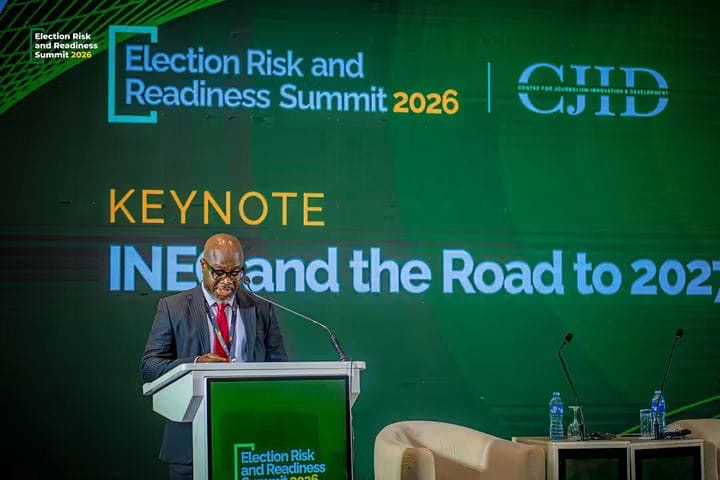
Speaking through his Chief Press Secretary and Media Adviser, Mr Adedayo Oketola, at the Nigeria Election Risk and Readiness Summit 2026 organised by the Centre for Journalism Innovation and Development (CJID) in Abuja, the Chairman described attacks on election workers and accredited journalists as direct assaults on democratic institutions and the rights of voters.
He called on the Nigeria Police Force and other security agencies to ensure prompt arrests, thorough investigations and prosecution of electoral offenders, stressing that INEC lacked the constitutional mandate and operational capacity to maintain public order.
Amupitan also highlighted the growing threat of artificial intelligence-generated disinformation and deepfake content, disclosing that the Commission had established a dedicated Artificial Intelligence Division within its ICT Department to detect coordinated manipulation targeting electoral infrastructure.
He further called for regional cooperation among electoral management bodies, technology platforms, fact-checking organisations and other stakeholders to tackle disinformation across West Africa.
The Chairman made the call through Oketola at a Multi-Stakeholders Forum on Disinformation in Electoral Contexts in West Africa, held in Abuja on Tuesday, November 24.
He warned that false narratives originating in one West African country could be recycled in others, potentially triggering public panic, discouraging voter participation and undermining confidence in electoral outcomes.
The Presidential and National Assembly elections are scheduled for January 16, 2027, while the Governorship and State Houses of Assembly elections will hold on February 6, 2027.