

By Nkechi Eze
The Spokesman of the Nigerian Navy, Navy Captain NN AA Folorunsho, has urged the military and media to see each other as partners rather than adversaries, stressing the need for mutual understanding, professional cooperation and responsible communication in reporting military operations.
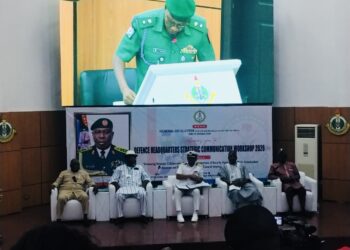
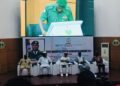
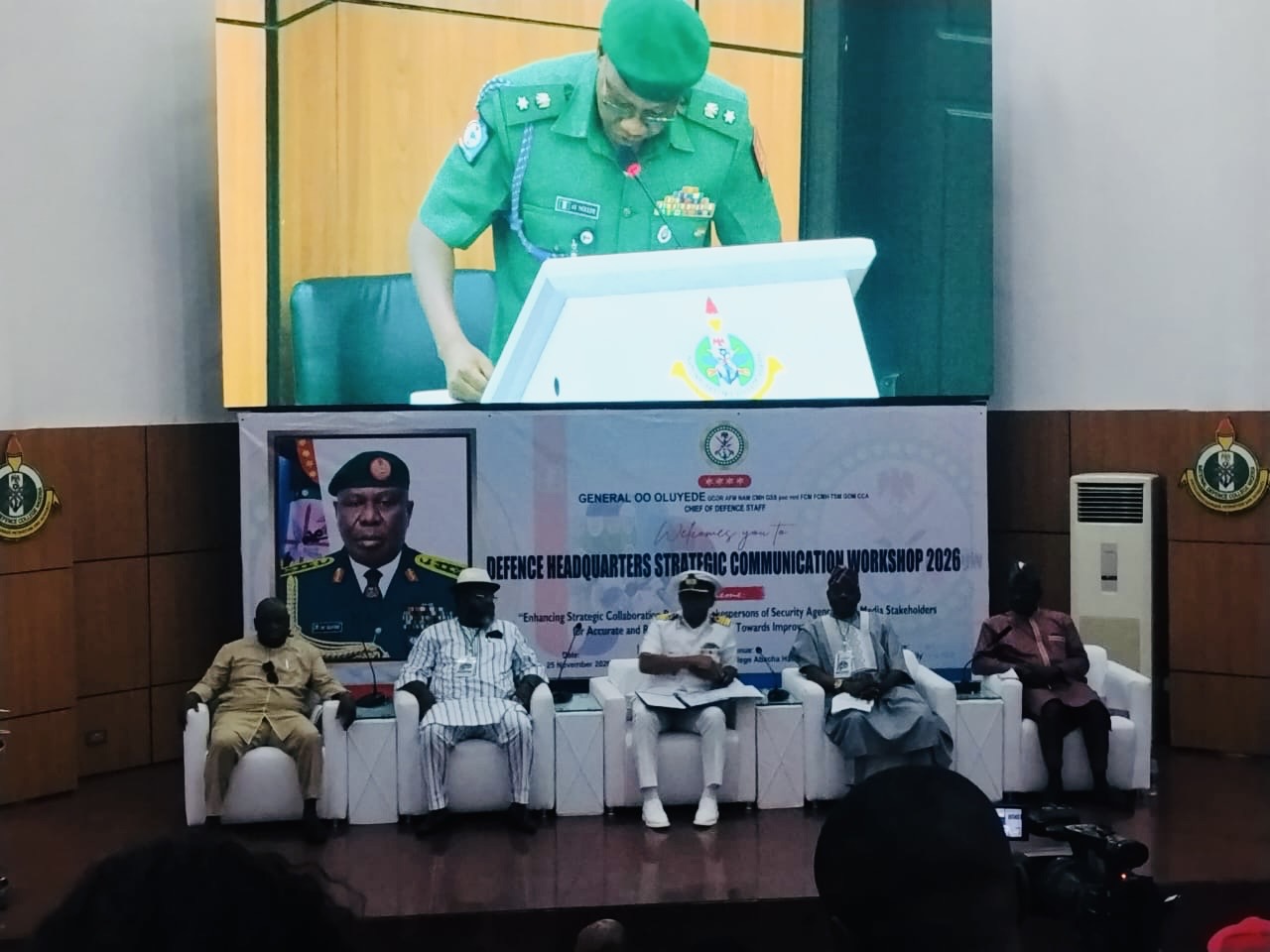
Folorunsho gave the charge at the Defence Headquarters Strategic Communication Workshop 2026, where he highlighted the importance of building a constructive relationship between the Armed Forces and the media to strengthen public confidence in the military and support ongoing efforts to address Nigeria’s security challenges.
He observed that journalists often struggle to provide accurate accounts of military operations when official information is delayed, incomplete or difficult to verify, noting that such communication gaps could create room for speculation, misinformation and misleading narratives.
While acknowledging the operational challenges that sometimes prevent military authorities from providing immediate explanations of unfolding security situations, he maintained that both institutions must appreciate their respective responsibilities and work towards improving information flow.
Drawing lessons from the Vietnam War, the Navy spokesman noted that military forces could win battles on the ground but lose the wider information war if communication was poorly managed.
He explained that the information environment had become an important dimension of modern warfare, requiring the military to pay greater attention to public communication while ensuring that sensitive operational details were protected.
Folorunsho also cautioned journalists against allowing the pressure to break news to override accuracy, verification and professional judgement, particularly when reporting ongoing military operations.
He stressed that responsible defence reporting required more than reproducing official statements or circulating dramatic battlefield footage, urging journalists to understand military terminology, verify claims and consider the possible implications of publishing sensitive information.
The discussions at the workshop further examined the responsibilities of both institutions in managing the delicate balance between operational security and the public’s right to know.
Veteran journalist and defence analyst, Kayode Otitoju, supported the call for professional engagement, warning that journalists must not accept military accounts of security incidents without independent verification.
He recalled the killing of University of Maiduguri geologists in Borno State, explaining that an Army spokesperson had reportedly announced that troops repelled an ambush. He said he had praised the military during a broadcast based on the briefing but subsequently received calls from Minna inviting his crew to cover the funeral procession of the slain academics.
Otitoju said the experience demonstrated the dangers of relying exclusively on official accounts without establishing the facts on the ground.
He also cautioned against publishing sensitive military information, particularly troop movements, rescue operations and operational plans, which could be monitored and exploited by insurgents and other adversaries.
The first discussant, Brigadier General JA Agrim (Rtd.), emphasised the need for journalists to understand the sensitivities of military operations, warning that state and non-state actors could exploit media reports to advance their strategic interests.
Similarly, the second discussant, public relations practitioner, Alhaji Yushau Shuaib, called for sustained engagement between military institutions and media professionals, stressing that timely, credible and transparent communication was essential to preventing information gaps and misinformation.
The third discussant, Mr Odita Sunday, underscored the importance of preserving media independence in the relationship, warning that collaboration with the military must not turn journalists into extensions of military public relations departments.
He maintained that the media must retain its responsibility to scrutinise public institutions and report in the public interest.
The panel also examined the legal and ethical boundaries of defence reporting, including constitutional provisions on freedom of expression, Section 45 of the Constitution, exemptions under the Freedom of Information Act and laws relating to cybercrime and official secrets.
Participants also explored the possibility of establishing a structured Defence and Security Media Advisory arrangement to facilitate discussions between military authorities and media organisations on the timing and potential security implications of sensitive reports without compromising editorial independence.
The workshop emphasised that the military has a responsibility to protect sensitive operational information while also keeping Nigerians adequately informed about security developments.
It further stressed that journalists must hold security institutions accountable without exposing military personnel to unnecessary danger or compromising legitimate operations.
Participants agreed that building public confidence in the Armed Forces requires a professional relationship in which the military provides credible information and the media exercises its watchdog responsibility with accuracy, fairness and a clear understanding of national security considerations.