

By Nkechi Eze
The National Emergency Management Agency (NEMA) has provided humanitarian assistance to residents affected by gas seepage incidents in Rivers and Delta States as part of efforts to mitigate the impact of the incidents and strengthen coordinated emergency response.
The intervention covered Bille Community in Degema Local Government Area of Rivers State and Uzere Kingdom in Isoko South Local Government Area of Delta State, combining the distribution of relief materials, technical assessments and engagement with relevant stakeholders.
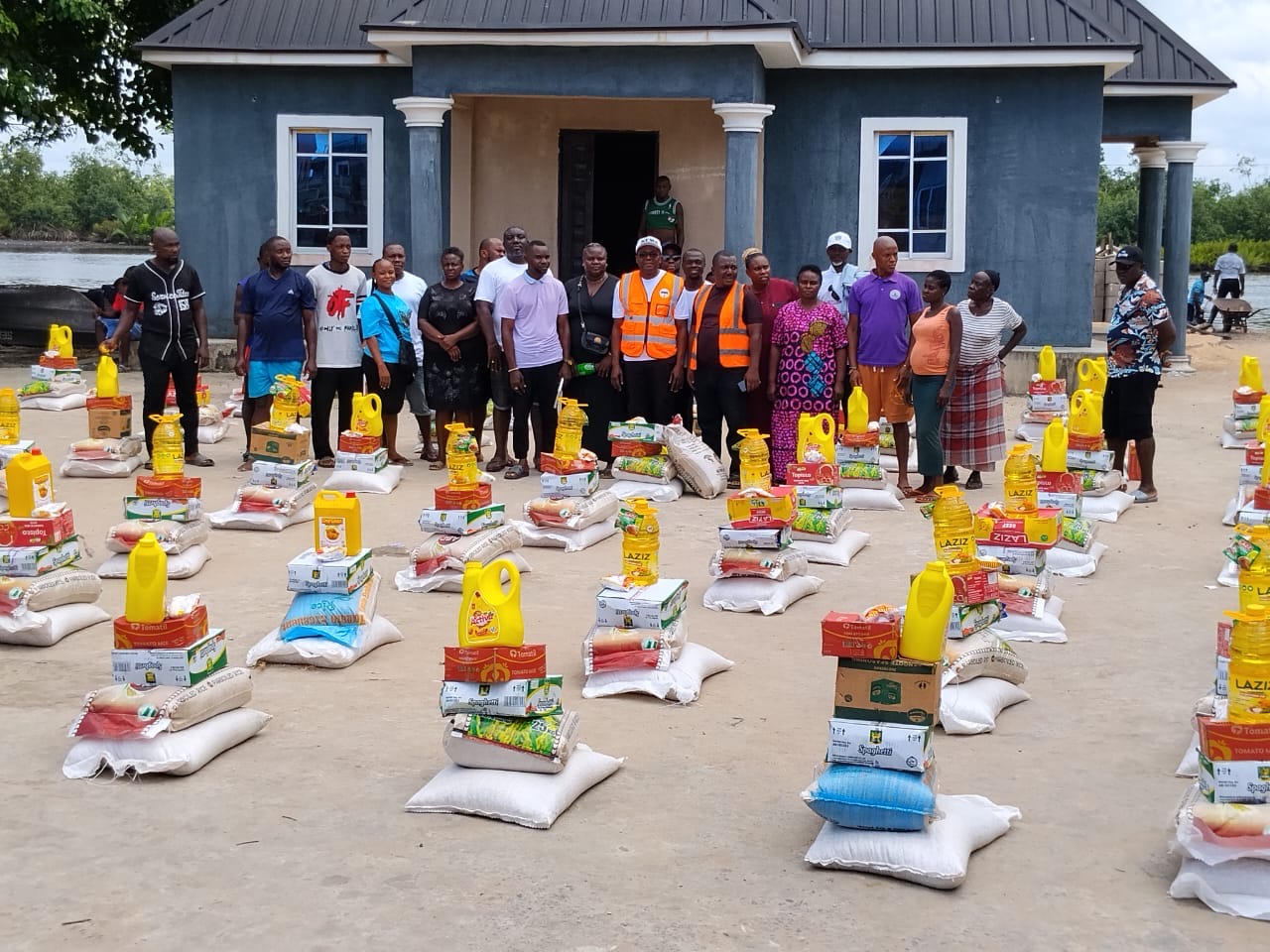
According to an official statement signed by NEMA Press Unit’s Manzo Ezekiel, the Agency recently distributed relief materials to affected residents in Bille Community following an earlier assessment of the incident and its impact on the community.
The Director General of NEMA, Mrs Zubaida Umar, was represented at the distribution exercise by the Head of the Agency’s Port Harcourt Operations Office, Mr Chidi Ogundu, who coordinated the intervention.
During a courtesy visit to the King of Bille Kingdom, His Royal Majesty, King Igbikingeri Ngowari Cornelius, Ogundu conveyed the Director General’s sympathy and solidarity with the monarch and affected residents.
He explained that the Federal Government’s intervention through NEMA was intended to address the immediate humanitarian needs of the victims by providing essential food supplies and other relief materials to cushion the hardship caused by the incident.
The exercise also involved representatives of the Rivers State Emergency Management Agency (RISEMA), the Nigerian Red Cross Society and other relevant stakeholders.
In Delta State, NEMA also coordinated a multi-stakeholder technical mission to Uzere Kingdom between November 3 and 4, 2026, following reports of gas seepage in the community.
The Director General was represented during the mission by the Director of Planning, Research and Forecasting, Dr Godwin Tepikor.
The agency said the interventions in both states reflected its integrated disaster management approach, which prioritises humanitarian assistance, technical assessments, inter-agency collaboration and sustained engagement with affected communities.