


By Nkechi Eze
The National Information Technology Development Agency (NITDA) has called for increased investment in local cloud infrastructure and data centres, assuring international technology companies that Nigeria’s digital sovereignty agenda is designed to encourage collaboration rather than restrict foreign participation.
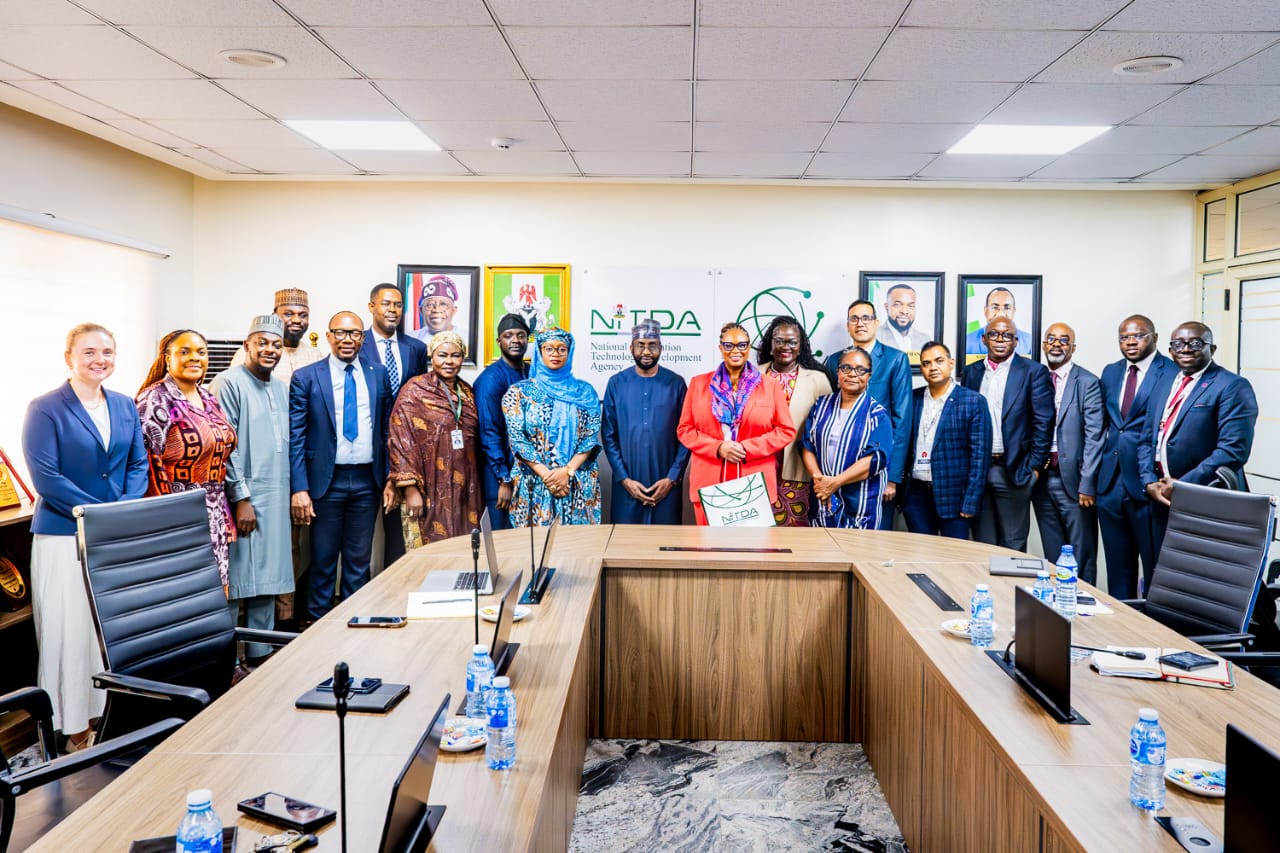
The Director-General of NITDA, Kashifu Inuwa, CCIE, gave the assurance while receiving a delegation of American business and technology organisations led by the President of the U.S.-Africa Business Centre, Kendra Gaither, during a visit to the agency to explore opportunities for collaboration in digital transformation, cloud computing, artificial intelligence, data governance and technology investment.
The delegation included representatives of Microsoft, Citi Bank, Cavista Holdings, Flutterwave, Tolaram Group, the American Business Council and the U.S. Chamber of Commerce, alongside members of the U.S. Embassy.
Inuwa explained that Nigeria’s digital transformation agenda was focused on ensuring citizens had access to essential digital services while positioning them to participate meaningfully in value creation within the digital economy.
He said the government’s sovereign cloud initiative was intended to strengthen national control over critical digital infrastructure, improve resilience against disruptions, mitigate risks and give government institutions and businesses greater flexibility in adopting technology solutions.
“It’s not about politics. It’s not about locking our doors against anybody, but it’s about inviting you to come and build with us,” the NITDA chief said.
He stressed that digital sovereignty should not be interpreted as an attempt to exclude international technology companies but as an opportunity for them to invest in Nigeria’s digital infrastructure and partner with local businesses to develop sustainable solutions.
According to Inuwa, investments in domestic data centres and cloud infrastructure would create opportunities for Nigerian businesses, support innovation and strengthen the country’s position as a technology hub for West and Central Africa.
He disclosed that the Federal Government had invested more than ₦4.5 trillion in information technology between June 2023 and June 2026, noting that appropriate infrastructure and policy frameworks could help channel relevant government technology services towards locally hosted sovereign cloud platforms.
The NITDA director-general also highlighted the importance of regulatory clarity in encouraging investment, particularly in the financial technology ecosystem, where data localisation and compliance requirements remain key considerations for businesses.
He said the agency was working with relevant regulators, including the Central Bank of Nigeria, to develop an assurance framework that would clarify technical requirements, support compliance and encourage investment in local digital infrastructure.
On cloud computing, Inuwa emphasised the need for portability, explaining that businesses and government institutions should be able to switch between service providers based on their operational requirements and the quality of services available.
“We need that portability. If Google has better services, I should be able to move my services from Microsoft to Google or AWS,” he said.
He added that Nigeria’s digital policies should promote fair competition among technology providers while preserving the flexibility of government institutions and businesses to choose solutions that best meet their needs.
Inuwa further encouraged the visiting organisations to sustain engagement with NITDA and explore practical ways of aligning their investments with the country’s digital priorities. He also invited Cavista Holdings to formally submit its proposal for collaboration in digital transformation, workforce development and employment-oriented skills programmes for assessment by the agency.
Earlier, Gaither reaffirmed the American business community’s interest in deepening commercial engagement with Nigeria, identifying digital transformation, regulatory clarity and investment predictability as essential to expanding bilateral economic cooperation.
She described Nigeria as a significant player in Africa’s information technology and digital economy landscape, noting that the country’s policy direction had implications for businesses operating across West Africa and the wider continent.
Gaither said the delegation sought constructive dialogue with NITDA to better understand Nigeria’s evolving digital regulatory environment and identify opportunities to support shared economic and innovation objectives.
She also highlighted concerns about overlapping regulatory responsibilities and areas requiring further clarification, particularly in cloud computing, data governance and financial services.
However, she stressed that American companies were willing to comply with Nigeria’s regulatory requirements while continuing to expand their operations in the country.
Gaither expressed the U.S. Chamber of Commerce’s readiness to draw on international experience and facilitate further engagement between NITDA and its member companies, noting that sustained dialogue could help address regulatory uncertainties, strengthen investor confidence and promote partnerships that support Nigeria’s digital transformation.