


By Nkechi Eze
The Secretary to the Government of the Federation (SGF), Senator George Akume, has said investments by the Tertiary Education Trust Fund (TETFund) must go beyond the construction of buildings to deliver improved teaching, research, innovation and quality graduates capable of driving Nigeria’s development.
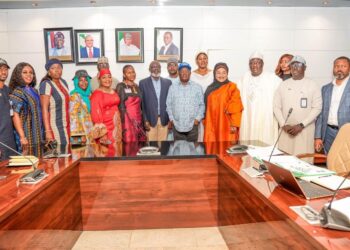
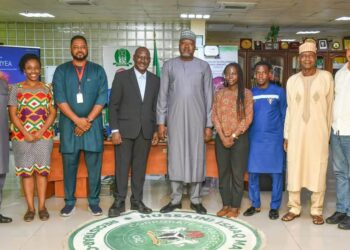
Akume stated this on Wednesday in Abuja at the 2026 TETFund Town Hall Dialogue with Stakeholders, where he urged tertiary institutions to ensure that increased federal funding translates into measurable improvements in academic standards, institutional governance and students’ learning experiences. He was represented at the event by Pharm. Aliyu Zakari-Jiya, PhD.
According to an official statement signed by Yomi Odunuga, Special Adviser on Media and Publicity to the SGF, Akume described tertiary education as critical national development infrastructure, stressing that the country’s human capital remains one of its greatest resources.
“Nigeria’s greatest natural resource is not only what lies beneath our soil. It is also what sits in our classrooms, our laboratories, our workshops and our libraries… the talent, curiosity and enterprise of the Nigerian people,” he said.
The SGF explained that education should not be treated as a competing priority against roads, power and healthcare, but as a critical foundation for producing the professionals, scientists, innovators and skilled workers required to advance national development.
He said investment in tertiary education contributes to productivity, competitiveness, social mobility and national resilience, adding that stakeholders must assess the impact of funding by the national capabilities it creates.
Akume noted that TETFund’s statutory mandate extends beyond physical infrastructure to include instructional materials and equipment, research and publications, as well as academic staff training and development.
He emphasised that universities, polytechnics and colleges of education could not achieve their objectives through buildings alone without adequate research facilities, well-equipped workshops and infrastructure for knowledge development and teacher training.
“This understanding is important because there is no modern university, polytechnic, college of education, that will succeed with buildings only. Research, well equipped workshops, knowledge development infrastructure for training teachers must be present,” he said.
According to him, TETFund’s investments have expanded significantly under President Bola Ahmed Tinubu, presenting opportunities for the transformation of tertiary education while placing greater responsibility on beneficiary institutions to demonstrate tangible results.
He said the returns on these investments should be reflected in better teaching, stronger scholarship, improved governance and the quality of graduates produced, rather than being measured solely by the number of projects completed.
To achieve this, Akume called for reforms that would strengthen postgraduate training in Nigerian institutions and ensure that research findings are translated into practical applications for industry and public policy.
He also advocated collaboration among tertiary institutions to share costly facilities and expand opportunities for innovation, patents, licences and start-ups capable of providing solutions to national challenges.
The SGF further stressed the need to improve students’ welfare and learning conditions through adequate accommodation, reliable electricity, internet connectivity, functional libraries, well-equipped laboratories and safe campuses.
Akume, however, raised concerns over reports that some institutions had delayed accessing allocations already made available to them, describing the situation as a challenge that could undermine the effective delivery of educational projects.
“This self-inflicted challenge could be overcome if boards and governing councils make oversight, maintenance and measurable impact central to their stewardship,” he said.
He urged institutional managements and governing councils to access funds promptly, execute projects properly, maintain existing facilities and provide transparent reports on the outcomes of their investments.
Akume assured stakeholders that the Federal Government would sustain predictable investment in tertiary education, while ensuring that TETFund’s interventions complement, rather than replace, the responsibilities of institutional proprietors.
He also called for stronger partnerships among educational institutions, industry, alumni, students and civil society to promote research commercialisation, support scholarships, protect public assets and strengthen accountability.
“The ultimate measure of TETFund’s impact will be the capability Nigeria builds. Let us build institutions worthy of Nigeria’s ambition and human capital equal to Nigeria’s promise,” the SGF said.