

By Nkechi Eze
The Nigerian Meteorological Agency (NiMet) and the China Meteorological Administration (CMA) have strengthened their strategic partnership to advance artificial intelligence-driven early warning systems, improve meteorological observation and enhance Nigeria’s capacity to anticipate and respond to multiple hazards.
The partnership was reinforced during a bilateral engagement on the sidelines of the 2026 Alliance for Hydromet Development Annual Meeting, where both institutions identified priority areas for cooperation in AI technology, satellite applications and institutional capacity building.
CMA Deputy Administrator, Mr Song Shanyun, commended Nigeria for hosting the annual meeting and acknowledged the leadership of NiMet’s Director-General and Chief Executive Officer, Professor Charles Anosike, in advancing meteorological development.
Shanyun reaffirmed the Chinese administration’s readiness to support the development of meteorological services in Nigeria and beyond, outlining three priority areas for collaboration: the joint development of the MAZU operational platform for Nigeria, expanded application of Fengyun satellite technology for meteorological observation, and strengthened capacity building and institutional development.
Responding, Anosike expressed appreciation to the Chinese Government and the CMA for sending a six-member delegation to the meeting, describing their participation as a demonstration of commitment to global meteorological development.
He called for the formalisation of the partnership through a memorandum of understanding that would align the collaboration with Nigeria’s socioeconomic priorities and practical meteorological requirements.
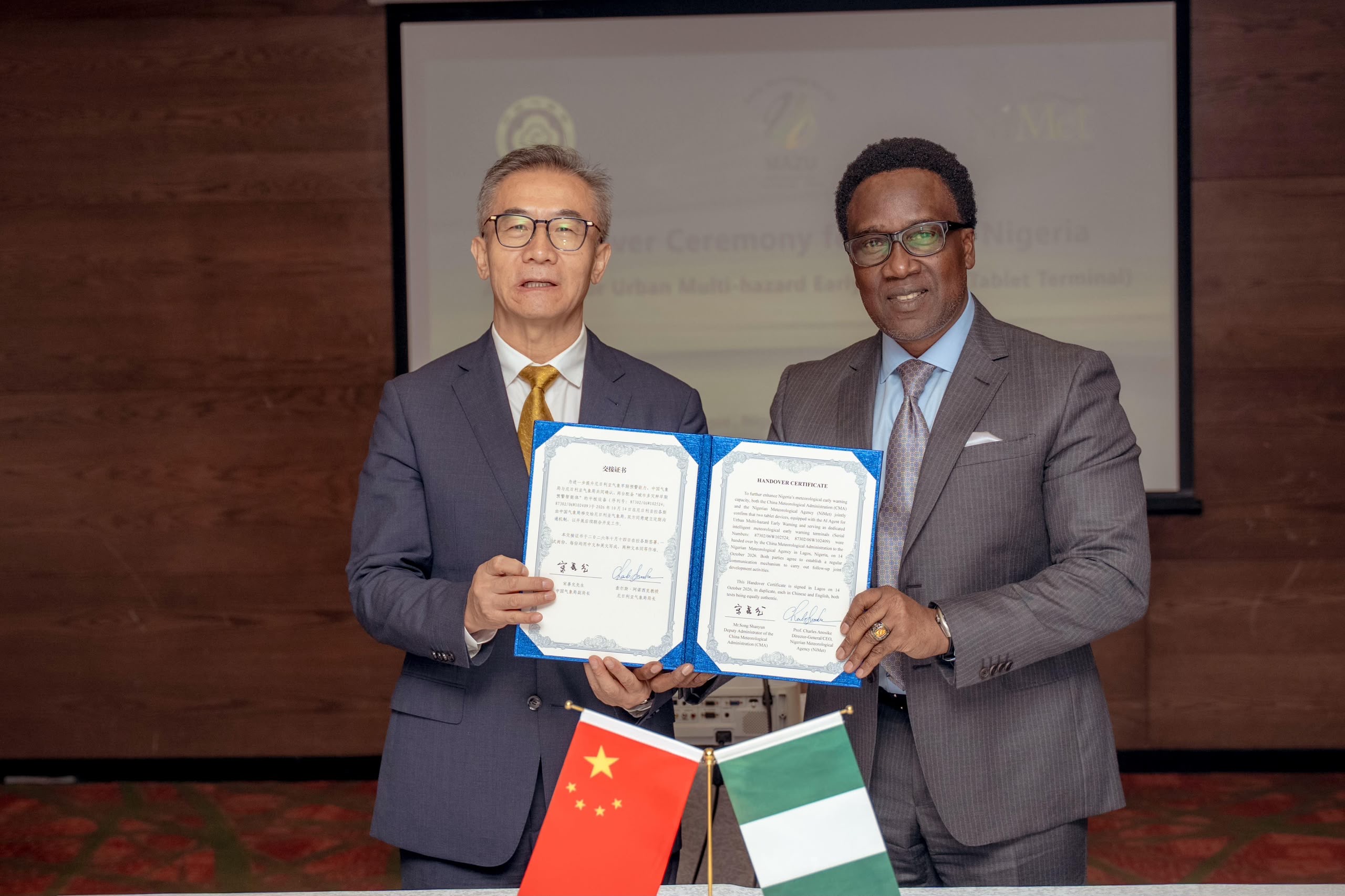
As part of the engagement, the CMA presented NiMet with two tablet devices equipped with the MAZU artificial intelligence agent for urban multi-hazard early warning.
The devices are intended to serve as dedicated intelligent terminals for delivering meteorological early-warning information, supporting efforts to improve access to timely alerts and strengthen preparedness for hazardous events.
Beyond the technology transfer, both institutions agreed to establish a regular communication mechanism to coordinate joint development activities and sustain progress on the proposed areas of cooperation.
The collaboration is expected to strengthen technical cooperation between Nigeria and China, particularly in the application of artificial intelligence and satellite technology to weather monitoring and early warning services.
The initiative also underscores the importance of international partnerships in building meteorological capacity and improving access to timely, reliable information that can help communities and relevant authorities prepare for weather-related and other hazards.