

By Festus Fifen
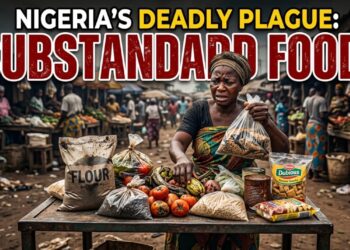
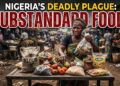
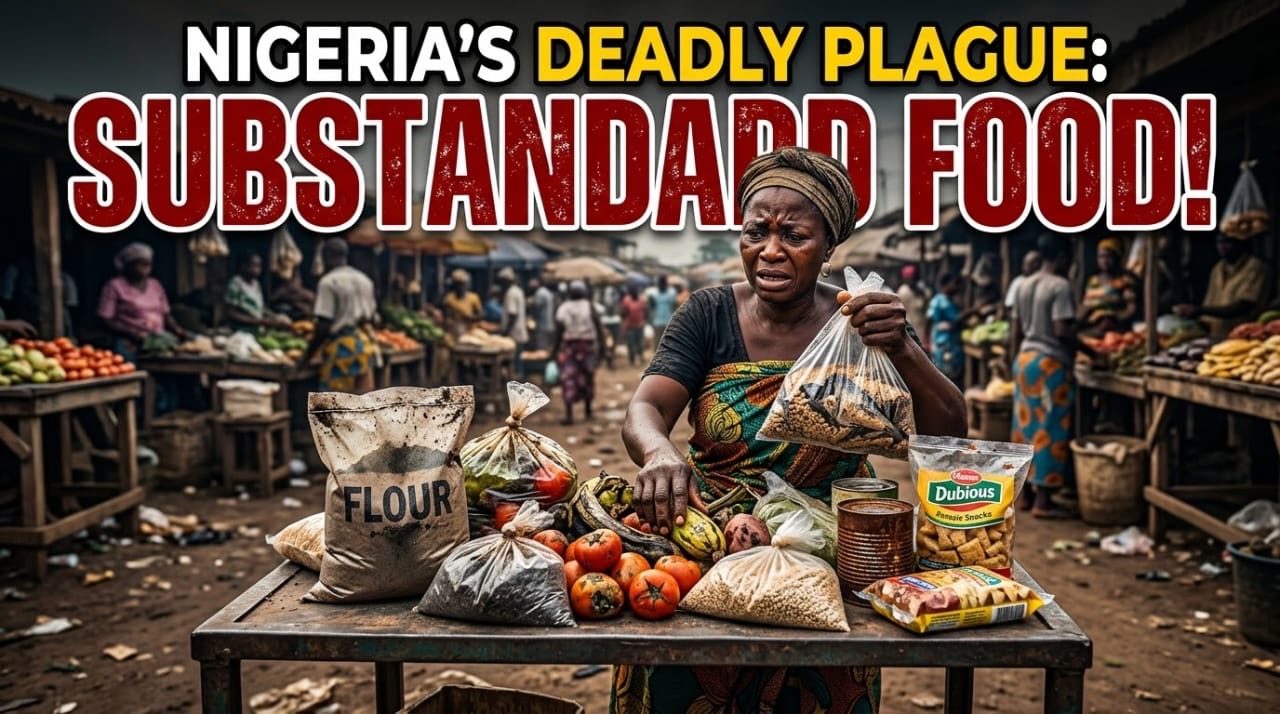
Walk into almost any open market and shopping mall in Abuja, Lagos, Onitsha, Aba or Kano today and the evidence is impossible to miss, dyed palm oil with different substances sold as pure, bleached fruit ripen with calcium carbide passed off as fresh, soft drinks and malt beverages bottled in unmarked factories and shanties out in the market for public consumption, and drugs stacked in damp warehouses with no proof they ever passed a quality test all o. Display
Nigerians have grown so used to the threat of fakes that a quiet, grim ritual now precedes many purchases; the turning over of a bottle, the sniffing of a sachet, the second-guessing of a factory seal. It should not be this way. Nigeria has two principal agencies whose entire reason for existing is to prevent exactly this: the National Agency for Food and Drug Administration and Control (NAFDAC) and the Standards Organisation of Nigeria (SON). And yet, by their own admissions and by the testimony of the markets themselves, both have struggled badly raising an uncomfortable question Nigerians are now asking out loud: have they failed us?
Unfortunately, this is a crisis the regulators themselves admit openly.
The scale of the problem is no longer a matter of anecdote. NAFDAC’s own officials have conceded that roughly 30 percent of drugs sold in Nigeria’s open markets are fake or substandard, a figure the agency has cited even as it insists it is fighting back.
In February 2026, the agency reported seizing more than 10 million doses of fake malaria medicine at the Lagos Trade Fair Market alone. Months earlier, during enforcement raids on the country’s three largest open drug markets, Idumota in Lagos, Ariaria in Aba and the Bridgehead market in Onitsha.
Director-General Professor Mojisola Adeyeye disclosed that security operatives evacuated 100 forty-foot truckloads of fake, banned and unregistered drugs and narcotics. Those three markets, she noted, serve as distribution hubs for more than 80 percent of the drugs Nigerians consume.
Numbers of that size are not evidence of a regulator in control of its territory. They are evidence of a regulator that has, for years, allowed entire distribution networks for counterfeit and substandard products to take root, expand and become normalised, only intervening in dramatic, headline-grabbing sweeps after the damage is already done nationwide.
As one very notable commentary on the crisis put it bluntly recently, NAFDAC “appears to have lost the sense of urgency and regulatory authority that once defined its operations.”
That assessment says it all because it is largely true. The agency has also disclosed that foreign nationals, including Chinese operators, now allegedly run manufacturing and distribution networks for counterfeit medicines inside Nigeria. If that assertion is anything to consider, it raises an uncomfortable question NAFDAC has yet to answer convincingly how did such networks establish themselves, under a regulator’s nose, without being stopped at the point of entry? How did they build these dangerous product hubs without the surveillance network of the regulator?
The anger is not confined to drugs. In recent months, Nigerian social media has been awash with consumers comparing products bought from different outlets and discovering troubling inconsistencies — palm oil dyed to look fresher than it is, apples painted from green to a more appealing red, soy sauce and olive oil whose taste and texture vary wildly from bottle to bottle, and even suspicions around widely trusted dairy brands.
The issues of a loaf of breads left in the shelf for about 3 weeks without getting spoiled is a story for another day. One frustrated Nigerian reacting on the social media to the pattern, said NAFDAC “has killed thousands of people by failing to do their job.” Another suggested that the sheer scale of counterfeiting pouring into the market implies compromise somewhere inside the regulatory system itself.
These are not fringe accusations. They reflect a public that has stopped trusting the institutions meant to protect it, and started relying instead on crowd-sourced vigilance on X and Facebook to do the job regulators are paid to do. The social media has become where Nigerians go to vent their anger to whoever cares to listen online and offline
The story of the Standard Organisation of Nigeria SON on the other hand is not different
If NAFDAC’s troubles are dramatic, SON’s are quieter but no less damaging. The agency responsible for setting and enforcing quality standards across virtually every manufactured and imported product in Nigeria, from electronics to steel rods to packaged foods, has itself conceded that corruption is central to its struggles.
A former Director-General (names withheld) of SON stated plainly that corruption remains the bane of the agency’s fight against substandard goods. When the very leadership of a regulatory body says, in essence, that its own house is compromised, the public can hardly be blamed for assuming the worst every time a product bearing a SON certification mark turns out to be substandard.
SON does intervene, and its raids make headlines: factories shuttered for producing substandard steel rods, consignments of soft drinks, milk and tomato paste destroyed for failing to meet specification. These actions matter, but they amount to firefighting rather than prevention. pre-market verification that would stop substandard goods from reaching shelves in the first place is no longer as effective as it should be.
Nigeria’s broader governance environment compounds the problem. Reformist officials inside government agencies have described operating under severe underfunding, which leaves them working with minimal resources while facing pressure from compromised superiors or colleagues. SON is not immune to that reality. An agency tasked with inspecting an entire country’s worth of factories, ports and markets, but starved of the budget, personnel and political backing to do so, will inevitably leave enormous gaps for counterfeiters to exploit.
Three structural failures explain why Nigeria keeps finding itself in this position.
The first is reactive rather than preventive enforcement. NAFDAC’s biggest wins, such as its reported destruction of more than 1.5 trillion naira worth of counterfeit products and 64 convictions between June 2025 and June 2026, are genuinely significant. But they are also, by definition, retrospective. They tell us what was destroyed after it had already been manufactured, distributed and, in many cases, sold and consumed. A regulatory system that only distinguishes itself through the size of its raids is a system that has already lost the first and most important battle; stopping counterfeit products before they reach a single customer.
The second failure is the sheer scale mismatch between the informal economy and the agencies meant to police it. Nigeria’s open drug and food markets are vast, largely informal, and poorly mapped, and NAFDAC’s own investigators found that warehouses and storage points in the major open drug markets did not meet even the minimum requirements for safe storage and distribution, with many premises operating without proper registration at all.
When the baseline infrastructure for legitimate trade is this weak, no amount of periodic raiding will be enough. Enforcement needs permanent, embedded regulatory presence, not seasonal sweeps.
The third failure is accountability and transparency. Nigerians do not know, in any granular or trustworthy way, how many fake products are actually in circulation at any given time, which brands or batches are currently compromised, or how effectively past enforcement actions have reduced risk. NAFDAC set itself a target of reducing substandard and falsified medicines to below 5 percent prevalence by 2025. Yet the most recent prevalence data cited by the agency’s own website is 16.7 percent — and that figure is about fourteen years old. In other words, Nigeria’s primary drug regulator is setting public health targets against data almost a decade and a half out of date. Independent estimates circulating in 2026 suggest prevalence could be as high as 25 percent. A regulator cannot credibly claim to be winning a war it cannot even currently measure.
None of this is to say NAFDAC and SON do nothing. Their raids are real, their seizures are often massive, and individual officers frequently do difficult, even dangerous work. But going forward, good intentions and occasional dramatic interventions are not the same as functioning regulation. What Nigeria needs is a shift from spectacle to system: permanent surveillance and testing infrastructure embedded within major markets rather than occasional raids; mandatory, updated and publicly accessible prevalence data so citizens and health workers know the real scale of the risk; serious investment in the staffing and funding of both agencies, matched with real consequences for internal compromise; and tighter coordination with Customs and port authorities to intercept counterfeit goods, and the ingredients used to manufacture them, before they ever enter the distribution chain.
Until then, ordinary Nigerians will keep doing the regulators’ job for them, one suspicious bottle, one painted apple, one viral social media thread at a time. That is not consumer protection. It is the absence of it, dressed up in official letterhead. Nigerians deserve a food and drug safety system that works quietly, consistently and invisibly, catching problems before they reach a dinner table or a sickbed not one that only makes headlines after the damage has already been done.
Festus Ejiroghene Fifen writes from Abuja
Festus Ejiroghene Fifen is a Seasoned Journalist with decades of experience, Media Consultant and Public Affairs Analyst
He can be reached on fesfen28@gmail.com. 08024222096.