


By Nkechi Eze
The National Drug Law Enforcement Agency (NDLEA) has rehabilitated 53,843 persons through its 31 rehabilitation facilities across Nigeria in the last five years, its Chairman/Chief Executive Officer, Brig. Gen. Mohamed Buba Marwa (Rtd), has disclosed.
Marwa made this known on Tuesday, October 13, 2026, while chairing the fifth edition of The Conversation Conference (TCC 5.0), organised by Intersect Consortium at Nicon Luxury Hotel, Abuja.
According to an official statement signed by Femi Babafemi, Director of Media and Advocacy, NDLEA, Marwa said the number represented individuals given an opportunity to rebuild their lives, reunite with their families and return to education and employment.
“Behind that number are fathers returned to their families and young people returned to school and work,” he said.
The NDLEA chief stressed the need for sustained investment in rehabilitation and mental healthcare, warning that drug abuse and mental illness often reinforce each other and require a coordinated response that addresses their underlying causes.
“For too long, we treated mental health as a private burden, hidden behind shame and silence. In my work at the NDLEA, I see the cost of that silence daily,” Marwa said.
“Behind many cases of drug abuse is untreated pain: depression nobody noticed, trauma nobody addressed, a young person who found a substance before finding help. Drug use and mental illness feed each other. If we only arrest the symptoms, we will keep missing the cause.”
He called for increased funding for mental health services, including prevention programmes, trained personnel and accessible treatment, noting that mental healthcare should be integrated into primary healthcare to enable more Nigerians to obtain assistance without travelling long distances.
Marwa also advocated the recruitment of more psychiatrists, psychologists, counsellors and community health workers to strengthen the country’s capacity to address mental health challenges.
He emphasised the need for equitable financing, warning that access to mental healthcare should not depend on an individual’s financial circumstances.
“Care that only the well-off can afford is not a system, it is a privilege,” he said.
Speaking on the importance of community-led interventions, the NDLEA chairman cited the agency’s pilot programme in three communities in Ondo State, where residents previously dependent on illicit cultivation were supported to establish lawful and sustainable livelihoods.
He said the initiative demonstrated how economic opportunities and community participation could help address some of the underlying conditions associated with drug abuse, adding that the agency planned to expand the model nationwide in partnership with relevant stakeholders.
Marwa also highlighted the agency’s War Against Drug Abuse (WADA) campaign, which targets young people in schools, campuses and communities, as well as its 24-hour toll-free helpline for people seeking assistance with drug-related challenges.
He called for stronger collaboration among the health, education, security, justice and social welfare sectors, stressing that no single institution could effectively tackle drug abuse and mental health challenges alone.
The NDLEA chairman further urged stakeholders to prioritise women, children and vulnerable groups, including survivors of violence, displaced mothers, persons with disabilities and families affected by conflict.
He said recovery was more sustainable when support extended beyond individuals to include their families and households.
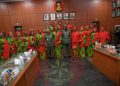
Marwa made the call at the conference, which was attended by stakeholders in mental health and related fields, with Vice President Kashim Shettima represented by Senator Ibrahim Hassan Hadejia as Special Guest of Honour.
He urged participants to commit to increased financing for effective interventions, expansion of proven community-based programmes and accountability for measurable results.
“Let us build a Nigeria where seeking help is an act of courage, where recovery is possible, and where no one suffers alone,” he added.