

…Urges Journalists To Promote Responsible Reporting, Counter Security Misinformation
By Nkechi Eze
The Minister of Defence, General Christopher Gwabin Musa (Rtd.), and the Chief of Defence Staff (CDS), General Olufemi Oluyede, have called for greater investment in emerging technologies, intelligence-led operations and cybersecurity to address Nigeria’s evolving security challenges.
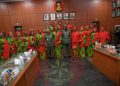
They made the call in separate addresses at the 2026 Conference and Awards of the Defence Correspondents Association of Nigeria (DECAN), held in Abuja on Monday, October 12, 2026, with the theme, “Beyond Kinetic Warfare: Harnessing Technology and Intelligence-Led Operations for Nigeria’s National Security.”
While the Defence Minister stressed the need to combine technological innovation with effective intelligence coordination and responsible security reporting, the CDS highlighted the growing importance of artificial intelligence, space-based surveillance and cyber capabilities in modern warfare.
Musa, who was represented at the conference by Air Commodore Stephen Ogunmodele (Rtd.), Special Adviser Foreign Relations, described the conference theme as a reflection of the changing nature of contemporary security threats, noting that military effectiveness could no longer be measured solely by visible engagements, territorial recoveries and arrests.
He said terrorist groups, criminal networks and other adversaries were increasingly exploiting information networks, financial systems and technological vulnerabilities to advance their activities, requiring security agencies to adopt more coordinated and intelligence-driven approaches.
According to the Minister, the ability to identify threats early, understand adversaries’ networks, anticipate their intentions and act precisely could make the difference between preventing an attack and responding after lives had been lost.
He stressed that intelligence-led operations must be supported by modern technology, trained personnel, reliable systems and sound operational judgement.
“Technology is a force multiplier, it does not replace the human judgement, discipline and professional competence upon which military effectiveness ultimately depends,” he said.
The Minister noted that the Ministry of Defence and the Armed Forces of Nigeria were pursuing approaches aimed at improving situational awareness, intelligence coordination and operational effectiveness.
He also called for stronger cooperation across the country’s security architecture, stressing that no single institution possessed all the information and capabilities required to tackle contemporary security threats.
Addressing the role of the media, Musa said responsible journalism was essential to public understanding, institutional accountability and confidence in the Armed Forces.
He maintained that the public’s right to information and the operational requirements of security agencies should not be treated as incompatible, adding that responsible reporting could strengthen public trust while protecting sensitive military activities.
“The absence of a visible engagement should therefore not automatically be interpreted as an absence of action,” he said, explaining that successful intelligence operations might not always produce dramatic images or immediate public disclosures.
He urged defence correspondents to maintain accuracy, fairness, independence and professionalism, while exercising caution with unverified reports and sensitive operational information whose premature disclosure could compromise military missions, expose personnel or endanger civilians.
The Minister, however, cautioned against using operational security to undermine legitimate journalism and accountability, advocating constructive engagement between security institutions and the media.
He congratulated recipients of the DECAN awards and reaffirmed his commitment to strengthening collaboration between the Ministry of Defence and the association.
In his goodwill message, the Chief of Defence Staff, General Olufemi Oluyede, represented by the Director of Defence Information, Major General Samaila Uba, said modern warfare was increasingly shaped by superior information, real-time intelligence, technological dominance, cyber resilience and the ability to operate effectively in the information domain.
“Today, battles are no longer won by firepower alone. They are won by superior information, real-time intelligence, technological dominance, cyber resilience, and the ability to control the narrative space,” Oluyede said.
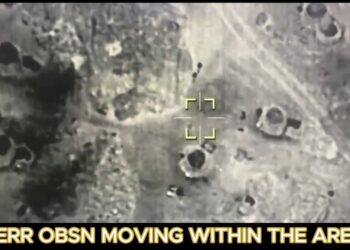
He disclosed that the Armed Forces was investing in non-kinetic capabilities, including space-based surveillance, geospatial intelligence, artificial intelligence-enabled decision support and joint intelligence fusion, to improve operational effectiveness, protect citizens and secure Nigeria’s national interests.
The CDS cited initiatives at the Defence Space Administration, including the expansion of modular earth observation outposts into operational theatres, the establishment of the Defence Space School for human capital development, and the ongoing integration of AI and advanced surveillance systems into military operations.
According to him, the initiatives were aimed at building an Armed Forces that was not only combat-ready but also intelligence-driven and technology-enabled.
However, Oluyede warned that emerging technologies were also being exploited to spread disinformation, particularly through AI-generated videos, manipulated images, cloned voices and fabricated operational claims falsely attributed to the military.
He said such content was being used to mislead the public, incite fear, discredit troops and undermine confidence in the Armed Forces.
The CDS described deepfakes as instruments of psychological warfare capable of eroding public trust in military institutions and weakening the relationship between the Armed Forces and citizens.
“These deepfakes are not mere misinformation; they are weapons of psychological warfare aimed at eroding public trust in the Armed Forces and rupturing the vital bond between the military and the citizenry,” he said.
He warned that a single AI-generated video could reverse months of operational gains, endanger troops and trigger panic in communities, describing the threat as a shared national security concern.
“In today’s information age, security operations are fought not only on the battlefield but also in the information domain,” Oluyede added.
The CDS consequently urged DECAN members to verify sensitive operational information with Defence Headquarters before publication, stressing that speed must never come at the expense of accuracy.
He also called on defence correspondents to use their professional platforms to educate the public on identifying synthetic media and promptly debunking fake videos falsely attributed to the Armed Forces.
Furthermore, he urged journalists to embrace intelligence-led reporting and move beyond sensational headlines towards informed, technology-aware coverage that strengthens civil-military relations and counters extremist propaganda.
The CDS reaffirmed the Armed Forces’ commitment to defending Nigeria’s sovereignty and democracy, emphasising that public trust, citizen cooperation and responsible media engagement remained essential to achieving national security objectives.
He assured DECAN of Defence Headquarters’ continued support and commitment to timely and accurate information sharing.
Both military leaders underscored the need for stronger collaboration between security institutions and the media, stressing that technological innovation, effective intelligence coordination and responsible communication were essential to confronting Nigeria’s emerging security threats.
They expressed confidence that the conference would strengthen professional defence journalism, improve military-media relations and generate practical ideas for enhancing Nigeria’s national security.