

By Nkechi Eze
President Bola Ahmed Tinubu has said the economic reforms introduced by his administration have laid the foundation for Nigeria’s transition to prosperity, assuring Nigerians that the country is entering a new phase of growth and development.
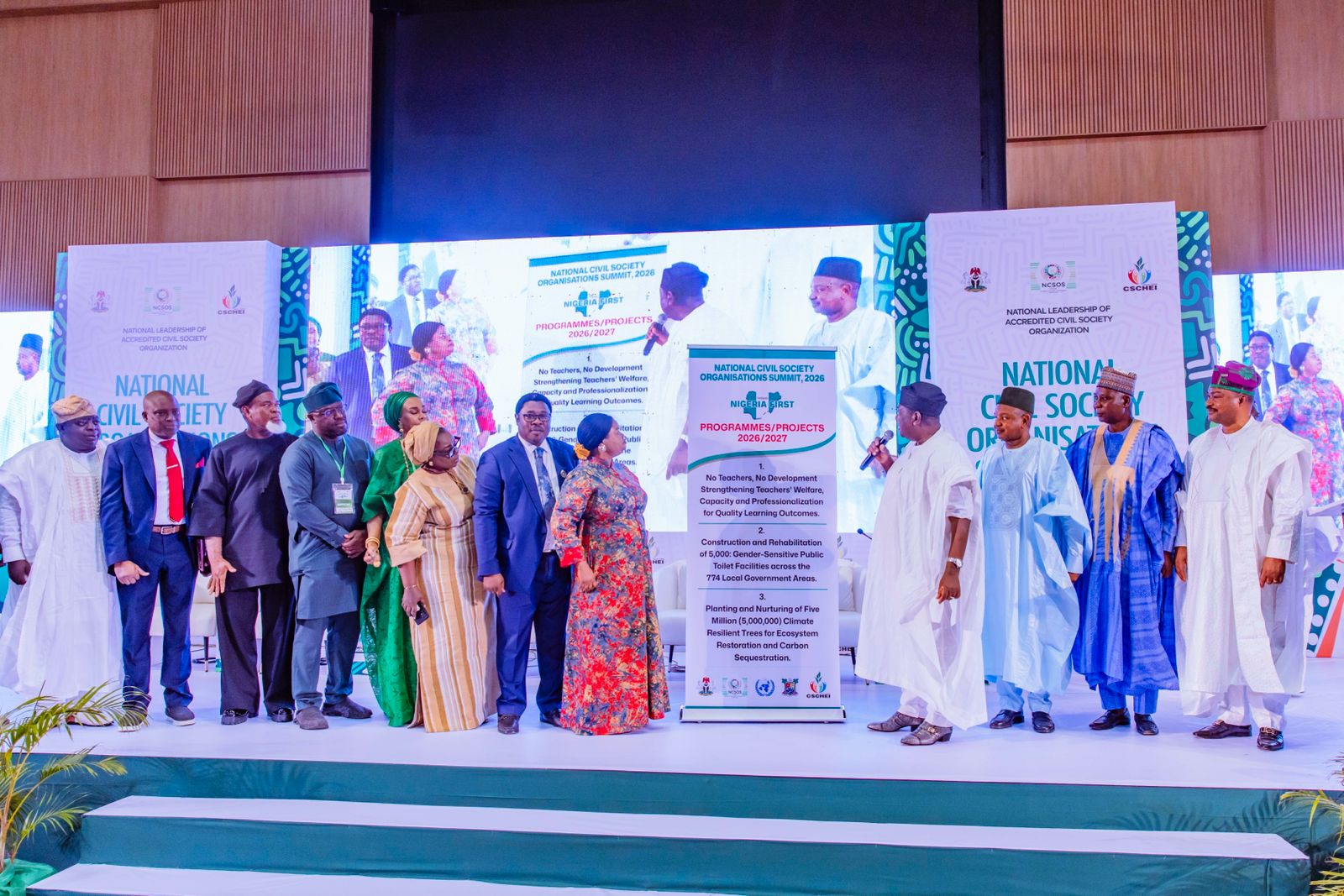
According to an official statement by Yomi Odunuga, Special Adviser to the SGF on Media and Publicity, Tinubu stated this on Friday in Abuja while addressing the 2026 National Civil Society Organisations Summit, themed “Nigeria First and National Development.”
The President, who was represented by the Secretary to the Government of the Federation (SGF), Senator George Akume, acknowledged the difficulties created by the reforms since 2023, but said the measures were necessary to stabilise the economy and reset what he described as wasteful policy regimes.
“Four years down the line, we wish to modestly assure Nigerians that Nigeria is moving from reform to prosperity,” Tinubu said.
He said the focus of the Renewed Hope Agenda was now shifting towards rebuilding public trust, strengthening institutional accountability and ensuring that economic growth translates into social inclusion and improved livelihoods.
Tinubu, who described Civil Society Organisations (CSOs) as the “conscience of the nation,” commended their contributions to democratic governance, social justice, human rights, poverty eradication and anti-corruption efforts.
He reaffirmed his administration’s commitment to protecting civic space and partnering with civil society as strategic stakeholders in governance and national development.
The President said government could not deliver the prosperity agenda alone, stressing the need for stronger collaboration among government, civil society, development partners and the private sector.
To strengthen the partnership, Tinubu announced the establishment of a Quarterly Government-Civil Society Policy Dialogue Forum to ensure that evidence-based advocacy and grassroots perspectives contribute to policy design, implementation and evaluation.
He also said the government would expand civic space for social accountability by working with accredited organisations to strengthen public finance transparency, budget tracking and monitoring of humanitarian interventions.
According to him, government would also collaborate with the United Nations system, development partners and the private sector to strengthen the capacity of civil society organisations to support the localisation of the Sustainable Development Goals, particularly in poverty reduction, youth and women empowerment, health, education, climate resilience and peacebuilding.
On the 2027 general elections, Tinubu charged CSOs to remain at the forefront of democratic development by educating voters, monitoring elections, advocating reforms and working with law enforcement agencies, the judiciary and the media to promote credible elections.
“Nigeria’s strength lies in its united people and their vigilance,” he said, urging civil society organisations to counter misinformation, promote interfaith dialogue and support inclusive governance.
Tinubu also called on CSOs to develop a collective code of conduct to strengthen ethics, professionalism and accountability within the civic space.
While reaffirming the administration’s commitment to freedom of expression, association, assembly and press freedom, the President urged civil society organisations to uphold integrity and professionalism in their advocacy.
He further restated four priority areas identified at the Southern Civil Society Summit held in Lagos on July 9, 2026, namely food security, poverty eradication through jobs and enterprise, improved governance and human capital development, as priorities for the country.