

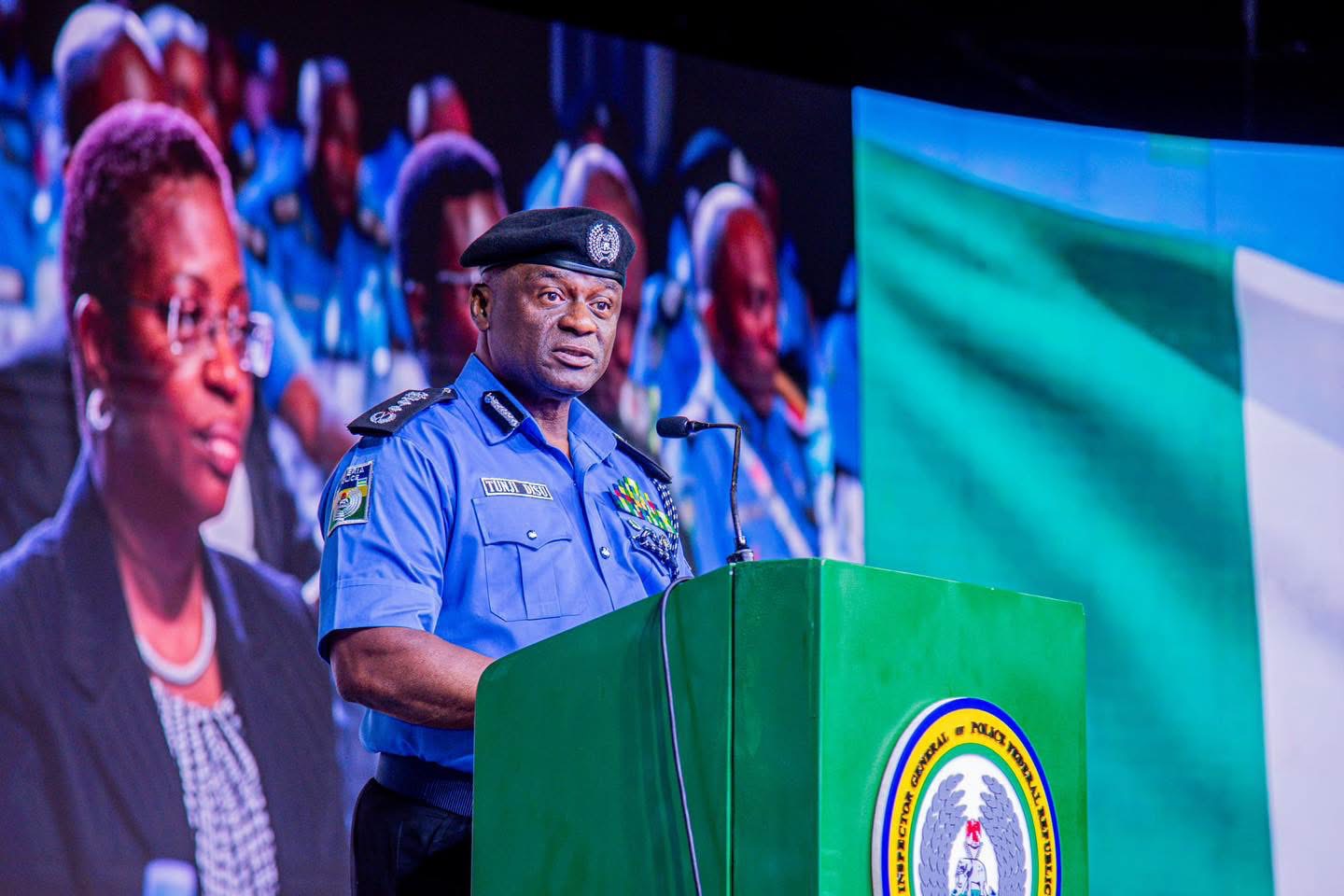
The conference hall in Owerri has emptied. The speeches have ended, the senior officers have returned to their commands, and the resolutions of the Sixth Conference and Retreat for Senior Police Officers, CARSPO 2026, have moved from the conference table to the much harder terrain of implementation.
That transition is where the significance of CARSPO 2026 truly lies.
Held from September 21 to 23 in Owerri, Imo State, the conference was built around a question that will increasingly dominate national security discussions as Nigeria approaches the 2027 General Elections: how can the Nigeria Police Force prepare early enough to secure an election that is complex, technology-driven and potentially vulnerable to violence, misinformation and political tension?
The Police’s own stated objective was to develop a practical roadmap for managing election security before, during and after the polls. The Force had identified intelligence-led policing, community partnerships, digital technology and artificial intelligence as important components of that preparation.
For Inspector-General of Police, IGP Olatunji Disu, however, the value of the exercise cannot end with the adoption of another policy document.
The closing session made that expectation explicit. Disu told senior officers that the measure of CARSPO 2026 would be the changes recorded across commands and formations after participants returned from Owerri. He subsequently directed them to adopt a train-the-trainers approach, cascading the knowledge gained at the conference to Deputy Commissioners of Police, Area Commanders, Divisional Police Officers, tactical commanders and other personnel.
That perhaps represents the most important transition from CARSPO 2026: from strategy to field-level policing.
A Roadmap Built Around Six Priorities
At the centre of Disu’s agenda is a six-pillar framework covering early intelligence and warning systems, intensive training and preparedness, joint command and inter-agency coordination, communication and technology, community partnership, and political neutrality.
Taken together, the pillars reflect an understanding that election security cannot begin on election morning.
The first requirement is intelligence.
Rather than waiting for violence or criminal activity to occur before responding, police commands are expected to identify electoral flashpoints, criminal networks and emerging threats early enough to enable preventive action. This places greater responsibility on Commissioners of Police and commanders at lower levels to understand the security profile of their jurisdictions well before voting begins.
The second is preparedness
A roadmap can only be as effective as the officers implementing it. Training therefore becomes critical not simply in crowd control, but in conflict prevention, protection of electoral personnel and materials, rapid response and policing that respects legal and human-rights obligations.
Then comes coordination
Election security is inherently multi-agency. The Police, electoral authorities, other security agencies, emergency responders, community structures and other stakeholders operate within the same environment but with different statutory responsibilities.
CARSPO 2026 placed emphasis on joint command and inter-agency coordination because fragmented responses can create gaps precisely when security situations are changing rapidly.
The Technology Question
Another defining feature of the Owerri conference was the attention given to technology.
A dedicated session examined smart policing and how artificial intelligence and digital technologies could transform law enforcement. Discussions included the potential of AI, data analytics and digital tools in crime prevention, investigations and security management.
For a Police Force preparing for an election in which information can move almost instantaneously, the issue is significant.
Misinformation, fabricated statements, manipulated content and false election narratives can spread rapidly, potentially creating confusion or heightening tensions before security agencies have an opportunity to respond. The IGP has therefore identified countering misinformation and disinformation as part of the wider election-security challenge.
But technology itself is not the strategy.
The real test will be whether intelligence generated through digital tools can reach the right commander at the right time, whether information can be verified quickly, and whether technology improves situational awareness without undermining lawful policing.
That distinction will matter considerably as the Force moves from conference discussions to operational deployment.
Neutrality As An Operational Standard
Perhaps no aspect of the CARSPO agenda will attract more public scrutiny than political neutrality.
Disu has repeatedly stressed that police officers must not take sides in the electoral process. At the Owerri conference, he warned that personnel who collude with political actors, harass voters or abuse police powers would face investigation and punishment.
The significance of that position extends beyond official declarations.
Election security is also about public confidence. Voters must be able to see security personnel as law-enforcement officers rather than agents of political interests. The same standard must apply regardless of the political identity of a candidate, party or voter.
This places a substantial responsibility on commanders to supervise personnel, enforce professional standards and respond to misconduct.
For the rank-and-file officer, neutrality will ultimately be tested not in an auditorium but at the polling unit, along campaign routes, around collation centres and during moments of political tension.
Bringing The Strategy Down The Chain
One of the potential strengths of the CARSPO framework is its emphasis on cascading knowledge.
The Police Force has thousands of officers who will eventually be involved in election-related duties. Most of them did not attend CARSPO.
This makes the train-the-trainers directive particularly important. If the strategy remains understood only by Commissioners of Police and senior officers, its operational reach will be limited. But if its principles are understood by DPOs, patrol commanders, tactical teams and individual officers, the roadmap begins to acquire institutional depth.
That is also where accountability becomes measurable.
Commands should be able to demonstrate that election-security plans have been developed, flashpoints identified, personnel trained, communication channels established and inter-agency relationships strengthened.
The public may not need to know sensitive operational details. But it should be possible to see evidence of preparation.
The Community As An Early-Warning System
The sixth pillar community partnership also has practical implications.
Police officers cannot be everywhere. Communities, traditional institutions, religious leaders, civil society groups, youth organisations and residents often possess information about emerging tensions long before those tensions become security incidents.
Building credible channels for such information can therefore strengthen early warning.
But community partnership also works in the other direction. The public is more likely to cooperate with the Police when officers are seen to be professional, accessible and accountable.
Trust, in this sense, is not merely a public-relations objective. It becomes an operational resource.
Beyond Election Day
Another important feature of the CARSPO approach is its focus on the entire electoral cycle rather than voting day alone.
The Police roadmap is intended to cover the period before, during and after elections.
That is significant because electoral security risks do not begin when polling opens and do not necessarily disappear when ballots are counted.
Campaign activities, rallies, political gatherings, voter mobilisation, movement of electoral materials, polling, collation and post-election reactions can each produce different security demands.
Preparation must therefore be continuous.
The planned release of an official public election complaints line on October 12, 2026, as announced at CARSPO, is one indication that the Force intends to create mechanisms through which members of the public can communicate election-related concerns ahead of 2027.
The Human Face Of Election Security
At the centre of all these systems is the voter.
Technology, intelligence, command structures and operational plans ultimately have one practical purpose: creating an environment in which citizens can participate in the electoral process without intimidation or violence.
That includes protecting electoral officials, candidates, journalists, observers and vulnerable groups, while ensuring that police powers are exercised within the law.
The ordinary voter may never read the CARSPO communique. What that voter will experience is the conduct of the officer standing at a polling unit, controlling access to a sensitive location, responding to a complaint or managing a confrontation.
That individual encounter will shape public perception of the entire security architecture.
From Conference To Scorecard
CARSPO 2026 also comes against the backdrop of the Police Force’s wider operational responsibilities.
At the opening of the conference, IGP Disu presented an operational scorecard covering the period since he assumed office in February 2026, including arrests, rescue operations and recovery of firearms and ammunition. The figures formed part of the Force’s broader account of its ongoing response to terrorism, banditry, kidnapping, armed robbery and other security threats.
The challenge now is to sustain those security operations while simultaneously preparing for an increasingly demanding electoral environment.
That will require resources, training, intelligence, logistics, technology and strong command supervision.
President Bola Ahmed Tinubu, represented at the opening by the Secretary to the Government of the Federation, Senator George Akume, reaffirmed Federal Government support for the Police in areas including training, technology, logistics, welfare and institutional reform.
Such support will be important because an effective election-security framework cannot operate on directives alone.
The Real Journey Begins Now
CARSPO 2026 has produced a framework. The more difficult assignment is ensuring that the framework becomes routine police practice.
The test will be whether intelligence moves faster than threats; whether training translates into professional conduct; whether agencies coordinate rather than operate in silos; whether technology improves decision-making; whether communities trust the Police enough to share information; and whether neutrality remains a standard applied consistently to all political actors.
Most importantly, the test will be whether the resolutions adopted in Owerri can be translated into conduct across thousands of officers and hundreds of commands.
The conference may have lasted three days, but its agenda now stretches towards 2027.
The distance between a policy document and a polling unit is considerable. It is measured in commands, divisions, officers, intelligence reports, training sessions, logistics, communications and countless decisions taken under pressure.
That is the road IGP Disu has placed before the Nigeria Police Force.
The real measure of CARSPO 2026 will therefore emerge not from the conference hall, but from what happens after the officers leave it.
From Owerri to the field, the question is no longer what the Police intend to do. It is how consistently the new roadmap will be translated into professional, lawful and accountable policing.