

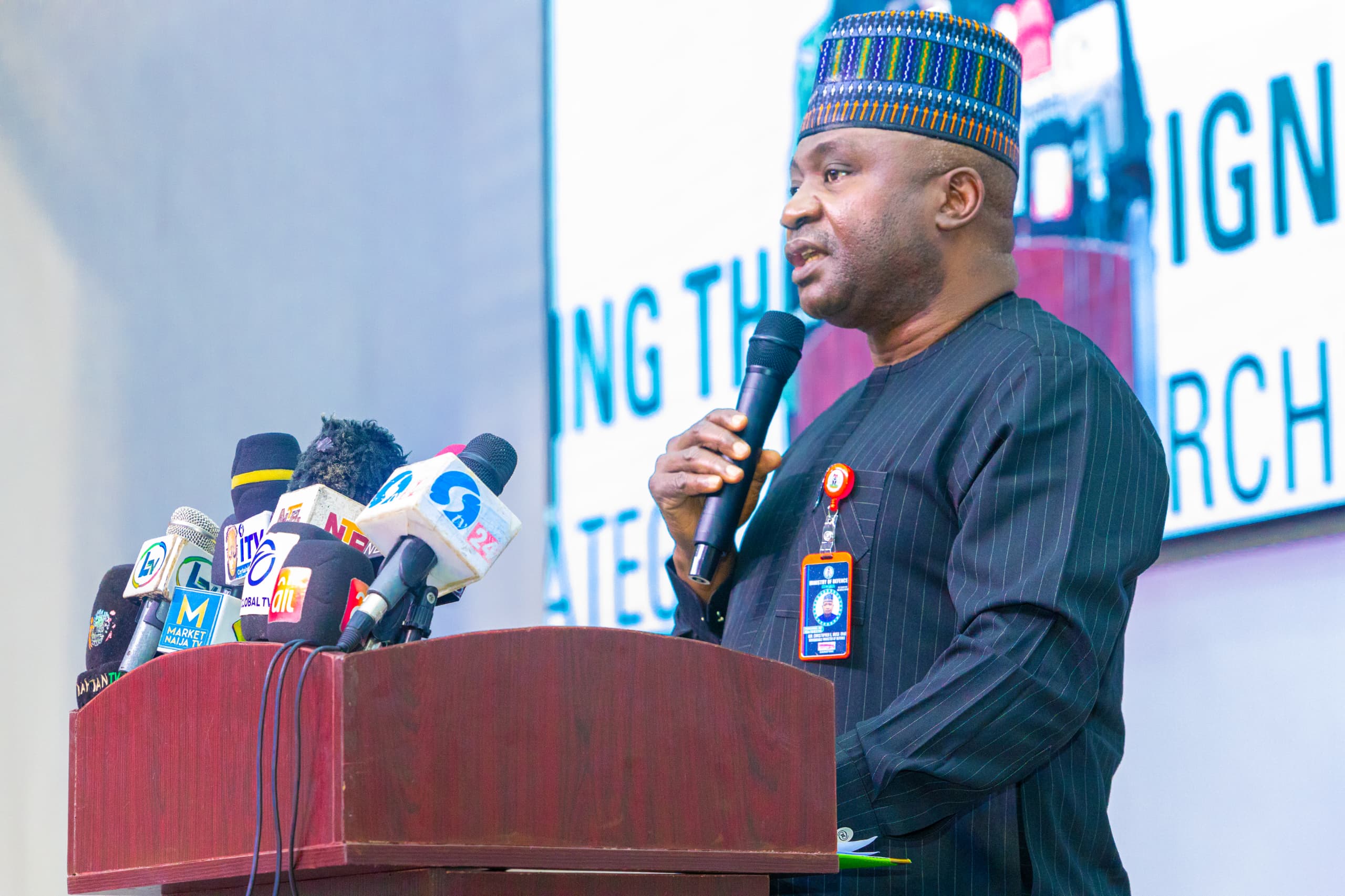
The Minister of Defence, Gen. Christopher Musa (Rtd.), has said the administration of President Bola Ahmed Tinubu is strengthening Nigeria’s security architecture to protect the country’s sovereignty and sustain democratic stability.
Musa stated this in Abuja while opening the 2nd Policy Colloquium organised by the Ministry of Defence in collaboration with Saban Media Services.
The colloquium, themed “Strengthening the Sovereign Frontiers: Strategic Defence Architecture, Emerging Technologies and Democratic Integrity in Nigeria,” focused on emerging security threats, defence modernisation and the role of technology in safeguarding Nigeria’s national interests.
The minister said the Federal Government had continued to prioritise national security, recognising that a secure and stable Nigeria was essential for protecting its sovereignty, preserving democratic institutions and promoting national development.
According to him, President Tinubu had consistently reaffirmed the government’s determination to strengthen national security and provide the Armed Forces with the capabilities required to effectively discharge their constitutional responsibilities.
Musa said the Ministry of Defence was therefore focused on strengthening defence capabilities, advancing military modernisation and ensuring that the Armed Forces remained adequately prepared to respond to the changing security environment.
He described the 2026 colloquium as timely, given the increasingly complex nature of contemporary security threats, which he said required renewed strategic thinking, institutional adaptation and sustained national commitment.
The minister stressed that Nigeria must continually reassess its defence capabilities and preparedness to remain ahead of developments capable of threatening its national interests.
He said the country’s strategic frontier was no longer limited to conventional threats on land, but increasingly encompassed the maritime, air and cyber domains.
Musa consequently called for a more integrated defence posture backed by effective intelligence coordination, joint operations and greater interoperability among the Armed Forces and other security institutions.
“Our defence architecture must remain agile and forward-looking, with the capacity to anticipate threats, respond decisively and protect Nigeria’s territorial integrity and vital national interests,” he said.
The minister also identified emerging technologies as critical to the future of national defence, citing artificial intelligence, unmanned systems, surveillance and reconnaissance technologies as well as cyber capabilities.
He said Nigeria must invest in relevant technologies while developing the human, doctrinal and institutional capacity required to effectively integrate them into military operations.
Musa added that technological advancement had also underscored the strategic importance of strengthening Nigeria’s defence industrial base.
“This is essential to maintaining operational advantage and preparing the Armed Forces for future security challenges,” he said.
He urged participants at the colloquium to move beyond identifying security challenges and develop practical recommendations that could strengthen Nigeria’s strategic defence posture.
Earlier, the Special Adviser to the Minister on Media, Leah Katung-Babatunde, said the colloquium was conceived as a non-partisan platform for bringing together defence strategists, policymakers, technologists, civil society leaders, academics, media practitioners and other key stakeholders.
Babatunde said the gathering was aimed at generating actionable pathways, informing public policy and developing a practical blueprint for strengthening national resilience.
She urged participants to contribute candidly and constructively to the discussions, with a strong commitment to advancing Nigeria’s national interests.