

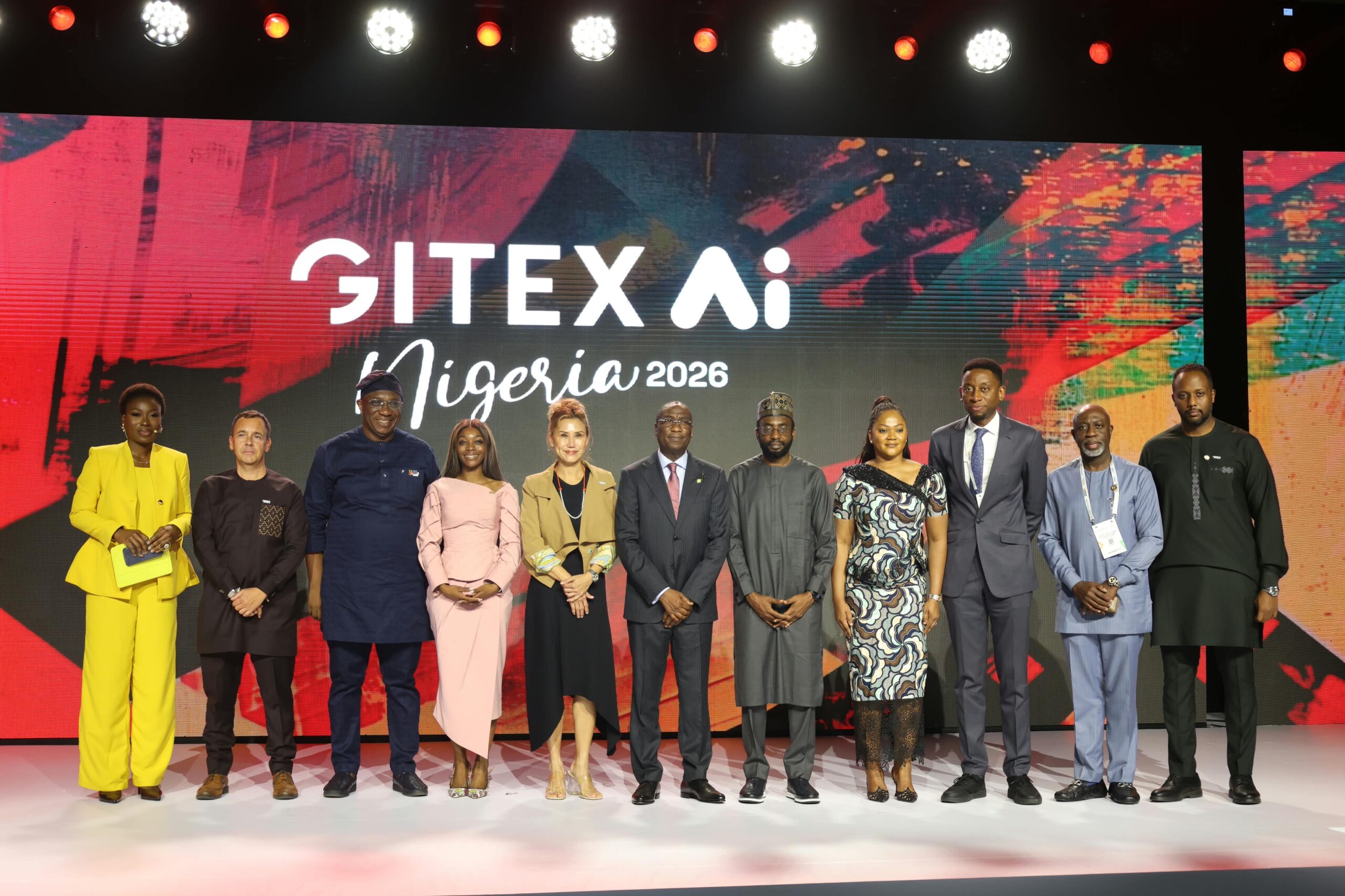
Lagos is positioning itself as Africa’s leading innovation hub as technology enterprises, government policymakers, investors and startups converge in the state for the second edition of GITEX NIGERIA.
The two-day event, which opened on Wednesday, September 2, 2026, brings together key players in technology, artificial intelligence and the startup ecosystem for discussions, product showcases and investment opportunities aimed at accelerating Africa’s participation in the global intelligence economy.
Held under the patronage of President Bola Ahmed Tinubu GCFR, GITEX NIGERIA is supported by the Federal Ministry of Communications, Innovation and Digital Economy in collaboration with the National Information Technology Development Agency (NITDA).
The event is endorsed by the Lagos State Government and organised by KAOUN International, the global organiser of GITEX events.
Speaking at the opening ceremony, the Deputy Governor of Lagos State, Dr. Kadri Obafemi Hamzat, said the state’s emergence as the host of GITEX NIGERIA reflected its growing importance to Africa’s technology and innovation ecosystem.
Hamzat said Lagos was determined to move beyond its status as Nigeria’s commercial capital and establish itself as Africa’s innovation capital, stressing that such a position could only be achieved through sustained investment in infrastructure, talent, policy and execution.
Lagos was ranked the world’s fastest-growing tech hub in the 2025 Dealroom Global Tech Ecosystem Index, recording an 11.6-fold increase in enterprise value to $15.3 billion and producing five unicorns.
The state is home to almost 1,000 active startups, accounting for about two-thirds of Nigeria’s nationwide startup ecosystem. It also hosts 23 of the 28 Nigerian companies featured in the Financial Times’ 2025 ranking of Africa’s fastest-growing companies.
The Secretary-General of the African Continental Free Trade Area (AfCFTA) Secretariat, Wamkele Mene, said Africa must develop interoperable digital infrastructure capable of connecting innovation with commercial opportunities across the continent.
Mene stressed that Africa possessed the talent and technical expertise required to shape its own digital transformation, calling for the creation of a single digital continental market where African businesses could operate, transact and expand seamlessly across borders.
The Director-General of NITDA, Kashifu Inuwa Abdullahi, said Nigeria must create an enabling environment for young people to develop innovative solutions to the country’s challenges.
He said the Federal Government was pursuing data, cloud, operational and artificial intelligence sovereignty to ensure that Nigeria would not remain at the receiving end of technological advancement.
“We don’t want to be at the receiving end of technology; we want to be an active builder of the technology,” Abdullahi said.
The event also featured discussions on digital identity, cybersecurity, data protection and digital public infrastructure, particularly following the signing of the NIMC Act 2026 by President Bola Ahmed Tinubu in June.
The Director-General and Chief Executive Officer of the National Identity Management Commission, Engr. Abisoye Coker-Odusote, said digital identity and trusted digital infrastructure were essential to enabling seamless transactions and cross-border trade under the AfCFTA framework.
The 2026 GITEX NIGERIA Tech Expo features more than 400 exhibiting companies and startups showcasing solutions designed to drive transformation across sectors, while more than 200 investors managing approximately $200 billion in assets are expected to participate.
GITEX CEO, Trixie LohMirmand, said the event was designed to connect Nigerian and African innovators with global markets, investors, knowledge, partnerships and scaling opportunities.
She said Nigeria had the scale while Lagos possessed the ambition and energy needed to compete globally, adding that Africa must aspire to become not only a consumer of artificial intelligence but also a globally competitive producer.